Home Blog Page 10

Is Dish Liquid the Same as Dish Soap? The Chemistry of Kitchen Cleanup

You are standing in the cleaning aisle, staring at a bottle labeled “dish liquid” and a bar labeled “dish soap.” They both promise to obliterate the greasy residue left behind by your Sunday roast, but are they actually the same thing?

  • NEW & IMPROVED FORMULA: New Dawn Platinum is now stronger* on tough grease, so you can spend less time washing dishes (*…
  • REMOVES TOUGH GREASE: Dawn Platinum removes 99% of Grease and Food Residue for a squeaky clean you can see and feel
  • SCRUB LESS AND CLEAN FASTER*: Dawn Platinum dish soap attracts grease like a magnet so you can scrub less and clean fast…

The short answer is no. If you ask a chemist whether dish liquid is the same as dish soap, they will point out a fundamental difference in molecular structure. One is an ancient chemical reaction; the other is a modern petroleum-derived surfactant. Here is the engineering reality behind what you are using to clean your skillets.

The Myth of Liquid “Soap”

We use the word “soap” as a catch-all term for anything that produces suds and cleans our hands or plates. But true soap is highly specific. It is the result of a chemical process called saponification, where natural fats or oils (like olive oil or beef tallow) are mixed with a strong alkali (like lye). This reaction creates a true soap molecule.

Therefore, that solid block of “dish soap” sitting next to your sink is actually soap. It is brilliant at binding to grease and lifting it away, which is why it has been used for centuries.
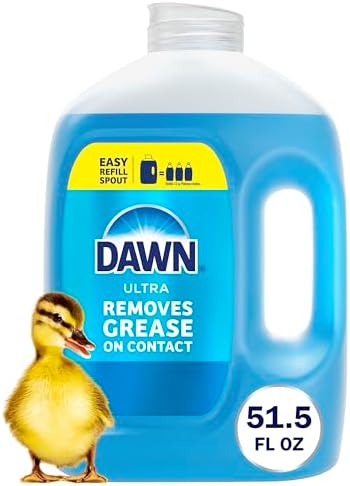
  • REMOVES GREASE ON CONTACT: Dawn Ultra packs a powerful punch of grease-fighting power for a deep, sparkling clean
  • REFILL WITHOUT THE SPILL: Our new and improved jug features an easy-pour spout and comfortable handle to make refilling …
  • SAME CLEAN, BETTER VALUE: Save money* and save plastic when refilling with our dish soap refill jug (*when comparing $/o…

However, that squirt bottle of Dawn or Palmolive sitting on your counter? It contains absolutely zero soap.

The Engineering Reality: Surfactants and Hard Water

Dish liquid is technically a synthetic detergent. Instead of relying on saponified fats, manufacturers build these liquids using complex synthetic surfactants (surface-active agents), often derived from petrochemicals or highly processed plant oils.

Why did we move away from true soap for washing dishes? The answer lies in the physics of your local water supply. True soap reacts terribly with the dissolved minerals (calcium and magnesium) found in “hard water.” When soap molecules meet these minerals, they instantly bond and form soap scum a sticky, insoluble film that coats your glasses and leaves them looking cloudy.

Synthetic dish liquids were engineered specifically to ignore these minerals. The surfactants in dish liquid cut through heavy grease and rinse away perfectly clean, regardless of how hard your tap water is.

User Experience Analysis: When to Use Which

The choice between traditional dish soap and modern dish liquid dramatically alters your cleanup workflow.

Users who switch to solid dish soap often praise its environmental benefits. User Sarah T. noted, “I switched to a solid dish soap bar to cut down on plastic bottle waste, and it cleans my lightly soiled plates beautifully.” However, users also frequently report frustration when tackling heavy, baked-on messes, finding that true soap requires significantly more mechanical scrubbing power to break down stubborn animal fats.

Conversely, synthetic dish liquids are aggressive degreasers. They are formulated to break the surface tension of water instantly, allowing the liquid to penetrate and lift polymerized oils off a stainless steel pan with minimal elbow grease. The trade-off is that these highly concentrated synthetic detergents can be harsh on human skin, stripping away natural oils and leading to cracked hands during heavy winter prep sessions.

Choosing Your Degreasing Agent

If you live in an area with very soft water, are passionate about eliminating single-use plastics, and primarily wash lightly soiled plates, a traditional solid dish soap bar is a fantastic, eco-friendly option.

However, if you routinely wrestle with heavily greased cast iron skillets, deal with hard tap water, and demand spotless, streak-free glassware, synthetic dish liquid remains the undisputed champion of the modern kitchen sink.

BINO 3-Piece Plastic Cutting Board Review: The Physics of Budget Prep

Most home cooks fundamentally misunderstand the purpose of a plastic cutting board. They buy an inexpensive set expecting an indestructible surface that will look pristine for decades. The reality of kitchen physics dictates a harsh trade-off: your prep surface either sacrifices itself, or it sacrifices your knife’s edge. The BINO 3-Piece plastic cutting board set sits squarely, and successfully, on the sacrificial side of that equation.

  • Durable: Our cutting boards for the kitchen are made with BPA-free durable plastic with a thickness of 0.39 inches. Each…
  • Chopping Board Set: This set has a small cutting board (9.8″L x 5.9″W), a medium cutting board (11.8″L x 7.9″W), and a l…
  • Dual-sided Usage: The BINO plastic cutting board has a reversible prep surface. Cut one food item on one side and anothe…

At roughly $16 for a set of three, we need to analyze what you are actually getting from a materials and workflow perspective.

The Engineering Reality: Density and Edge Retention

BINO utilizes a 0.32-inch thick BPA-free plastic for this set. While this is relatively thin compared to the heavy-duty, one-inch polyethylene slabs used in commercial restaurant kitchens, it serves a highly specific household function.

High-density plastic is formulated to yield to steel. When your sharp chef’s blade strikes the BINO board, the plastic compresses and takes a micro-score. If a manufacturer ever sells you a plastic board that refuses to scratch, you should throw it away immediately. It means the material is harder than your blade and is actively rolling your knife’s delicate edge. The BINO set protects your cutlery precisely because it absorbs the mechanical impact.

User Experience Analysis: Wear, Tear, and Hygiene

The inclusion of three distinct sizes (ranging from a compact 9.8-inch board to a large 14.4-inch surface) offers excellent cross-contamination control. You can easily designate the small board for pungent garlic and onions, reserving the large board exclusively for raw poultry.

The boards feature a “Black Granite” aesthetic that looks highly attractive right out of the box, but buyers must adjust their visual expectations. User Lesandra Santiago accurately highlighted this in her review, noting that the board marks very quickly and its pretty appearance is not durable under heavy use. This is the exact mechanical reality of yielding plastic. It will show white scratch lines where the blade has done its work.

However, where the BINO set truly proves its worth is in post-prep sanitation. Premium wood blocks require meticulous hand-washing, prompt drying, and monthly oiling. These thin plastic boards thrive in the aggressive, high-heat environment of a dishwasher. User Nasha emphasized this precise workflow benefit, praising the set for its incredibly easy cleaning routine. When you are processing raw chicken or pork, the ability to toss the contaminated surface into the bottom rack of a dishwasher for thermal sanitation is a non-negotiable safety feature.

The Budget-Friendly Verdict for Your Kitchen Workflow

If you exclusively use $300 Japanese high-carbon knives, you already know you should be cutting on end-grain walnut or specialized soft rubber.

But if you need a lightweight, highly maneuverable trio of boards for handling raw proteins, slicing acidic fruits, and avoiding cross-contamination without an ounce of maintenance anxiety, the BINO set is a highly logical purchase. Treat them exactly as they are designed to be treated: sanitary, replaceable prep surfaces. Once those inevitable knife grooves become too deep to effectively sanitize in the dishwasher, you simply recycle them and buy another set. At roughly five dollars per board, the culinary math makes perfect sense.

Delta Faucet Trinsic Pro VoiceIQ Review: The Smartest Kitchen Upgrade Yet

The Delta Trinsic Pro is a top-tier choice for anyone looking to upgrade their kitchen with professional-grade tech. In our previous articles, we compared Matte Black vs. Chrome faucets and reviewed the KRAUS Bolden, but today we’re deep-diving into the Delta Trinsic Pro VoiceIQ to see if it lives up to the hype.

In our previous articles, we talked about I Have to Make a Choice for My Kitchen: Matte Black Faucets or Chrome Faucets? Then, we created the KRAUS Bolden Commercial Style Kitchen Faucet Review. In this article, we’re reviewing the Delta Faucet Trinsic Pro VoiceIQ.

Let me just say it: I didn’t think I needed a smart kitchen faucet. I mean, it’s just water, right? But then I tried the Delta Faucet Trinsic Pro VoiceIQ, and yep it totally changed the way I use my sink. Not kidding. I find myself saying, “Alexa, pour one cup” like I live in some sci-fi cooking show. And honestly? It’s kind of awesome.

  • VOICE ACTIVATED: Use your voice-enabled smart home device like Alexa or Google Assistant (purchase separately) to power …
  • TOUCH ON. TOUCH OFF. Messy hands? Touch anywhere on the kitchen spout with your wrist or forearm to start and stop the f…
  • LASTS 2X LONGER: Patented DIAMOND Seal Technology reduces leak points and lasts twice as long as the industry standard—e…

Voice Commands That Actually Work

Let’s start here because it’s the fun part. You can literally tell the faucet to pour out specific amounts like a cup for coffee, a bowl for the dog, or a bottle for your workout. Just say, “Ask Delta to fill dog bowl,” and boom it listens. Hands full of raw chicken? No problem. Just talk to it. (It listens better than my kids, honestly.)

Oh, and you’ll need Alexa or Google Assistant to make that happen, plus a wall outlet under the sink (heads up!).

Touch It with Your Wrist Because Life’s Messy

I cook. A lot. Which means sticky hands, flour everywhere, and sometimes barbecue sauce in places it really shouldn’t be. With this faucet, you just tap anywhere on the spout with your wrist or forearm and the water flows. Clean, easy, done. Plus, there’s this little LED light that changes color depending on water temp so no more accidentally scalding your fingers.

Built Like a Tank (but Looks Way Better)

It’s not just smart it’s solid. This thing is metal through and through, with Delta’s Diamond Seal Technology, which supposedly lasts twice as long as the average faucet. I haven’t had it for decades, but so far? Zero leaks. No drips. And the MagnaTite Docking? Genius. The sprayer snaps back into place like it’s on autopilot.

A Few Notes Before You Buy

It’s not cheap. I mean, this isn’t a $150 off-the-shelf fixture. But considering it’s something you use a dozen times a day, it feels worth it. You will need a powered outlet under the sink, and if you’ve got a 3-hole configuration, you’ll need to buy the deck plate separately.

Also don’t use lemon-scented detergents. Learned that the hard way.

Final Thought?

If you’re building a smart kitchen or just sick of turning on the faucet with messy hands, the Delta Faucet Trinsic Pro VoiceIQ might be the best “little luxury” you’ll add to your kitchen this year. I didn’t know I needed it now I can’t imagine cooking without it.

Do You Need a Puck Screen? The Truth About Cleaner Shower Screens and Even Extraction

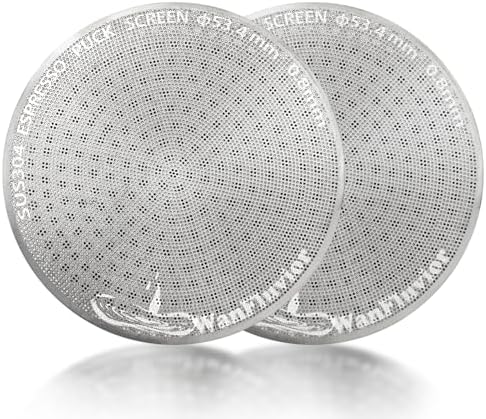
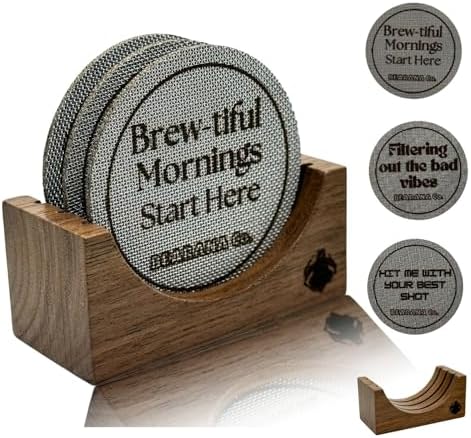
If you are wondering what is an espresso puck screen, it is a thin metal mesh disc placed on top of your coffee grounds to improve water distribution and keep your group head clean.

If you’re on Instagram or TikTok and follow coffee people, you’ve definitely come across it. They get the basket ready, press down the coffee, and then carefully put a thin metal mesh disc on it before making the shot.

This is the puck screen for the espresso machine. Everyone in the home coffee scene is really loving this new one right now.

But seriously, does it really change the flavor of your coffee, or is it just another fancy $15 thingy that’ll end up lost at the bottom of your knock box?

Having pulled thousands of shots myself, some with screens and some without, I really looked into how water moves and how clean things stay to figure out what’s what.

Beyond just improving the extraction of your coffee, using a high-quality espresso machine screen significantly reduces the amount of coffee grounds that get sucked back into your machine’s group head.

What Does a Puck Screen Actually Do?

The purpose of a puck screen is simple: more even water distribution and a cleaner group head.

You ever wonder what a puck screen actually does? Well, it basically helps your coffee grounds brew more evenly. Imagine the water hitting your coffee bed. Without a screen, it can kind of blast a hole right in the middle, or just hit in one spot and not wet everything.

A puck screen is basically a few layers of stainless steel mesh stuck together. It’s a really thin disk, about 1.7mm thick or 150 microns, that you just place right on top of your coffee after you’ve tamped it down.

It’s supposed to do two things:

  1. Secondary Water Dispersion: It takes that strong, rushing water from the machine and softens it into a nice, gentle shower.
  2. Headspace Filler: This gadget helps shrink the gap between your coffee and the machine, which can stop your coffee puck from turning into a soggy mess.

The Extraction Test: Does It Stop Channeling?

You know, the main reason people snag an espresso machine puck screen is to sort out “channeling.” That’s when the high-pressure water just blasts a hole right through your coffee, which totally messes up your shot, making it taste all sour and bitter.

The Analyst’s View: So, if you’ve got a more affordable machine, maybe something like a Breville Barista Express or a Gaggia Classic Pro, the shower screen that comes with it usually sprays water all over the place. It often sends the puck right down the middle with way too much oomph.

Throwing in a puck screen really ups your machine’s game for how water gets spread around. The water lands on the mesh, fans out sideways, and pushes down on the coffee just right.

  • The Result: You’ll notice way fewer little holes or craters when you look at your used coffee grounds.
  • The Taste: It’s not like it’s a magic wand that’ll fix bad beans, but it makes your shots more consistent. If your shots are sometimes too fast and sometimes too slow, this thing helps keep things steady.

The “Killer Feature”: A Pristine Group Head

You know, getting more out of my coffee is cool and all, but honestly, that’s not the main thing keeping me using a puck screen every single day. It’s all about keeping things clean.

When you stop an espresso, the machine’s 3-way solenoid valve lets out pressure, which can sometimes pull coffee grounds and oil right back up into the shower screen. Here’s why your group head ends up getting all dirty.

A puck screen just creates a physical barrier. BaristaBob from the Home-Barista forums mentioned something interesting. He said that after he started using a screen for about a month, his usual chemical backflushing routine produced almost clear water. That screen really does stop the coffee grounds from messing up the group head. If you really dislike scrubbing out your machine, this little extra is totally worth getting just for that.

The Downsides (Nobody Talks About)

It’s not all perfect. Just a heads-up, there are a couple of things that might bug you:

  1. The “Knock Box” Struggle: Anyone who’s used a knock box knows this annoying struggle. You go to knock out the coffee grounds, and boom, the screen falls right out with the puck. So, you’ve gotta grab a hot metal disc from the trash. It’s a real pain, honestly.
  2. Thermal Mass: A cold metal screen will actually make your brew temperature go down by 2 to 4 degrees. Quick Tip: You really should warm up the screen first. Just pop it on top of your machine or run some hot water through it before you get started.

The Big Question: Is This Really Needed?

You should think about getting a puck screen if:

  • You own a Gaggia, Breville, or De’Longhi: You’ll really notice how much better these machines work with the upgraded water dispersion.
  • You hate cleaning: Seriously, if you just keep that group head clean, your life will be so much easier.
  • You see holes: If your coffee grounds look like they’ve been to the moon and back, this will sort it out.

Skip it if:

  • You have a commercial E61 machine: Good news! They’re already really great at spreading water nicely. You won’t really notice any change.
  • You value speed: Finding a hot disc in the trash when all you want is a quick caffeine fix before work is just an irritating delay.

Is it worth the hype? For just fifteen bucks, this is one of those rare accessories that actually makes things more consistent, if you don’t mind a tiny bit of extra effort in your routine.

Cuisinart 17-Piece Stainless Steel Cookware Set Review

If you recently read our deep dive on the dangers of scratched Teflon and decided it is time to completely overhaul your kitchen with non-toxic, forever-lasting materials, building a new collection piece by piece can be incredibly expensive.

  • SET INCLUDES: 1.5 Quart saucepan with glass cover, 1 Quart saucepan with glass cover, 2 Quart saucepan with glass cover,…
  • PREMIUM STAINLESS STEEL: The Cuisinart Chef’s Classic premium stainless steel pots and pans set with aluminum-encapsulat…
  • COOL GRIP HANDLES: Cast stainless steel Cool Grip stick handles are contoured for a secure grip and designed to stay coo…

This is where the Cuisinart 17-Piece Stainless Steel Cookware Set (Model 77-17N) enters the picture. Priced remarkably well at around $215, this massive bundle offers everything a serious home cook or a large family needs. With over 1,000 sets purchased just last month and thousands of positive ratings, it is one of the most popular stainless steel transitions on the market. Here is our analytical breakdown of its performance and value.

The Engineering: Aluminum-Encapsulated Base

Stainless steel is the ultimate cooking surface for health-conscious chefs because it is completely inert. It contains zero PTFE, PFOA, or Sol-Gel coatings, meaning it will never chip, flake, or off-gas toxic fumes into your food.

However, stainless steel on its own is a poor conductor of heat. Cuisinart solves this pure physics problem by engineering the Chef’s Classic line with an aluminum-encapsulated base. A thick disc of pure aluminum is bonded to the bottom of the pan and wrapped in stainless steel. This ensures the pans heat up incredibly fast and distribute that heat evenly across the cooking surface, eliminating the hot spots that burn food.

Is a 17 Piece Stainless Steel Cookware Set Worth It?

If you are looking for a complete kitchen upgrade, a 17 piece stainless steel cookware set offers the best value for home chefs.

The Learning Curve: It Is Not Non-Stick

When reading through user feedback, a common theme emerges: cooks who transition directly from Teflon to this set often complain that their eggs stick.

It is crucial to understand that cooking on stainless steel requires a different technique. You cannot place cold food into a cold pan. You must let the stainless steel pre-heat properly, add your cooking oil or butter, and wait until it shimmers before adding your food. Once you master temperature control, you will achieve incredible sears on steaks and perfectly sautéed vegetables without the fear of scratching a delicate coating. As one verified buyer noted, the peace of mind that comes from using a metal spatula without ruining the pan is entirely worth the learning curve.

Unmatched Versatility and Scale

The sheer volume of cookware included in this 17-piece set is staggering. It features three different saucepans (1.5, 1, and 2-quart), a 3.5-quart sauté pan, a 4-quart Dutch oven, a massive 8-quart stockpot, a 20cm steamer insert, and three skillets (8, 10, and 12-inch).

Furthermore, the entire set is highly versatile. It is compatible with all stovetops, including induction. The pans are oven and broiler safe up to a scorching 500°F (with the glass lids safe up to 450°F). The Cool Grip handles are solidly riveted and contoured for a secure hold, preventing dangerous slips when transferring a heavy, boiling stockpot.

The Verdict: Is It Worth the Investment?

If you want to make a single purchase that completely outfits your kitchen with safe, highly durable cookware, the Cuisinart 17-Piece Set is an exceptional value.

While they require more cooking fat and a bit more scrubbing than a traditional non-stick pan, these pots and skillets are built to endure decades of heavy daily use. They are technically dishwasher safe, but hand washing with a specialized stainless steel cleaner will keep the mirrored finish looking pristine for years.

Pros:

  • 100% free of chemical non-stick coatings.
  • Aluminum-encapsulated base provides rapid, even heating.
  • Massive 17-piece collection covers every possible cooking task.
  • Induction compatible and oven safe up to 500°F.
  • Exceptional price-to-piece ratio for home chefs.

Cons:

  • Requires proper heat management to prevent food from sticking.
  • Heavier than standard aluminum cookware.
  • Glass lids limit oven temperature to 450°F when covered.

Hard Brown Sugar? The Best Airtight Keepers with Terra Cotta Discs

It’s a familiar feeling, right? You’re all set to whip up some chocolate chip cookies, you grab the brown sugar, and bam! It’s a rock.

You know when you’ve got something and you’re just like, “Ugh, I’ll try to stab it with a knife, maybe I’ll even microwave it,” just because it’s so annoying. To solve this for good, you need a reliable brown sugar saver disc.

The simple fact is, it’s just chemistry. Brown sugar has molasses in it, and that’s why this happens. When the water leaves the molasses, the sugar crystals sort of stick together. To put a stop to this, you’ll need a couple of things:

  1. First, grab an airtight container to keep any air out.
  2. You need something that adds moisture, just enough to keep the humidity from dropping.

This is where the Terra Cotta Disc comes in. This clay stone soaks up water and then slowly lets that moisture go back into your sugar, which keeps it soft for months.

This type of clay tool is also called a brown sugar saver disc, and it has become the standard solution for preventing hardening.

We looked at the market closely to find the top solutions out there. It doesn’t matter if you need a fresh new container or just want to quickly fix up your current jar; we’ve got you covered. Here are your top 3 winners.

  • Airtight Seal for Long-Lasting Freshness – Each container is equipped with a silicone seal and stainless steel latch to …
  • Custom-Fit Design for Essential Baking Ingredients – Includes 5 specialized containers to hold standard ingredient bag s…
  • Accessory-Rich for Smart Storage – Comes with built-in magnetic tools like a leveling bar, measuring/dusting spoon, and …

1. The Best All-in-One System: Progressive Prepworks ProKeeper

Rating: 4.8/5

The Progressive Prepworks ProKeeper is awesome; it’s definitely the best all-in-one system out there. This is great for folks who just want one perfect thing that does exactly what they need.

  • The Design: This is the container you need if you’re looking for one just for brown sugar. Other jars just didn’t cut it, but we made the Progressive ProKeeper right from the start to fix that common problem where things turn into a brick. This smart design fits a standard 2lb bag of brown sugar just right.
  • The Integrated Disc: That’s the really smart bit about it. The little terra cotta disk isn’t just chilling in the sugar, where it could easily get scooped out by accident. It just clicks right into its own spot under the lid.
  • The Seal: The seal is made with a silicone gasket and a stainless steel latch. When you lock it, you can actually hear the air being sealed out.
  • Performance: Soak the stone for 15 minutes, then just snap it into the lid and close it up. Folks are saying that even really hard sugar gets soft in just a day.
  • Keep Dry Foods Fresh: Airtight, stackable, space-efficient and completely dishwasher safe, OXO POP food storage containe…
  • Maximize Pantry Storage: The 4.4 Qt/4.2 L canister is perfect for around 5 pounds of pasta, flour or sugar. Every kitche…
  • Easily Open With One Hand: Each airtight container has a push-button lid that creates an airtight seal—and doubles as a …

2. The Modular Choice: OXO Good Grips POP Container

Rating: 4.6/5

The OXO Good Grips POP Container is a solid choice because of its modular design. It’s really easy to get organized with these. This is perfect for pantry organizers who are really into that “POP” look for their kitchen.

If you’ve already got a pantry filled to the brim with those OXO containers, it probably makes sense to stick with that system.

  • The Setup: You use the classic 1.1-quart POP container, but you add the Brown Sugar Keeper accessory to it. This little terra cotta disk sticks right under the POP lid.
  • The Seal: It’s got that famous push-button airtight seal. Yeah, it’s handy and all, but some folks in the know reckon the old-school mechanical latch on the Progressive (you know, the one up top) just feels a bit sturdier for keeping things from drying out over time.
  • Aesthetics: It really is a beauty. If you really want your pantry to look all neat and tidy, with everything matching, OXO is a solid choice.
  • Keep Brown Sugar Soft: Tired of rock-hard brown sugar? Our Terra Cotta Brown Sugar Saver Disk keeps sugar moisture and i…
  • Food-Safe Natural Moisture Control: Our Brown Sugar Saver is made of natural food-grade terra cotta. Clay stones release…
  • Multiple Uses: Not only brown sugar, but terracotta brown sugar saver can also maintain softness when storing cookies, b…

3. The Best Brown Sugar Saver Disc: ENOLVO Terra Cotta

Rating: 4.7/5 (5,000+ bought last month)

The ENOLVO Terra Cotta Disc is a good budget hack. Over 5,000 of these were snapped up just last month. You know, this is perfect if you want to save some cash and just fix up that jar you’ve already got.

What if you’re not into buying another plastic container? What if you’re trying to soften hard sugar in the jar you already have?

Enter the ENOLVO Terra Cotta Sugar Saver. Coming in at under $7, this is easily the cheapest option we’ve got.

  • How It Works: It’s just a simple disc made from food-grade clay. Just soak it in water for about 15 minutes, then give it a pat to dry it off, and you can toss it into any container that seals tight or even a Ziploc bag.
  • The “Resurrection” Power: Does it work on sugar that is already hard? Allie Julius, like many of us, had a common experience: “I had a container packed with a brick of hard brown sugar… The sugar was all soft the next morning. This really changed my life for the better!”
  • Versatility: This one is really versatile; you can carry it around, which is different from the attached lids.

Comparison: Which One Should You Buy?

FeatureProgressive ProKeeperOXO POP SystemENOLVO Disc Only
TypeFull ContainerContainer + AccessoryAccessory Only
Terra CottaIntegrated in LidAttached to LidSits in Sugar
Best FeatureSecure Latch SealStackable DesignUniversal Fit
Price$$$$$$ (Under $7)
InstallationReady to goAssembly requiredToss in jar

The Bottom Line

  • Buy the Progressive ProKeeper if you want the “Ferrari” of sugar storage. The latch seal plus the lid-mounted stone makes it the most effective system for keeping sugar fluffy.
  • Buy the ENOLVO Disc if you are on a budget or already love your current jars. For less than the price of a coffee, it turns a rock-hard brick back into soft sugar overnight.

Classic Meals

- Advertisement -