Home Blog Page 84

Manual vs Electric Coffee Grinders: Which One Is Right for You?

When you’re stepping up your coffee game, the grinder you choose becomes one of the most important tools in your brewing journey. But should you go manual or electric? Let’s weigh the pros and cons to help you decide which grinder type suits your lifestyle, budget, and brewing goals.

Manual Coffee Grinders

Pros:

  • Portability: Great for travel or small kitchens no outlet needed.
  • Quiet operation: Ideal for early mornings when silence matters.
  • Precision at a lower price: High-quality manual burr grinders can rival electric ones.
  • Durability: Fewer parts mean less that can break.

Cons:

  • Effort: You’ll need to crank it by hand, which can be tiring for multiple cups.
  • Speed: Takes longer, especially for finer grinds like espresso.

Best for:

  • Coffee lovers who enjoy a hands-on approach
  • Those who mainly brew pour-over, AeroPress, or French press
  • Budget-conscious home baristas looking for precision

Popular Picks: 1Zpresso JX-Pro, Hario Skerton, Timemore Chestnut C2

Electric Coffee Grinders

Pros:

  • Speed: Grind a full batch in seconds.
  • Convenience: Just push a button ideal for busy mornings.
  • Consistency: More grind settings and better output at higher price points.
  • Espresso-friendly: Many can grind ultra-fine for espresso machines.

Cons:

  • Price: Entry-level electric grinders may not match the quality of manual burr grinders.
  • Noise: Can be loud something to consider in shared spaces.
  • Size: Typically bulkier and need counter space.

Best for:

  • Daily drinkers needing multiple cups
  • Espresso machine users
  • Anyone prioritizing convenience over manual effort

Popular Picks: Baratza Encore, Fellow Opus, Breville Smart Grinder Pro

Which Should You Choose?

Ask yourself:

  • How many cups do you brew a day?
  • Do you prefer speed or ritual?
  • How important is grind consistency?
  • Do you have space and budget for a larger appliance?

If you’re all about ritual and brewing just a cup or two, manual may be perfect. But if convenience and speed are priorities especially if you’re brewing for more than one person go electric.

One rewards patience and control

Both manual and electric grinders have a place in the home barista world. The key is aligning your grinder choice with your brewing style and daily habits. One rewards patience and control; the other offers efficiency and consistency. Either way, freshly ground coffee beats pre-ground every time.

read more: Being a Home Barista: Hobby or Lifestyle?

Coffee Accessories on Amazon

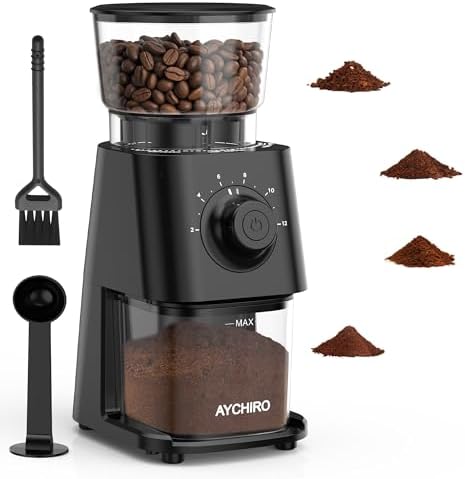
Blade vs Burr Grinders: Which One Should You Choose?

If you’ve ever wondered why your home-brewed coffee doesn’t taste like your favorite café’s, your grinder might be the culprit. The grinder you choose blade or burr can make a bigger difference than you think. Let’s break it down and help you decide which one fits your brewing style and goals.

What’s the Difference?

Blade Grinders

  • How they work: Use spinning blades (like a blender) to chop coffee beans.
  • Pros: Affordable, compact, easy to find.
  • Cons: Uneven grind size, generates heat, can impact flavor.

Burr Grinders

  • How they work: Crush beans between two burrs either flat or conical.
  • Pros: Uniform grind size, adjustable settings, better consistency.
  • Cons: More expensive, bulkier, slightly louder.

Why Grind Size Matters

Grind size affects extraction. Too fine, and you risk over-extraction (bitter); too coarse, and you under-extract (sour). Consistency ensures balanced flavor and repeatable results.

Burr grinders allow you to control grind size precisely critical for pour-over, French press, espresso, and even AeroPress.

Who Should Use a Blade Grinder?

Blade grinders can be a good option for:

  • Casual coffee drinkers using drip or French press
  • Beginners just starting to explore brewing
  • Tight budgets

Tip: Shake the grinder gently while it’s working to improve consistency (slightly).

Who Should Use a Burr Grinder?

Burr grinders are ideal for:

  • Anyone serious about coffee quality
  • Home baristas using manual brewing methods
  • Espresso lovers (you need consistent fine grinds!)

There are two types of burrs:

  • Conical: Quieter and more compact
  • Flat: More precise and consistent (but pricier)

Electric vs. Manual Burr Grinders:

  • Electric: Fast and convenient (e.g., Baratza Encore, Fellow Opus)
  • Manual: Great for travel or quiet mornings (e.g., 1Zpresso, Hario Skerton)

Investing in Your Brew

Spending more on a burr grinder might feel like a leap, but it’s one of the best upgrades you can make. Think of it as a long-term investment in flavor, consistency, and control.

Your beans deserve better, and so do you.

If you’re just starting out, a blade grinder can be a stepping stone. But if you’re chasing café-quality cups at home, a burr grinder isn’t optional it’s essential. Your beans deserve better, and so do you.

read more: Are Blended Coffee Beans Better Than Single-Origin?

DIY Coffee Bloom Experiment: Test Freshness at Home

Have you ever wondered how fresh your coffee beans really are? One of the easiest ways to test it at home doesn’t require any lab equipment just hot water, ground coffee, and your eyes. That’s where the coffee bloom comes in.

This article walks you through a simple, step-by-step experiment to evaluate bean freshness and bloom strength perfect for curious home baristas.

Why Coffee Bloom Indicates Freshness

When hot water first touches freshly ground beans, carbon dioxide (CO₂) trapped during roasting is released rapidly. The resulting bubbles and swelling form the “bloom.” The more active the bloom, the fresher the coffee.

Stale coffee? You’ll barely see any bloom at all.


Your Home Coffee Bloom Test

What You’ll Need:

  • Two types of coffee beans (one freshly roasted, one older)
  • Grinder
  • Scale
  • Hot water (about 200°F / 93°C)
  • Two clear glasses or cups

Instructions:

  1. Grind Your Beans: Use the same grind size for both samples (medium-coarse is ideal).
  2. Measure Grounds: Use 10 grams of coffee per cup.
  3. Pour Hot Water: Add 20g of hot water over each sample at the same time.
  4. Observe for 30–45 Seconds: Watch for bubbling, puffing, and movement.

What to Look For

ObservationWhat It Means
Strong bubbling & swellFreshly roasted coffee
Mild bloom, fewer bubblesCoffee is a bit older
No movement at allLikely stale or improperly stored

Tip: Smell both samples fresh coffee will often release a much stronger aroma during bloom.

related article: How Coffee Bloom Time Affects Final Flavor: A Comparative Analysis

Bonus: Record & Compare

Create a mini tasting journal:

  • Rate the bloom activity (1–5 scale)
  • Note the roast date
  • Record aroma and color differences

You can even repeat the test with different roasts (light, medium, dark) to see how bloom strength varies.

informed home barista

Understanding and testing coffee bloom helps you become a more confident, informed home barista. This fun little experiment doesn’t just teach you about freshness it also trains your eyes, nose, and intuition for better brews in the future.

So grab a couple of beans from your pantry and run your own coffee lab. Your next cup might just be your best yet.

Can Stirring During the Bloom Phase Improve Your Brew?

If you’re aiming to level up your manual brewing technique, you’ve probably wondered: Should I stir my coffee during the bloom phase? While traditional methods often call for a simple pour-and-wait approach, some home baristas and professionals swear by gently stirring the grounds during bloom.

Let’s explore what stirring can (and can’t) do during this critical stage and whether it’s right for your brewing style.

Why Stirring Might Help

During blooming, carbon dioxide rapidly escapes from the coffee grounds. Stirring helps by:

  • Evenly saturating the grounds: Especially useful if your pour technique is inconsistent or your kettle has a narrow spout.
  • Releasing trapped gas more effectively: Stirring breaks up dry clumps and exposes more surface area, allowing CO₂ to escape quickly.
  • Promoting uniform extraction: A consistent bloom sets the tone for an even brew. Stirring helps ensure no grounds are left dry.

When to Stir and How

If you choose to stir during bloom, follow these tips:

  • Use a non-metal utensil: A bamboo stirrer or wooden stick minimizes risk of damaging filters.
  • Be gentle: Think of it as “guiding” the coffee, not whipping it. Aggressive stirring can cause channeling later in the brew.
  • Timing: Stir right after pouring your bloom water (usually twice the weight of the grounds). Stir for just 3–5 seconds.

read more: Understanding Coffee Bloom: Why It Matters in Brewing?

Downsides of Stirring

While stirring has benefits, it’s not for everyone:

  • Over-agitation can lead to over-extraction, especially in lighter roasts.
  • Inconsistent results: Stirring introduces a variable. If your goal is repeatability, it’s one more step that needs precision.
  • Not ideal for all methods: Stirring works best in open brewers like V60 or Chemex. For AeroPress or French press, techniques differ.

Try It But Measure Your Results

Like many brewing adjustments, stirring during bloom is a matter of preference. The best way to decide is through side-by-side testing. Brew one cup with stirring and one without. Compare body, clarity, and flavor.

You might find stirring brings out sweeter notes or more balanced acidity especially with fresh, light-roasted beans.

Game-changer when applied thoughtfully

Stirring during the bloom phase isn’t a magic fix but it can be a game-changer when applied thoughtfully. If you’re striving for a more even extraction and a better bloom, it’s a simple experiment worth trying.

Who knew a little swirl could make such a difference?

Does Pre-Wetting the Filter Affect Coffee Bloom? Here’s What You Need to Know

If you’re using a pour-over method like a V60 or Chemex, you’ve probably come across the step where you pre-wet the paper filter before brewing. But does this seemingly minor step have any effect on the coffee bloom? The answer is yes more than you might expect.

Let’s break down how pre-wetting your filter can influence blooming and, ultimately, your final cup.


1. Removes Paper Taste That Can Mute the Bloom

Unrinsed paper filters often carry a subtle “papery” or cardboard-like taste. This flavor can interfere with the aromatic compounds released during blooming, especially in delicate beans. By pre-wetting the filter, you allow the coffee’s natural bloom aroma to shine without competition.

2. Improves Temperature Stability

Pouring hot water into a dry filter and carafe absorbs a portion of the brew’s heat. This can cause water temperature to drop during the initial bloom phase, which is critical for proper degassing.

Solution: Pre-wet the filter and warm the carafe to stabilize temperature. A stable thermal environment promotes more vigorous, even blooming.

3. Reduces Flow Resistance

A dry filter can resist water flow more than a wet one, causing uneven water dispersion over the coffee bed during the bloom.

By rinsing the filter first:

  • Water saturates more evenly
  • Bloom is more uniform
  • Less channeling occurs, especially in V-shaped brewers like the V60

4. Potential Downsides? Only If You Forget to Dump the Water

Pre-wetting introduces extra water into your carafe or brewer. If you forget to discard that water before brewing, your final cup may be diluted and that will affect not just your bloom but the full extraction.

Bloom Smart: Make Pre-Wetting a Habit

While it might seem like a small step, pre-wetting your filter sets the stage for a clean, stable, and aromatic bloom. It’s one of those barista habits that separates a decent cup from a truly great one.

Next time you brew, don’t skip the rinse you might just notice a brighter, more expressive bloom.

related article: How Altitude Affects Coffee Flavor: The Highs and Lows Explained

How Coffee Freshness Affects Bloom: What You Need to Know

When you pour hot water over fresh coffee grounds and see that lively bubbling reaction you’re witnessing the bloom. But what if that bloom is barely visible, or completely absent? One of the biggest factors behind this is coffee freshness. In fact, freshness and bloom go hand in hand and understanding their relationship can dramatically improve your brew.

Why Freshness Matters in Blooming

Coffee beans contain carbon dioxide (CO₂), which is a byproduct of the roasting process. This gas is trapped inside the beans and gradually escapes over time. The fresher the coffee, the more CO₂ it retains and the more vigorous the bloom.

As coffee ages:

  • CO₂ levels drop
  • Bloom becomes weaker
  • Extraction may become more even but flatter in taste

So, a strong bloom is usually a good sign that your coffee is fresh and aromatic.

How to Judge Coffee Freshness by Bloom

Here’s how bloom can indicate freshness at a glance:

Bloom BehaviorWhat It Suggests
Strong bubblingRecently roasted (within 2–14 days)
Mild bloomAged slightly (2–4 weeks)
No bloomLikely stale or over a month old

But don’t toss older beans just yet! While they may not bloom dramatically, they can still make a decent cup—especially with immersion methods like French press.

Personal Story: When the Bloom Was Gone

A few months back, I opened a bag of beans I’d forgotten at the back of the pantry. The roast date? Two months earlier. I brewed a V60 like usual, and… nothing. No puff, no bubbles, just flat coffee grounds. The taste? Muted and a bit dull. That day, I learned that bloom is the canary in the coal mine for freshness.

Tips for Getting the Best Bloom from Your Beans

  1. Check the roast date: Aim to use beans 7–21 days after roasting for optimal bloom and flavor.
  2. Buy whole beans: Pre-ground coffee loses CO₂ faster.
  3. Grind right before brewing: Even freshly roasted beans lose bloom potential if ground too early.
  4. Store properly: Use airtight containers and avoid moisture, heat, and light.
  5. Experiment with degassing: Some beans need a few days post-roast to reach peak bloom. Too fresh (like 1–2 days) can actually over-bloom and affect extraction.

Is More Bloom Always Better?

Not necessarily. While a vigorous bloom signals freshness, it can also mean trapped CO₂ might interfere with even saturation if not managed properly. That’s why letting your coffee bloom for 30–45 seconds helps release gas and prepares the grounds for full extraction.

Pay attention to how your coffee reacts

Bloom isn’t just a visual cue it’s a window into your coffee’s freshness and brewing potential. Pay attention to how your coffee reacts when it first meets water. If it blooms beautifully, you’re likely in for a treat. If not, it might be time to refresh your beans.

Classic Meals

- Advertisement -