Home Blog Page 58

Dosing Funnel: A Simple Tool That Prevents Mess and Waste

If you’ve ever tried to pour ground coffee directly from your grinder into a portafilter, you know the mess that follows. Grounds spill over, create a mess on your countertop, and you’re left losing precious grams of your carefully measured coffee. That’s where a dosing funnel comes in.

It’s small and inexpensive, but it’s a home barista must-have for those who care about accuracy and sanitation.

What Is a Dosing Funnel?

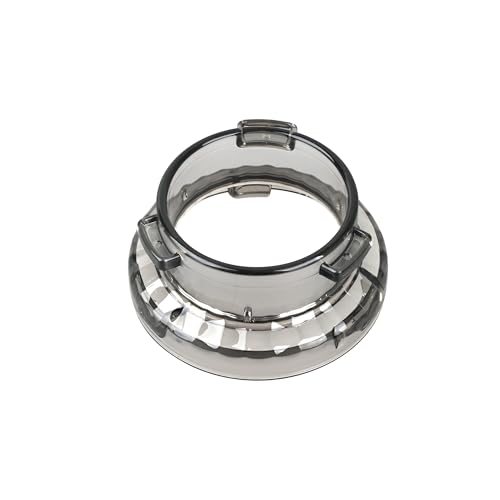
A dosing funnel is a circular collar that fits on top of your portafilter. When grinding, it acts as a barrier to keep coffee grounds from spilling over the edge. Once you’re done, simply remove the funnel and tamp as usual.

Why It Matters

  1. Reduces Mess

No more sweeping up loose grounds or wiping your counter after every dose. The funnel contains everything neatly in the basket.

  1. Prevents Waste

Coffee is expensive especially specialty-grade beans. Even small losses to dosing add up over time. A funnel keeps each gram in its place.

  1. Increases Consistency

By directing all the grounds into the basket, a dosing funnel guarantees evenly distributed grounds, a crucial element of creating better extractions.

Who Should Use One?

Honestly? Everyone. Whether you’re a beginner or a pro, this tool simplifies your process and helps maintain a tidy workspace. If you’re using a single-dose grinder or measuring out beans manually, a dosing funnel is practically essential.

read more: How Coffee Bloom Time Affects Final Flavor: A Comparative Analysis

Choosing the Right Funnel

Size matters – Make sure it matches your portafilter diameter (usually 58mm or 54mm)

Material – Stainless steel or aluminum funnels are durable and static-resistant

Magnetic base (optional) – Some models lock in place for hands-free grinding

Final Thoughts

The espresso dosing funnel is one of those small investments that pay off big in convenience and consistency. If you’re building a serious espresso setup, don’t skip it.

Coffee Accessories on Amazon

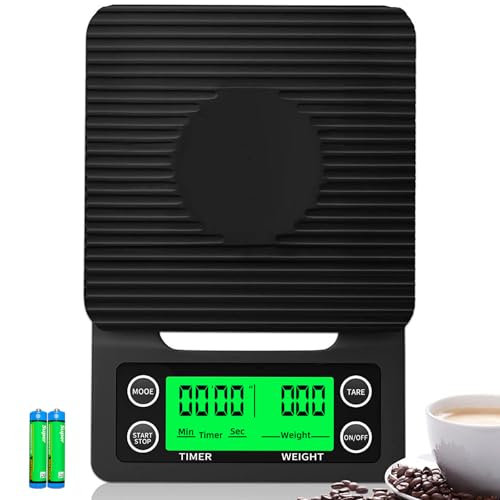
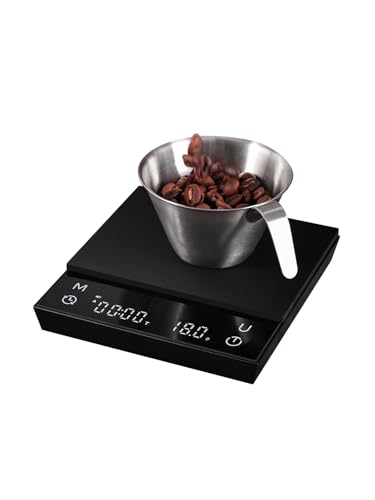
How to Use a Coffee Scale for Better Pour-Over Brewing

If you’re in pursuit of the perfect pour-over cup of coffee, your first ally in the battle should be a reliable coffee scale. Why? Because pour-over brewing is all about being exact, and guesstimating your measurements just won’t cut it. In this tutorial, we’ll cover how to get the most out of a coffee scale and why it’ll make a difference in your morning cup.

Why Use a Coffee Scale for Pour-Over?

Pour-over manual brewing puts you in total control of the brewing process but that means small mistakes can lead to uneven cups. A coffee scale helps by:

Providing for accurate coffee-to-water ratio

Safeguarding you to control your pour rate

Providing consistency per cup

Step-by-Step Brew Guide to Pour-Over Using a Coffee Scale

  1. Set Up Your Equipment
    You will need:

A pour-over dripper (like a V60 or Chemex)

Paper filter

Freshly ground coffee

A hot water kettle (approximately 200°F / 93°C)

Your coffee scale

  1. Tare Everything
    Place the dripper, filter, and carafe on the scale. Press “tare” to zero it out. Weigh your ground coffee (usually 15–18g). Tare out again when it’s time for water.
  2. Measure as You Pour
    Start your timer and pour twice the weight of your coffee in water for the bloom (e.g., 30g water for 15g coffee). Allow it to sit 30–45 seconds. Then, pour in slow circles to your desired weight usually 240g to 270g total.
  3. Timing and Flow Rate
    Use your scale’s timer feature or another independent timer to ensure your pour-over takes approximately 2:30–3:30 minutes, depending on grind and style.

Tips for Improved Pour-Over Coffee with a Scale

Employ uniform grind size: Medium-fine is standard for V60.

Master your pour: A gooseneck kettle makes flow rate easy to manage.

Take notes: Monitor your ratios and timing to replicate excellent brews.

Invest in a scale timer: It’s particularly useful for multi-step brews.

It removes all the guessing game

Pour-over brewing on a coffee scale isn’t just for coffee snobs it’s something anyone can utilize to produce more, better coffee in their own home. It removes all the guessing game aspects and gives you full control over the flavor and strength.

Coffee Accessories on Amazon

Espresso Distribution Tools: What They Are and Why They Matter

You’ve got your grinder dialed in, your tamper polished, and your espresso machine humming but your shots still feel inconsistent. If that sounds familiar, there’s a tool that could change your game: the espresso distribution tool.

This often-overlooked tool by newcomers is a simple yet effective device that prevents uneven ground coffee distribution in the portafilter prior to tamping. That even distribution is critical to achieving a balanced extraction and ultimately, a great shot.

What Is an Espresso Distribution Tool?

A leveler or coffee distributor, or espresso distribution device, is a tool which is used to spread ground coffee evenly across the surface of the portafilter basket. It typically has a ridged or flat bottom that spins or glides over the grounds in order to crack up clumps and leave a smooth surface on which to tamp.

It’s not a replacement for tamping it’s an optional pre-tamp procedure which readies you for success.

Why Is Distribution Important?

Even extraction is all about espresso. As water flows through unevenly packed coffee grounds, it takes the path of least resistance. That means over-extracted (bitter) in some areas and under-extracted (sour or weak) in others.

Distribution maximizes even extraction by reducing channeling and advantages:

Shot-to-shot consistency improvement

Flavor clarity improvement

Failed extractions, and thus waste, reduced

Optimization of your espresso machine

Types of Espresso Distribution Tools

  1. Distributor/Leveler (Palm Style)
    These are depth and position adjustable on top of the coffee bed. With a twirl or two, they level the grounds.
  2. WDT Tools (Weiss Distribution Technique)
    A WDT tool uses fine needles to stir up and break up clumps in the coffee bed. It’s an extremely powerful method that can be combined with a leveler for the best results.
  3. Dual-Sided Tools
    Some distribution devices have a leveler on one end and a tamper on the other a match made in heaven for small operations.

Each style has its following, and some baristas do use both WDT and a palm distributor together for ultimate accuracy in distribution.

How to Use a Distribution Tool to Success

Here’s a quick review:

Dose coffee into the portafilter.

Optional but strongly advised: Distribute and break up clumps with a WDT tool.

Place the distributor on top of the portafilter.

Apply light pressure and spin 2–4 times to level and distribute the grounds evenly.

Tamp as usual, then pull your shot.

The payoff: A more level coffee bed, less inconsistency, and better-tasting espresso.

Do You Really Need One?

If you’re using good beans and a good grinder but still finding yourself plagued by inconsistency, a distribution tool is an easy upgrade that pays major dividends.

For home baristas specifically, it can bridge the gap between hobby and precision and even shorten the learning curve for newcomers.

Whether you go for a WDT tool

Distribution tools are not a gimmick. They are a genuine means of streamlining your workflow and nearing that mythical golden shot rich, smooth, and balanced.

Whether you go for a WDT tool, a palm distributor, or a combo unit, the investment is small compared to the impact it can have on your daily brew.

Do All Coffees Bloom the Same? How Bean Origin, Roast, and Processing Impact Bloom Behavior

You may already know that coffee percolates differently sometimes. Some froth like a good science experiment, while others barely puff. That’s not an accident it has to do with where the beans were grown, how they were processed, and even the way they were roasted.

Understanding these differences lets you not only adjust your brewing technique, but also better understand your coffee.

  1. Origin and Altitude: Where the Bean Was Born Counts

Higher-altitude coffee is denser and retains CO₂ in the beans longer after roasting. Such beans tend to have:

Slower rise of bloom

Extended degassing phase

Brighter, more nuanced flavor profiles

Lower-altitude beans may bloom earlier due to lower density and softer structure.

Example: A high-grown Ethiopian Yirgacheffe might bloom slower and more predictable than a low-grown Brazilian Santos.

  1. Roast Level: Light to Dark, Bloom Changes

Roast impacts amount of gas retained directly:

Light Roasts: High bloom since the cellular structure remains intact with more CO₂ trapped.

Medium Roasts: Equilibrium bloom—moderate gas, easy to control.

Dark Roasts: Low bloom; structure is more broken down, and most of the gas escapes during roasting.

Tip of the Brewer: Light roasts, take extra attention to your bloom stage (more water, longer). Dark roasts, short and slow.

  1. Processing Method: Washed vs Natural vs Honey

Depending on how a coffee bean is processed after it is picked, it will behave with water in the future.

Washed Process: Usually leads to an even more balanced bloom.

Natural Process: Can bloom more erratically with residual sugars and oils.

Honey Process: In between, depending on how much mucilage is left on the bean.

Try to pay attention to how your natural vs washed beans bloom there usually is a big difference.

read more: How Coffee Bloom Time Affects Final Flavor: A Comparative Analysis

  1. Freshness and Storage

Even the best beans won’t produce a good bloom if they’re old or stored incorrectly.

Freshness tip: Try to roast and then brew beans 5–20 days from the roast date.

Store beans in airtight containers, in darkness and coolness.

Why This Matters to Home Baristas

Understanding the bloom behavior that correlates to origin, roast, and processing allows you to:

Adjust your bloom time and ratio of water in reaction

Improve flavor uniformity between beans

Expect how an incoming coffee will respond before you brew it

It’s not science for science’s sake it’s about loving the bean, and respecting its story.

Coffee Accessories on Amazon

How an Espresso Shot Glass Can Improve Your Brewing Precision

Precision is everything when dealing with espresso. A matter of milliliters, and your shot will go from golden to bitter. That’s where an espresso shot glass comes into play an unsung but powerful ally for home baristas trying to find consistency and command.

What Is an Espresso Shot Glass?

An espresso shot glass (alternatively called a measuring glass) is a tiny heat-proof cup, often made of borosilicate glass or tempered glass, which has volume markings on the side. It allows you to observe and measure the volume of liquid extracted from your espresso machine in real time.

Most shot glasses are double spouts and designed to serve single shots or double shots (30 ml / 1 oz or 60 ml / 2 oz), and some have imperial and metric markings.

Why You Need One in Your Espresso Setup

  1. Precision in Extraction
    Having a visual gauge of your espresso guarantees you’re receiving the proper amount. This is important when fine-tuning a new grind or perfecting your espresso recipe.
  2. Shot-to-Shot Consistency
    A shot glass allows you to replicate your perfect shots time and time again. You’ll be able to produce the same amount each time once you’ve hit that magic spot in flavor.
  3. Best for Dialing In Your Grinder
    When refining your grind setting, a shot glass makes it easy to monitor what happens to shot volume and time with changes, allowing for easy troubleshooting and perfecting of your process.
  4. Facilitates Learning Ratios
    An easy-to-use method of becoming comfortable with brew ratios such as 1:2 espresso ratio (such as 18g in, 36g out)—by providing visual feedback in addition to utilizing a scale.
  5. Less Mess, More Accuracy
    Two-spout designs help with neater pours to your drinking glass, especially when splitting shots between two glasses.

Features to Keep an Eye Out For

Clear, easy-to-read measurement graduations (in oz and ml)

Heat resistance (most important for hot espresso)

Spouted form for effortless pouring

Robust glass or borosilicate build

Dishwasher-safe for easy washing

A few units, like Rhino Coffee Gear, Rattleware, or Apexstone, also include espresso scales or dosing cups compatibility.

read more: The Best Coffee Grinders for Every Brewing Method

Dedicated home barista

An espresso shot glass might look like a simple piece of glassware, but in the hands of a dedicated home barista, it becomes a tool for mastery. If you’re serious about improving your espresso craft, don’t underestimate the power of visibility and precision.

Measure it. See it. Perfect it one shot at a time..

Coffee Accessories on Amazon

The Importance of a Tamping Mat in Your Espresso Setup

As a home barista, you could spend hours perfecting your tamping technique but have you considered where you’re doing it? A tamping mat might seem like a small detail in your espresso workflow, but it’s a significant one that will help protect your equipment and promote consistency.

What Is a Tamping Mat?

A tamping mat is a thick, usually rubber or silicone mat that provides a solid, padded surface for tamping ground coffee into your portafilter. It prevents slipping, absorbs shock, and protects both your countertop and your espresso gear from damage.

Why Every Espresso Setup Needs One

  1. Saves Your Countertops
    Without a tamping mat, regular tamping on hard surfaces can result in scratches, dents, and long-term damage—especially if you’re working with metal portafilters.
  2. Improves Stability and Safety
    Tamping on a flat surface can lead to uneven pressure or even accidents. A good tamping mat holds your portafilter firmly in place, making your tamp more consistent and stable.
  3. Spares Your Portafilter
    Metal-on-stone contact slowly ruins the edges of your portafilter. A tamping mat acts as a buffer, extending the life of your equipment.
  4. Boosts Workflow Cleanliness
    Most mats have ridges or raised edges that trap stray coffee grounds, making your work area clean.

Types of Tamping Mats

Flat Mats: Basic rectangular pads set on any surface.

Corner Mats: Contoured to cling to the edge of your countertop for improved grip and ergonomics.

Mats with Portafilter Holders: Keep your portafilter in place while tamping.

Each type is suited to a variety of brewing setups, so select according to your space and tamping technique.

How to Choose the Right Tamping Mat

Material: Silicone mats are heat-resistant, durable, and easy to clean.

Thickness: Thicker mats offer more protection and cushioning.

Design: Tamping stations and raised edges are handy for keeping things tidy.

.Grip: Non-slip bottoms prevent it from sliding around during use.

read more: The Truth About Freezing Coffee Beans: Does it Preserve Freshness?

Coffee Accessories on Amazon

Classic Meals

- Advertisement -