Home Blog Page 50

Best Healthy Oils for High-Heat Wok Cooking: Smoke Point Comparison

The secret to a successful stir-fry is not the heat alone; it is the oil you choose to handle that heat. Since woks operate at incredibly high temperatures very often well above 400°F the wrong oil can quickly degrade, smoke excessively, and impart a burnt, bitter flavor. Finding the right cooking medium is important for capturing crisp textures and fresh flavors without compromising on health.

Smoke Point: The Non-Negotiable Factor

An oil’s smoke point is the temperature at which it begins to break down and smoke. To stir-fry, braise, or deep-fry in a wok all very high-heat methods an ideal wok oil should be one with a smoke point above 450°F. Using a low smoke point oil not only ruins the food but also releases free radicals, which is counterproductive to healthy cooking. For best results, always choose high-heat wok tolerance.

The Contenders: High-Heat Heroes

A number of easily available oils do very well in the high-heat environment a wok requires.

  • Refined Avocado Oil: With one of the higher smoke points, usually over 500°F, this oil has a neutral flavor. Because of that, it is very versatile in Asian cuisine where you want the ingredients, not the oil, to shine.
  • Refined Peanut Oil: A long time favorite in Asian cooking, refined peanut oil has a smoke point at approximately 450°F. It provides a clean, slightly nutty flavor that works beautifully in stir-fries. Make sure to use the refined variety, since the smoke point of unrefined peanut oil is much lower.
  • Grapeseed Oil: Grapeseed oil is a good, reliable choice, with a smoke point near 420°F. Its light flavor won’t interfere with delicate sauces or marinades.

Related article: Wok Covers Stir Frying: Essential or Optional?

The Oils to Avoid: Low-Heat Choices

Many common but popular oils should be avoided when the wok is screaming hot.

  • Extra Virgin Olive Oil: Its smoke point is too low at about 320°F to 375°F. It will burn instantly in a hot wok and give off acrid smoke, thus giving a burnt flavor. Save it for salads or low-heat sautéing.
  • BUTTER AND MARGARINE: Both contain milk solids and water, respectively, which burn very quickly and both are unsuitable for very hot cooking.
  • Flaxseed Oil: This oil, while very healthy, is exceptionally heat-sensitive; it should only be consumed cold.

Ultimately, the choice of the best healthy oils for high-heat wok cooking boils down to respecting the smoke point. Refined oils designed for intensity assure flavorful, crispy, clean food.

BTUs Wok Hei at Home: The Power You Need

Achieving authentic wok hei the smoky aroma and taste imparted by high-heat cooking is the ultimate goal of stir-frying. It’s a flavor created, in restaurant kitchens, by burners pushing upwards of 100,000 BTUs. For the home cook, replicating that power is a massive challenge. Understanding the minimum BTUs Wok Hei requires is the first step to truly great stir-fries.

The Reality of BTUs Wok Hei on Home Stoves

Standard residential gas ranges top out between 7,000 and 12,000 BTUs per burner. You can make good food with that setup, but it is virtually impossible to get the extreme heat required to achieve true wok hei. The extreme heat has two different functions: flash-cooking ingredients and producing small flames up the sides of the wok, vaporizing oil and caramelizing sugars. In combination, this is the essence of BTUs Wok Hei.

The Minimum Viable BTU for Wok Hei

More experienced chefs maintain that the minimum heat required to start generating restaurant-quality Wok at home is approximately 30,000 BTUs. Since most indoor residential stoves offer only a fraction of that, home cooks must look elsewhere for assistance.

  • Side Burners: Many have side burners that range from 15,000 to 25,000 BTUs for a strong upgrade over the majority of other outdoor grills.
  • Outdoor Propane Burners: Your most practical path to serious BTUs Wok Hei is through the employment of an outdoor propane burner. These “turkey fryers” or high-pressure portable burners often crank out 50,000 to 60,000 BTUs or more. This raw power provides the necessary heat saturation for the wok.

More Than Just BTUs: Wok Material Matters

Even at high BTUs Wok Hei needs, the material of your wok dictates heat transfer. A thick, well-seasoned carbon steel wok is necessary 14-gauge or thicker. Thin stainless steel or non-stick woks cannot store and re-distribute heat fast enough, and much of your power is wasted. Focus the high heat directly onto the wok’s curved surface for maximum effect. Ultimately, while the pursuit of 100,000 BTUs at home is impractical, aiming for an external BTUs Wok Hei source of 40,000 BTUs will put you firmly in the zone for creating authentic smoky flavor and perfectly textured stir-fries.

Tempura Racks Oil Skimmers for Wok Deep Frying

One of the most effective uses for a wok, and yet one of the most commonly overlooked, is deep-frying. The sloping sides of the wok require less oil than a dedicated deep fryer, and the shape inherently accommodates rapid temperature recovery. To perform flawless, grease-free fried dishes, you will need a couple of special accessories. The necessary pairing to achieve crispy textures while being able to handle hot oil with safety is Tempura Racks Oil Skimmers. Both of these are not optional but essential elements when it comes to quality frying.

The Indispensable Role of Tempura Racks

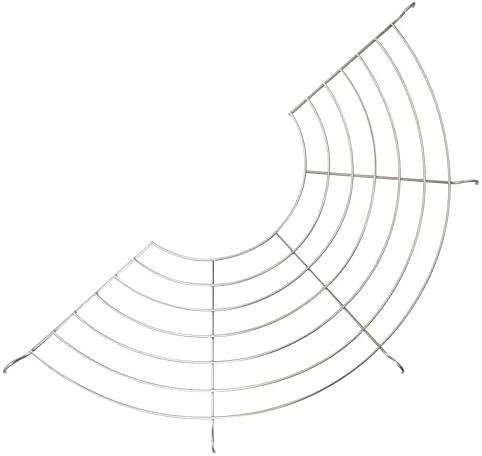
A tempura rack generally comes in the shape of a simple crescent-shaped metal grate that clips directly onto the rim of your wok. It serves one critical function: drainage. Immediately transferring freshly fried items from the oil to the rack allows excess oil to drip back into the wok. This prevents the fried food from becoming soggy and heavy. Without a rack, food sits in a basket or on a plate, where residual oil pools and quickly saturates the crust. Using Tempura Racks Oil Skimmers together ensures that the oil is quickly removed both from the food and from the cooking area.

Why Oil Skimmers are better than Slot Spoons

While a slotted spoon can do the job for small items, a proper Oil Skimmers tool, more precisely a spider strainer, is by far more effective for wok deep-frying. The wide mesh basket of this skimmer is designed to:

  • Remove Debris: Scoop up small burnt bits of batter and crumbs that float in the oil as quickly as possible. This keeps the oil clean, stopping debris from darkening and tainting the flavor of successive batches.
  • Safe Retrieval: Its large surface area means you can scoop up big portions of fragile food items such as shrimp or vegetables without harming their coats. This serves you quicker by retrieving more in one scoop and saves your food from overcooking.

Beyond the Basics: Combining Tempura Racks & Oil Skimmers

The secret to superior results is efficiency: fry a batch,remove the food with the Oil Skimmers tool, placing it immediately on the Tempura Racks while it drains. Take the skimmer, clean the oil, and then drop the next batch in. This will keep the oil at the right temperature and clean throughout the process. These two simple tools will dramatically elevate the quality and safety of deep-frying in your wok.

read more: The Complete Guide to Cleaning and Storing Your Carbon Steel Wok

Wok Racks and Steamers for Dumplings and Buns

The wok is infinitely more than a stir-fry pan; it is a holistic vessel, designed for braising, deep-frying, and, importantly, steaming. To achieve these delicate dishes dumplings, buns, fish you needed ancillary components. More specifically, what you needed were the right Wok Racks and Steamers. These accessories opened up the wok to function much like a very large, high-performance steamer, ensuring consistent moisture and heat across every level.

Why Steaming in a Wok Works Best: Steaming Efficiency

The concave shape of a wok naturally promotes steaming efficiency: as water boils in the bottom, the wide metal walls catch the steam and circulate heat evenly around the food positioned over the water. Using a dedicated Wok Racks and Steamers setup realizes this shape, whereas with a flat pot, most of the steam and heat are lost to its straight sides.

Essential Wok Racks and Steamers: Bamboo vs. Stainless Steel

When piecing your steaming rig together, you are mainly concerned with two basic materials:

  • Bamboo Steamers: These multi-tiered baskets are the traditional choice for soft foods like bao (buns), dumplings, and tamales. The bamboo is highly absorbent, meaning it naturally prevents condensation (water drips) from falling back onto the food, keeping buns from becoming soggy. They fit perfectly over the wok’s opening, requiring a Wok Racks and Steamers setup to keep the basket above the water.
  • Stainless Steel Racks: These are generally utilized for more robust steaming, round wire racks, or cross-racks that may sit directly inside the wok. They are great for placing plates of fish or vegetables above them to make sure the food is bathed in steam without being immersed in water. Their strength and the ease with which they are cleaned make them versatile Wok Racks and Steamers.

Perfect Dumplings and Buns: Water Level and Separation

Water level and separation are important for perfectly steamed dumplings and buns. When using a bamboo steamer, the water in the wok should come just below the base of the steamer. Line the bottom of the steamer with parchment paper or cabbage leaves to prevent sticking never rely on the bare bamboo. When steaming a whole fish on a stainless steel rack, it’s all about the height of that rack.

It has to be high enough for the platter to clear boiling water, but low enough to trap steam effectively beneath the dome of the wok, or under a lid. Having the right Wok Racks and Steamers in one’s kitchen setup isn’t optional; it’s how you get professional, moist, and tender results all the time.

Wok Covers Stir Frying: Essential or Optional?

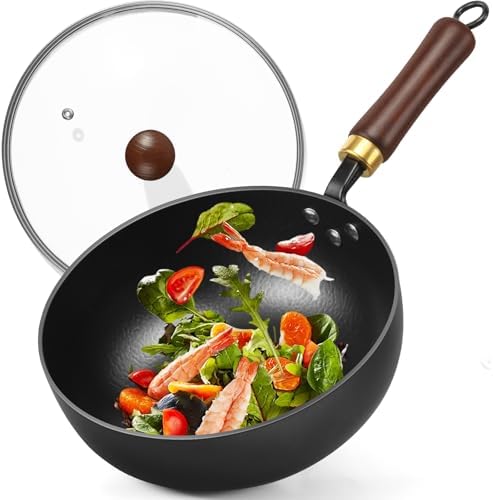
The essential question, whether to use Wok Covers for stir-frying, is critical to achieve the goal of authentic Asian cuisine. The signature image of stir-frying is synonymous with high heat, energetic tossing, and an open top. But the wok can be so much more than a stir-frying pan, and a lid may suddenly become very handy when switching to another method, such as braising, steaming, or deep-frying.

Why Wok Covers Stir-Frying is a Bad Idea: Traps Moisture

Wok Covers Stir-Frying should generally be avoided because a lid traps moisture. Stir-frying requires extremely high, dry heat for the attainment of wok hei (the smoky aroma) and to caramelize ingredients fast. When you cover the wok, steam rapidly builds up. This steam immediately brings down the overall temperature, turning your fast-paced stir-fry into a slow, soggy stew. You lose the vibrant texture of your vegetables and the crispy exterior of your protein. An open top lets the moisture dissipate, holding the environment at high heat.

Wok Covers: Not Just for Stir-Frying: Key to Versatility

The wok lid is essential when you use your wok for anything other than a quick stir-fry. Knowing when to use your Wok Covers Stir-Frying tool for other methods is key to versatility:

  • Steaming: The most common non-stir-fry use. Steaming dumplings, fish, or vegetables requires trapping moisture. The lid turns the wok into a high-powered steamer.
  • Braising/Stewing: In the preparation of curry and Chinese stews, which involve the evaporation of liquids, the lid covers the vessel to enable the simmering of the food evenly over a period of time.
  • Controlling Oil Splatter: Although not for continuous use, a lid can be placed on the wok momentarily in instances of deep-frying to control violent splatters of oil, protecting your cooktop.

Choosing the Right Wok Covers: Domed Shape

Wok lids are available in either domed or flat shapes. In general, a domed wok cover is preferable since it keeps condensation higher above the food, not allowing water droplets to drip into your ingredients. This is especially true for steaming. Ultimately, your Wok Covers Stir-Frying tool is a must-have for your wok armory. Its chief end, however, is not for stir-frying. Use it to steam, to braise, to contain the mess, and take it off when the oil is sizzling hot and the tossing begins.

Best Wok Ring and Stand Solutions for Electric and Induction Cooktops

Round-bottom woks were never intended for the flat glass of modern cooktops. Without the focused, intense heat of a gas burner, achieving true stir-fry results on an electric or induction stove requires a bridge. This is where the Wok Ring Electric Induction stand becomes indispensable. The right ring or stand solves the basic problem of stability and heat transfer that enables the proper centering and heating of the wok.

Why Stability is Key for Electric Cooktops

It is unsafe and inefficient to use a traditional, deeply curved wok directly on a smooth electric coil or ceramic glass cooktop. The wok wobbles and is likely to spill, and the small point of contact prevents adequate heat transfer. A high-quality Wok Ring Electric Induction stand provides a stable base in its own right. On flat electric resistance coils, you want a heavy, wide ring that safely cradles the wok and keeps it level, often lifting the base just slightly above the coil itself for even heat distribution.

Induction Cooktops Require Special Rings

Induction stoves pose a unique challenge because induction technology requires magnetic contact, and many of these standard stainless steel rings block the magnetic field and render the wok unusable. Wok Ring Electric Induction solutions for these cooktops must meet two strict criteria: magnetic compatibility and heat focus.

One popular, and effective, solution is a carbon steel wok with a flattened, wide bottom (sometimes called a domed bottom) that sits directly on the induction zone. If you want a truly round-bottomed wok, though, you need a specialized ring made of non-magnetic material that still manages to safely contain the wok. Some induction manufacturers offer proprietary indented cooktops that solve this problem directly, but a universal Wok Ring Electric Induction stand is usually the easier path.

read more: How to Identify a High-Quality Wok: Expert Buyer’s Guide

Choosing the Best Wok Ring

For selecting a stand for your flat surface, consider material and design first. For any surface, the stand should be sturdy, well-ventilated, and easy to clean.

  • For Electric: Find a heavy, cast-iron or thick stainless steel ring that offers excellent thermal mass and stability.
  • For Induction: Seek thin, non-magnetic rings made of silicone or rubber for stability only, together with a specially designed flat-bottomed wok, or purchase a commercial-grade, external induction unit designed specifically for round-bottom woks.

A correct Wok Ring Electric Induction setup is not a compromise, but rather an upgrade that brings the efficiency and precision of Asian cooking to the modern kitchen.

Classic Meals

- Advertisement -