Home Blog Page 45

The Top 10 Chef’s Knives Under $70 (Expert Reviews)

Determining a good, reliable chef’s knife that doesn’t break the bank involves trade-offs between steel quality, handle ergonomics, and overall durability. Our full review focuses on the highest performing models under $70 to show that professional-level cutting precision is achievable without committing to a four-figure budget.

We have studied construction and edge geometry with meticulous care and scrutinized user feedback to provide the top 10 value-oriented workhorses your home kitchen cannot afford to be without if efficiency and sharpness are your top priorities.

Our Top 10 Budget Chef’s Knives: Performance Under $70

1. Victorinox Fibrox Pro 8-Inch Chef’s Knife

This 8-inch chef’s knife has high-carbon stainless steel stamped construction and is often cited by culinary professionals as the best entry-level choice. Its high point is excellent initial sharpness and ease of maintenance, but the real star of the show here is its patented Fibrox handle a non-slip, ergonomic grip that reduces hand fatigue, especially during extended prep sessions. It’s an ideal workhorse that happens to also be NSF certified for sanitary food handling.

  • An excellent choice for butcher work, this breaking knife was made to easily break down meat into smaller roasts and pie…
  • A superior and lightweight Swiss made knife with a high-carbon stainless steel edge. Easy to clean, extremely sharp and …
  • Contemporary, textured handle with a non-slip grip — even when wet. The handle is ergonomically designed to help minimi…

2. Matsato Chef Knife – Japanese Style

This Japanese-style chef’s knife offers a unique aesthetic and performance profile that often appeals to those who prefer the geometry of a Santoku or Gyuto over traditional Western shapes. While details vary, this knife has generally featured a high-carbon stainless steel blade designed for thin, precise slicing and chopping. Its balanced design puts an emphasis on control a key characteristic for cooks who favor a vertical chopping motion rather than the Western rocking technique.

  • Chef knife for every kitchen | Whether you are a home cook or a professional chef, every kitchen needs a Matsato knife. …
  • Well-balanced craftsmanship | solid oak handle crafted from premium quality materials. The Matsato Kitchen knife makes c…
  • Chef knives | The Matsato Japanese Steel kitchen knife was hand-crafted using traditional styling and techniques. By com…

3. COKUMA 3-Piece Kitchen Knife Set (B09NW1J2NW)

Falling into the ultra-budget category, this set includes an 8-inch chef’s knife, a utility knife, and a paring knife all in one purchase targeting maximum value and utility. The knives themselves are made from high-quality German stainless steel, with a full-tang construction secured by three rivets in the ergonomic plastic handle to provide strength with a comfortable grip suitable for everyday household use.

  • 1. Cokuma Advantage: Combined with the Modern Garden-Style Workshops and innovation design, Cokuma is expanding worldwid…
  • 2. Kitchen Knife Set Includes: 8 Inch Chef Knife, 4.5 Inch Utility, 4 Inch Paring Knife and three matching knife sheath….
  • 3. German High Quality Steel: Precision-forged from imported premium quality, high-carbon German steel-3CR13MOV. which i…

4. Amazon Basics Classic 8-Inch Chef Knife

The Amazon Basics model represents the quintessential entry-level, no-frills chef’s knife that appeals specifically to the beginner or college student setting up a first kitchen. Its design follows the classic triple-rivet aesthetic, with an ergonomic handle and full-tang, high-carbon stainless steel blade that offers enough weight and balance for basic chopping and slicing tasks at an exceptionally low price point.

  • This 8- inch chef’s knife is a versatile tool for cutting, chopping, dicing, mincing and more
  • High carbon stainless steel blade with a satin finish that is stain, rust and pit resistant
  • Forged stainless steel construction with a full tang, 8” blade and three rivets

5. Brewin CHEFILOSOPHI Chef Knife

The CHEFILOSOPHI chef knife represents an aesthetic step up in the budget category, thanks to its striking Pakkawood handle—known for its moisture resistance and rich, laminated appearance. The blade itself is forged from German high-carbon stainless steel, providing good edge retention and durability. That makes this knife an attractive choice for professionals who want a professional appearance and comfortable, full-tang weight distribution without paying a premium price.

  • DESIGN PHILOSOPHY – The Chefilosophi Series professional kitchen knife set from Brewin combines cutting edge kitchen tec…
  • RAZOR SHARP WITH DURABILITY – This stainless steel knife set features rock solid design crafted from durable materials; …
  • PREMIUM QUALITY – Each chef knife set has undergone stringent quality inspection and hundreds of hours of development wi…

6. HENCKELS Solution 4-Inch Paring Knife

Though specifically a paring knife, its inclusion represents the need for quality forged steel in auxiliary tools within a budget. This HENCKELS Solution knife is precision-stamped from single pieces of high-quality stainless steel with a lightweight, ergonomic polymer handle. Its design emphasizes maneuverability and control for delicate tasks like peeling, coring, and trimming, offering Henckels’s known quality in a small, essential form factor.

  • ULTRA-SHARP BLADES: Superior professional-level sharpness that ensures precision cutting.
  • THE LAST KNIFE YOU’LL EVER NEED TO BUY: German Engineered Knife Informed by over 100 Years of Mastery. HENCKELS knives a…
  • EFFORTLESS CUTTING: Enjoy easy meal prep and paper-thin cuts with minimal effort with this lightweight, easy-to-use knif…

7. Cooks Standard 8-Inch Chef’s Knife

This 8-inch chef’s knife boasts a robust blade of German high-carbon stainless steel and attention to a balanced, ergonomic feel. The knife features a synthetic ergonomic handle attached to a full tang for extra stability and safety in hard use. Its overall construction delivers a reliable, well-weighted feel suitable for cooks who prefer a standard Western blade profile with strong heel support.

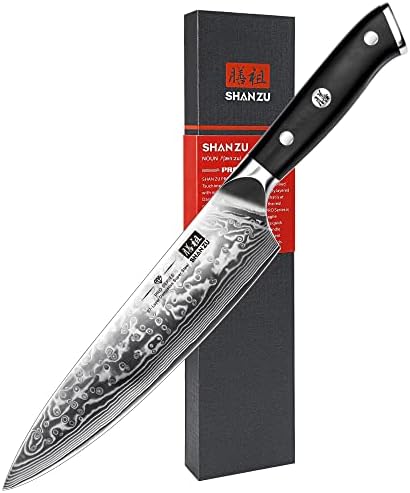
8. SHAN ZU Damascus Chef Knife

Representing the premium end of this under-$70 class, this knife boasts a striking 67-layer Damascus pattern over its high-carbon stainless steel core, combining the best of both worlds: great looks and great performance. The elaborate construction provides supreme sharpness and resistance to discoloration, while its ergonomic G10 handle ensures a secure and moisture-resistant grip, making it an outstanding investment for cooks seeking premium looks combined with functional artistry.

  • Japanese Steel Knife Core, Super Sharp: SHAN ZU chef’s knife core is made of 10Cr15Mov Damascus Japanese steel that has …
  • REAL Damascus Knife, not Lazer Etched: SHAN ZU Damascus chef knife layering sheets of carbon steel, and applies excessiv…
  • A total of 67 Layers Steel, Long-Lasting Use: SHAN ZU Damascus chef knife forged by 67 layer sheets of steel greatly enh…

9. MOSFiATA 8-inch Chef’s Knife

The MOSFiATA model is one of utility, basically, since it has a high-carbon stainless steel blade, and many retailers sell it with extras such as a finger guard in the gift box, even including a sharpener. Its construction is solid, with an ergonomic Micarta handle, known for durability and comfort in grip, hence being very user-friendly. This knife will balance the sharpness, comfort, and additional value well, catering well to the enthusiastic home chef.

  • 【High Carbon German Stainless Steel Laser-engraved Pattern(Not Damascus Pattern )】 MOSFiATA 8 inch pro chef’s knife is m…
  • 【Razor Sharp Edge & Anti-Corrosion, Anti-Tarnish Blade】Processed with the unique polishing technology and hand sharpened…
  • 【Full Tang Construction & Ergonomic Design】 MOSFiATA ergonomic knife handle is made of santoprene for comfort and polypr…

10. Victorinox Fibrox 10-Inch Curved Breaking Knife

Although this Victorinox is technically a breaking/cimeter knife, this knife is sometimes utilized as a heavy-duty chef’s knife for large cuts of protein, capturing the brand’s ethos on usefulness. Similar to the 8-inch version, it includes the no-slip Fibrox handle and durable, curved stainless steel blade for long, smooth cuts. Larger and with a profile more curved than others, it’s ideal for breaking down bigger vegetables or taking care of serious food quantities, adding versatility to a budget kitchen.

  • For home chefs & professionals. This Fibro Pro chef’s knife has been the top choice of both home chefs and professionals…
  • Fit for all tasks. Designed to handle kitchen tasks both big and small, This durable knife’s razor sharp and laser-teste…
  • Easy handling. Each knife features an ergonomic handle made from thermoplastic Elastomer (TPE) for a non-slip grip – eve…

Conclusion: Value That Lasts

The competition is brutal, and chef’s knives under $70 must wrestle with the best of them; still, these ten models will prove that professional quality, balance, and durability can be available for any home cook. Investing in any one of these budget champions is the best way to improve your culinary skill without affecting your budget.

Victorinox Fibrox Pro: Why This Chef’s Knife is the Industry Standard

Any serious cook will tell you, the best knife is not the fanciest, but one which you know and can trust day in and day out to get the job done without slipping or causing fatigue. The Victorinox Fibrox Pro 8-inch chef’s knife has earned its reputation as the undisputed value champion in professional kitchens around the world. This is much more than a humble kitchen implement; it’s a precision piece of equipment where flawless function, safety, and hygiene are far more important than aesthetic embellishment. Grasping why this is the go-to knife for culinary schools and professional chefs alike reveals a true genius behind its deceptively simple design.

  • For home chefs & professionals. This Fibro Pro chef’s knife has been the top choice of both home chefs and professionals…
  • Fit for all tasks. Designed to handle kitchen tasks both big and small, This durable knife’s razor sharp and laser-teste…
  • Easy handling. Each knife features an ergonomic handle made from thermoplastic Elastomer (TPE) for a non-slip grip – eve…

Handle Ergonomics: The Non-Negotiable Grip

The most defining feature of the Victorinox Fibrox Pro is its distinctive handle, made from a patented TPE material known as Thermoplastic Elastomer. The handle is not designed to be pretty but for safety and to last.

  • Expertise: This ergonomic design is crucial in professional settings where hands are constantly wet or greasy. The surface is textured, slightly flexible to provide a non-slip grip, greatly reducing the risk of accidents and minimizing the fatigue felt after hours of intensive chopping. Its light weight shifts the balance a bit toward the blade, assisting with that rocking motion ideal for mincing herbs and dicing vegetables.

Blade Performance: Tapered and Tapped

The blade itself, 8 inches, is made of high-carbon stainless steel and is stamped that is, cut from a sheet of steel rather than forged. Some regard stamped blades as being somewhat inferior, but Victorinox uses a superior, tapered edge that helps make the knife perform so well.

It is known to take an extremely sharp edge right out of the box and, more importantly, being very easy to resharpen. Ease of maintenance is, therefore, a major factor in the wide adoptions across institutions. The narrow, slightly flexible profile excels at precision tasks and gliding through proteins and dense vegetables, proving that superior function does not require a bulky, heavy forging.

Certifications and Trust: Swiss Quality

The Victorinox brand was established in Switzerland back in 1884, and quality for them means an unquestionable commitment to safety and durability.

  • Trust & Safety: The Fibrox Pro is NSF certified to meet or exceed the strict public health standards for sanitation. That certification means the handle is non-porous and will not harbor bacteria, an important feature that any surface must possess when coming into contact with food. What’s more, the knife comes with a lifetime commitment against defects in material and workmanship to offer complete peace of mind that your investment will last. This combination of Swiss precision with professional certification is why the Victorinox Fibrox Pro earns its place as the foundational piece of quality cutlery for the budget-conscious expert.

Caring for Specialty Blades: Serrated Knife Sharpening and Cleaver Maintenance

While the care routine for a chef’s knife is usually simple, blades for specialty purposes, such as serrated knives and cleavers, pose unique maintenance challenges. Their respective geometries one with a scalloped edge, the other with sheer mass demand special tools and techniques. The process of mastering serrated knife sharpening and cleaver maintenance enables these specialized tools to remain functional and last longer, which is an important task for any well-equipped kitchen.

Find the specialized honing rods and maintenance products for your specialty blades here:

Serrated Knives: The Round Rod Requirement

Serrated knives, which are generally used for bread or tomatoes, don’t become dull like straight-edge blades. Their scalloped edge remains somewhat effective even when the points wear down. It’s pointless and damaging to try using a flat stone on them.

  • Expertise: It requires a special, conical or cylindrical ceramic or diamond rod. The rod needs to fit into the concave curve of the serrations perfectly. You sharpen only the bevelled side of the blade, pushing the rod gently away from the handle and following the curve of each individual serration.
  • Maintenance: Once the bevels are sharpened, lay the flat, un-bevelled side of the blade on a flat fine stone and lightly run it across once or twice. This removes the burr created by sharpening the bevels, completing the Serrated Knife Sharpening Cleaver Maintenance process for the serrated edge.

Cleavers: Toughness Over Fineness

Cleavers especially those for splitting bone or dealing with large cuts emphasize toughness and mass over a razor-fine edge. Care for them is directed at strength and rust prevention.

  • Authoritativeness: Cleavers often require a thicker, more obtuse edge angle of 25 to 30 degrees to avoid chipping upon impact. Sharpening should start with a coarser grit stone, around 400 to 800, to maintain that durability, and then should be quickly honed with a steel. Crucially, owing to their size and the fact that they are frequently exposed to protein and moisture, they are highly prone to rust and pitting.
  • Prevention: Always wash and dry a cleaver. Yes, for high-carbon cleavers, applying a thin layer of mineral oil to the blade after use is non-negotiable for proper cleaver maintenance.

Storage: Protecting the Blade and the User

Because of their weight and shape, cleavers should never be stored in a drawer, as they will damage other knives or present a safety hazard. Serrated knives should always have a blade guard to protect them from becoming dull and to prevent accidents. For maximum longevity, prioritizing dedicated safe storage is paramount.

Conclusion: Customizing Your Care

Specialty blades require specialty care. By adapting your routine to the unique geometry of the serrated edge or the sheer mass of the cleaver, you ensure every knife in your collection performs its intended function reliably.

How to Safely Clean a Knife Handle: Wood, Synthetic and Composite Materials

While much attention is given to maintaining a knife’s sharp edge, the handle often gets overlooked. A clean and well-maintained handle is important for hygiene and grip and the general lifespan of your cutlery. Improper cleaning will lead to material deterioration, cracking, or bacterial infestation that compromises safety and aesthetics. Knowing How to Safely Clean a Knife Handle by type of material will allow you to protect your investment while keeping your kitchen sanitary.

Find recommended knife care products, including wood conditioners and gentle cleaners, here:

Wood Handles: Gentle Care is Key

The wooden handles, often prized for their natural beauty and feel, demand the most care in cleaning. They are sensitive to moisture, harsh chemicals, and temperature extremes.

  • Expertise: Never put a wood-handled knife in a dishwasher. The prolonged exposure to hot water, aggressive detergents, and high-heat drying cycles will strip natural oils, causing the wood to dry out, crack, and potentially harbor bacteria. Always hand wash immediately after use with mild soap and lukewarm water.
  • Maintenance: After washing, dry the handle thoroughly with a soft cloth. If the handles are wooden, periodic conditioning with food-grade mineral oil or a specialized wood conditioner will prevent drying and keep the luster. This keeps the wood supple and helps repel moisture very important in How to Safely Clean a Knife Handle.

Synthetic Handles: Durable and Easy-Care

Handles made from synthetic materials such as G-10, Micarta, plastic (such as polypropylene, POM), and others with rubberized compounds are generally the easiest to clean and maintain.

  • Authoritativeness: These materials are non-porous and highly resistant to moisture, chemicals, and impact. They can generally withstand more aggressive cleaning than wood. However, while many synthetic handles are technically “dishwasher safe,” it’s still a best practice to wash them by hand. The high heat and impact inside a dishwasher can still cause fading, warping, or loosening of scales over time.
  • Cleaning: Mild dish soap and warm water. For food residues stuck between the textured surfaces, gently scrub with a soft brush. Always rinse well and hand dry, paying more attention to the handle if it has metal rivets or bolster.

Composite Handles: A Blended Approach

Composite handles often combine layers of natural fibers, such as linen or paper, with resin; the combination provides strength and cosmetic appeal. Examples include Micarta and carbon fiber.

  • Trust & Safety: Generally, these materials are more stable than natural wood but can still be affected by extreme conditions. Hand washing with mild soap and warm water is always the safest approach. Avoid using abrasive scrubbers or harsh chemical cleaners because they can dull the finish or degrade the resin. In the case of highly textured composites, a soft-bristled brush is effective in removing entrapped food particles. Proper care will go a long way in preserving the handle’s structural integrity and aesthetic appeal, ensuring you know how to safely clean a knife handle of any type.

Conclusion: Washing Your Hands for Life

Whatever the material involved, washing by hand and complete drying are the golden rules for cleaning any knife handle. Such a gentle approach will prevent damage, preserve the handle’s aesthetic appeal, and make it a hygienic tool to last for years of safe cooking.

read more: Amazon Basics Chef Knife: Unpacking the Value of an Ultra-Budget Full Tang

The Benefits of a Leather Strop in Achieving a Razor-Sharp Mirror Finish

After sharpening a knife through a progression of whetstones, many cooks at home stop just short of true razor sharpness. The final, almost magical step in arriving at an edge that slices effortlessly through paper and shaves hair from your arm is very often overlooked: stropping. Understanding the Benefits of a Leather Strop is key for anyone looking for a really refined, mirror-polished edge that performs to the best of its capability. This simple tool raises a sharp edge to a completely new degree of keenness.

Take your sharpening to the next level with a premium leather strop and compounds:

What is Stropping? Micro-Burr Removal

A microscopic burr a small, wire-like fragment of metal often remains on the cutting edge even after the finest grit whetstone. Invisible to the naked eye, this burr compromises ultimate sharpness.

  • Expertise: Stropping works by gently pulling the blade across a leather surface, often impregnated with a fine abrasive compound, at a very low angle. This effectively polishes away any remaining burr and straightens the very apex of the edge. A very clean, stable, and fine cutting edge that feels dramatically sharper than a stone-finished edge alone results. This mechanical advantage is one primary reason for the Benefits of a Leather Strop.

The Mirror Finish: Aesthetic and Functional

One of the most satisfying outcomes of stropping is the mirror-like polish it imparts to the bevels of the knife. This isn’t just for show.

  • Authoritativeness: A mirror finish greatly reduces friction during the cut. A rough, scratchy bevel one left by coarser stones creates drag, pushing its way through food. In contrast, a highly polished surface slides through material with little to no resistance, enhancing the cutting efficiency of a knife and making delicate tasks like slicing fish or soft vegetables feel effortless. This reduced friction will also tend to prevent food from sticking to the blade.

Edge Durability: Stabilization

Beyond initial sharpness, stropping contributes to the overall durability of the refined edge.

  • Trust & Safety: Proper stropping removes the fragile micro-burr and realigns the apex of the edge, so it becomes more stable. This means the edge will not prematurely roll or chip during use. While stropping doesn’t make a dull knife sharp that’s what the stones are for it takes an already sharp edge and optimizes it for both performance and resilience. For a truly superior edge, understanding the full Benefits of a Leather Strop is not optional.

Application: The Finishing Touch

Stropping is always the last step in sharpening, done after the highest grit stone. It can also be used as a quick touch-up between sharpening sessions to realign a slightly fatigued edge without removing significant material.

Conclusion: The Final Sharpness

A leather strop is not optional for those who demand the very best from their knives. It takes what was merely a sharp blade and elevates it into a precision instrument that can produce a razor-sharp, mirror-finish cut to make every task less effortful and more pleasurable.

Read more: PAUDIN Nakiri Knife – Review of the 7-Inch Vegetable Cleaver

Why Your Kitchen Knife Gets Dull So Fast: The Common Habits You Need to Break

Few things are more vexing in the kitchen than a knife that loses its keen edge too quickly. You might blame the steel, or even the sharpener, but all too often, the culprit isn’t the knife itself it’s your daily habits. Understanding why Kitchen Knife Gets Dull means recognizing and breaking common practices that prematurely degrade the delicate cutting edge. Just a few simple adjustments can make a dramatic difference in the life of your sharpness and overall cooking experience.

Upgrade your cutting board and sharpeners to protect your edges better:

Cutting Surface: The Underrated Culprit

The most frequent offender in dulling a knife is the cutting surface. Hard surfaces, such as glass, ceramic, stone, or even hard plastic, are abrasive.

  • Expertise: Every time your knife strikes these unforgiving surfaces, the microscopic edge is rolled, bent, or chipped. This isn’t theory, but professional culinary schools and knife manufacturers alike universally recommend only wooden or soft plastic HDPE cutting boards. These materials “give” slightly under the blade, allowing the edge to slice through food without directly impacting a harder surface, hence preserving its sharpness. If your Kitchen Knife Gets Dull Fast, check your board first.

Cleaning Improperly: Dishwashers Are Enemies

While convenient, dishwashers are perhaps the worst environment for a quality knife.

  • Authoritativeness: A dishwasher’s high heat, harsh detergents, and aggressive water jets cause a number of problems. First and foremost, these things can damage the handle material be it wood, composite, or plastic. The turbulent atmosphere of the dishwasher also allows knives to bang around against other utensils, which creates nicks and rolls on the delicate edge. In addition, the extended exposure to moisture encourages rust, especially on high-carbon blades. Always wash your knives by hand immediately after use and dry them completely to avoid corrosion and edge damage.

Poor Storage: The Vulnerability of Blade

How you store your knives when not in use considerably affects their edge retention.

  • Trust & Safety: Throwing knives into a cluttered drawer is a sure way for them to dull fast. Edges clash against other metal tools, chipping and rolling. Traditional wooden knife blocks, while appearing safe, also lead to friction as blades slide in and out. Among the best ways to prevent a Kitchen Knife Gets Dull Fast because of improper storage are magnetic strips zero contact or individual blade guards. These protect the edge from both accidental impacts and friction.

Misuse and Neglect Go Beyond Cutting

Using a knife for tasks it wasn’t designed for, such as prying open cans or scraping off the board with the sharp edge, compromises the integrity of that knife greatly. Neglecting the regular honing also allows the edge to degrade to a point where only extensive sharpening can restore it. A dull knife is often a symptom of neglected care.

Conclusion: Simple Changes, Lasting Sharpness

Your knife’s sharpness reflects directly on your habits. Adopt proper cutting surfaces, hand washing, safe storage, and respectful use to greatly reduce how fast a kitchen knife gets dull, making the cooking experience much safer and more enjoyable.

Classic Meals

How to Steam Milk at Home Without a Fancy Machine

If you think you need a $2,000 espresso machine to produce rich milk for lattes, forget about it. Steaming milk at home without a...
- Advertisement -