Home Blog Page 36

Linen & Textiles: Selecting and Caring for High-Quality Napkins & Cloths

There is a tactile difference between a meal served with a paper towel and a meal served with a cloth napkin. One is a necessity; the other is a ritual. However, many people avoid using good textiles for daily meals because they are terrified of the maintenance. They imagine high dry-cleaning bills and hours spent ironing.

This fear leads people to buy “easy-care” synthetics that feel slippery and don’t actually dry your hands. The truth is that real linen and cotton are workhorse fabrics. They have been used for thousands of years specifically because they are durable. If you know how to select the right weight and how to wash it properly, a good set of napkins can last for decades.

Here is the practical guide to building and maintaining a textile collection.

Material Matters: Flax vs. Polyester

The first rule of buying table linens is to check the tag. If you see the word “polyester,” put it back. Synthetic fibers are hydrophobic, meaning they repel water. When you try to wipe your mouth with a polyester napkin, it smears the mess rather than absorbing it.

You want 100% natural fibers. Linen (made from flax) is the gold standard because it is highly absorbent, naturally antibacterial, and releases stains easier than cotton. Cotton is a good second choice, provided it is a thick weave. These natural fibers get softer with every wash, whereas synthetics just pill and degrade.

Understanding Weight (GSM)

When shopping online, photos can be deceiving. A thin, cheap napkin looks exactly like a thick, luxurious one in a picture. To judge quality, you need to look for the GSM (Grams per Square Meter).

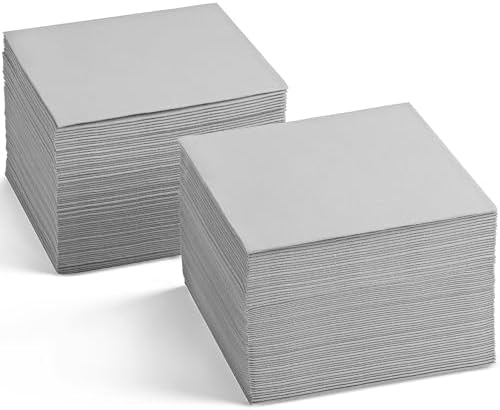
For a dinner napkin, you want a GSM of at least 160 to 200. Anything lower than that will feel flimsy, like a handkerchief. A heavier napkin stays on your lap better and feels more substantial in the hand. For tablecloths, a heavier weight helps the fabric drape over the table edges elegantly without fluttering every time someone walks by.

read more: Open Shelving Styling: How to Curate Functional Art in Your Kitchen

The Washing Routine

Linen does not need to be treated like a delicate flower. In fact, linen loves water. The more you wash it, the stronger the fibers become.

Wash your linens in cool or warm water with a mild detergent. The most important rule is to avoid fabric softener. Softeners coat the fibers in a waxy substance to make them feel slick, but this destroys the absorbency of the fabric. If you want them soft, simple agitation in the machine is enough. Also, never use chlorine bleach on vintage white linens; it weakens the fibers and can actually cause them to yellow. Oxygen-based bleach is the safer alternative.

The Wrinkle Debate

The modern table does not require stiff, starched, hotel-style linens. We are moving towards a “lived-in” aesthetic.

If you hate ironing, you are in luck. The natural texture of linen that slightly crumpled, wavy look is part of its charm. To achieve this without looking messy, take the linens out of the dryer while they are still slightly damp. Smooth them out with your hands on a flat surface and let them air dry the rest of the way. Gravity does the work for you. If you must iron, do it while the fabric is damp; dry linen is almost impossible to press flat without scorching it.

Dealing with Stains

If you use good linens, they will get stained. Red wine, oil, and tomato sauce are inevitable. The key is speed.

Do not wait until the next morning. If a spill happens, flush it with cold water immediately. Hot water sets protein stains, so always start cold. For oil stains, a dot of plain dish soap rubbed into the spot before washing works wonders. The goal is to lift the oil before it bonds with the fiber.

The Verdict

Investing in high-quality linen is an investment in the daily experience of eating. It elevates a Tuesday night pasta dish into a proper dinner. By choosing natural fibers and ignoring the perfectionist urge to iron everything, you make luxury functional for everyday life.

read more: The Art of Tablescaping: A Seasonal Guide to Dining Decor

The Art of Tablescaping: A Seasonal Guide to Dining Decor

We eat every day, but we do not “dine” every day. The difference between a dinner on a Tuesday night, and a dinner to remember, has less to do with the recipe than with the ambiance.

“Tablescaping” is the art of setting a scene. It has nothing to do with displaying china or making napkins look like swans. It has everything to do with telling your guests that they are important. It is a way of creating a tangible space that will enable a conversation to continue well beyond the time that the food has been consumed.

read more: Open Shelving Styling: How to Curate Functional Art in Your Kitchen

Here’s how to dominate the table all year round:

The Rule of Sightlines

One of the biggest decorating don’ts at the dinner table is the “Wall of Flowers.” You set up this huge floral arrangement right in the middle. It’s impressive until diners arrive and sit down. Then you can’t see the person opposite you. This leads to a dysfunctional conversation because the link is obstructed.

“The key to creating centerpieces,” interior designer Kaki Borton writes, “is to go low, or go high.”

The decorations should either be below eye level think about bowls of fruit or moss, or glasses of flowers or very tall and slender, such as candelabra that loom above heads. If you find yourself leaning on one elbow to ask someone to pass you the salt, table-setting design is not your friend.

Texture, Not Color Addition

A flat surface is like a cafeteria table. Texture is needed if the table is to be luxurious. Contrary to the required color combination, texture is much more essential.

Begin with linens. The slightly wrinkled tablecloth is more welcoming and contemporary than a starched white tablecloth. The tablecloth means “relax.”

Add layers. If you do use a tablecloth, forgo placemats and add a charger plate. If your table is wooden and you do not use a tablecloth, start with a table runner. This will help center everything.

Mix materials. If your plates have a smooth ceramic texture, you should use placemats made of woven materials and metal napkin rings. Such contrast between rough and smooth elements creates a visually interesting effect in terms of reflecting light.

Lighting: The Mood Manager

You can have the finest food that you’ve ever tasted, and you can have the most gorgeous flowers, but if you use bright overhead lighting to light the room with LEDs, the ambience will be clinical.

The overhead lighting is for cleaning, not for dining. Turn the big lights out. Use table lamps on a sideboard, or fall back on plenty of candles.

A word on candles: They should be unscented. This is not negotiable. A vanilla or lavender scent does not belong in competition with either the scent of roast chicken or wine. Beeswax candles or white tapers are just fine. The flickering light adds motion and helps all of the people around the table to look better.

A Seasonal Framework

A set of dishes is not required for each season. Only the organic part has to change.

Spring: Keep it loose. Use bud vases with single stems of tulips or daffodils rather than bouquets. Pastel-colored napkins and glass add a light feel.

Summer: Embark on making it durable. This season celebrates al fresco dining. It requires heavy glasses that won’t upend due to windy conditions. Add elements of fresh citrus, lemons, and limes direct tabletop decor.

Autumn: Bring the outdoors in. Use dried leaves, branches, and dark colors. Replace white candles with bright red or burnt orange. It is also the season when you can go for heavy texture materials, like velvet ribbons or wool mats.

Winter: It’s a season of warmth and reflection. You don’t need to resort to cheesy winter themes. Think highly reflective materials—brass, silver, and gold reflecting candlelight. Evergreen branches are free. Cut a few in your yard to place down the center of the table.

The Personal Touch

To conclude, the key component of a table arrangement with the greatest effect on an event environment, costing nothing, is the place card.

Placing a name on a small index card accomplishes two things. First, it obliterates “the Where do I sit?” dance that takes place at every dinner party. But perhaps more importantly, it says to your guest, “I set aside this place for you alone. I wanted you to feel like you belonged here.”

The art of hospitality.

read more: The Psychology of Space: Creating Flow in a Luxury Kitchen

The Psychology of Space: Creating Flow in a Luxury Kitchen

We’ve all known what it means to be in a kitchen that just didn’t feel right. Maybe it was filled with high-end marble and high-end appliances, but it was just too small the minute two people entered it. You were constantly ducking to avoid the dishwasher handle or running into the island just trying to grab a glass of water.

This is not a failure of budget, this is a failure of psychology.

High-end design involves the concept of “flow,” which represents the unseen force that leads people throughout a space. Flow represents the distinction between a kitchen that photographs well and a kitchen that functions well. When discussing the psychology of space in a high-end kitchen, what is being described is the concept of reducing friction. The objective is to provide a space whereby the mind does not have to consider movement; the body will intuitively know where to go.

read more: The Evolution of the Toaster: From Fire Hazards to Smart Tech

The Death of the Triangle

Architects for decades worshipped the so-called “Work Triangle” configuration from the sink, through the stove, to the refrigerator. There was a reason for the worship in the 1950s. The kitchen was a small isolated area which was inhabited by only one person.

The triangle has no place in state-of-the-art high-end homes. In today’s design concept, it’s all about “Zones.”

“The psychology at play is that of task reduction,” WestEnder explains. “What you want to happen is that if you’re making coffee, for example, you shouldn’t have to walk through the path of the person cooking eggs.”

A luxury kitchen includes a coffee station where you can prepare your brew because “you want all of the cups, all of the beans, and all of the water in reach.” There is also a prep area “with its own sink and its own trash chute,” because by dividing “the room into self-contained areas,” you eliminate “the crossing of traffic that creates mental stress.”

The Island as a Social Barrier

The kitchen island is no mere countertop but a psychological barrier. Guests are cooking and making contemporary conversation in a hosting setting. If there were no barrier, then guests would wander into the cooking area and cause congestion and potential dangers.

An effective kitchen island is like a stage. It distinctly separates the “Actor” (the chef) from the “Audience” (the dinner party).

To create this flow, seating needs to be located on the outside edge with minimal traffic on the inner aisle. The “Proximity and Safety” principles of psychology relate to this. The guests need to feel close enough to participate in what is going on but can feel safe with the physical buffer of the island.

Sight Lines and Mental Peace

Humans also have an “Evolutionary Preference for Prospect and Refuge.” “We enjoy watching what is happening while still being protected.”

An elite kitchen has maximum sight lines. As a kitchen designer, you should be able to see the dining area, outdoors, or living area when standing at the main preparation area. When a cook has a blank wall, it promotes a sense of isolation.

This too applies to clutter. The brain recognizes clutter as an incomplete task. This is why “Sculleries” or “Butler’s Pantries” are having a gigantic resurgence as a design statement in high-end design. This catch-all room gives you a place to stash clutter like toasters, blenders, and dirty dishes out of sight. This way, it keeps the psychological peace in the kitchen with a clear design statement that invites relaxation for the brain.

Light as a Guide

And, finally, everything that exists, or in other words, all substance, is ruled by light.

“Layered Lighting” will solve this problem. First, you have to have good, strong, focused task lighting above the work areas for safety reasons. Yet for a warm effect, you have to have soft, warm “ambient” lighting under the cabinets or toe-kicks.

“When lighting is well-balanced, a room feels open. It is an invitation to enter. True luxury is not simply a function of what one touches. It is a function of how one behaves without even realizing it.”

read more: Open Shelving Styling: How to Curate Functional Art in Your Kitchen

Open Shelving Styling: How to Curate Functional Art in Your Kitchen

Open shelving is probably one of the most divisive elements of modern kitchen design. Open shelving is either a chance to showcase beautiful ceramics and achieve a light and airy feel that is perfect for a kitchen, or a dusty nightmare of a disaster zone for many people.

The difference between those two worlds always comes down to one thing: curation. If you think about your open shelves like a typical kitchen cabinet—just a place to throw in everything that doesn’t fit in Tupperware boxes that don’t match then it will just be cluttered. But if you think about it in terms of a display piece of so-called functional art, then everything in that kitchen changes.

Applying her idea about a kitchen can be a wonderful application for any place in your home that you’d rather not dust. Though it is difficult, it is actually possible to create stylish shelving, and it’s not hard once you see what works.

The Dust Defense: Use it or Lose it

The strongest argument against open shelving is the presence of dust, but this is only a problem if you are displaying items that you do not use often.

The key to open shelving, according to Holly Becker of APieceOfCake.com and author of “Decorating a House That’s Young at Heart,” is to only display what’s essential. Your plates, cereal bowls, and glasses should be in this area. You use these items enough that the dust never has a chance to accumulate.

Your gravy boat and/or your casserole dish that you use only annually don’t belong on an open shelf. Keep your shelves full of activity. If something is not in use, it should be behind a door.

The Three-Tone Limit

Closed cabinets are easy to work with; they cover a multitude of sins. Open shelving reveals everything. If you are a collector with ten colors of mugs with matching logos, the open shelving will look cluttered. To achieve the calm look, you have to learn to contain yourself when it comes to color.

Keep the palette to only three tones. For instance, white ceramics, wood, and glass. Or perhaps black, stoneware, and copper. By doing this, you ensure that all the items, which could be different, are part of a harmonious group. This allows your eyes to easily sweep along the shelves without resting on a bold red logo.

Defying the Ceramics Tedium

Having a shelf full of plates neatly stacked together may give a rather sterile feel to it, as though it were a cafeteria at a hospital. In order to get a homely feel, there should be variation in the material used.

Add texture to vary from the glossy pottery. Prop a wood cutting board against a back wall to introduce warmth. Fill a few glasses with pasta or oats and set them out to introduce texture. Consider adding a small plant for natural texture or a pepper mill for shine. The idea is to achieve contrasting textures between hard and soft and between matte and glossy.

Breathing Room and Balance

The biggest error in regards to this space is overfilling the space. Because the shelf is three feet long does not mean you need three feet of things.

Negative space: The space between objects is as important as the objects. It serves as resting points for the eyes. Do not stack plates all the way up to the next shelf. Leave space at the top. Do not stack bowls against the glasses. Leave space between the bowls and glasses. Organize objects in odd-number groups such as three bowls or five mugs. Leave space between the groups.

The Verdict

Organizing open shelving is about styling and editing. It challenges you to consider what you actually like enough to showcase. It prevents you from becoming a hoarder because you literally cannot hide your stuff. Ultimately, a well-styled shelf is about more than just aesthetics. it’s a celebration of the tools that sustain your family.

read more: The Evolution of the Toaster: From Fire Hazards to Smart Tech

The Evolution of the Toaster: From Fire Hazards to Smart Tech

We consider the “pop” process nothing short of ordinary. You place two slices of bread into a slot, press a lever, and two minutes pass, and breakfast appears. But for the bulk of historical time, the process of toasting bread on either side of the Atlantic was an extreme sport. You had long forks, open fire, and a good chance of burning your fingers, your bread, or yourself.

The history of this toaster has nothing to do with warming carbohydrates. This is our story of how we harnessed technology to overcome breakfast rush.

The Age of Wire and Fire

Prior to the 20th-century era, electricity was a novelty and a hazardous item. The early versions of electric toasters, which emerged in the 1890s or 1900s, were effectively a metal framework hanging in the open, with red-hot wires strung around it. These were frightening pieces of equipment.

These first models, such as the General Electric D-12, had neither sensors nor housing. You put the bread on the grill and had to watch it until it was done on one side before flipping by hand the scorching hot slice to finish cooking it on the other side. Guess what happened if you got caught up in reading the morning paper? You wound up with toasted bread and a burning kitchen if you weren’t watching it minute by minute.

The Invention of Nichrome

However, it’s not the chef who should be credited as the hero of the toaster. Instead, it’s an engineer by the name of Albert Marsh. In the year 1905, Marsh invented “Nichrome,” which stood for an alloy of nickel and chromium.

This was important because, prior to its creation, wires that were intended to be heated would either turn to liquid or break down in just several uses. Marsh made it possible to have a wire that could be heated to bright red thousands of times without turning to liquid. Without Nichrome, there would be no toaster or hair dryer in today’s world.

The Pop-Up Revolution

“The dissatisfaction associated with burned toast is an important motivator,” says the book “The Innovator’s DNA.” World War I provided the backdrop in which Charles Strite, an inventor and mechanic, grew frustrated that the cafeteria in which he ate served “charcoal” toast for breakfast. “He wanted to eliminate human error from his decision.”

In 1919, Strite invented the first pop-up toaster, called the “Toastmaster” when released to the public in 1926, and used a clockwork timer and springs to pop the toast into the air when it was toasted to the owner’s liking. Now, you could let the toaster do the work without necessarily watching over it. The toaster went from something that could burn you to something that you could rely on.

Brief History: Chrome to Computers

By mid-century, the toaster had achieved iconic status. The chrome and rounded design of the 1950s elevated this appliance into the centerpiece of the formal table. However, the principle and function had changed little since then: heat, timing, and spring power.

Current technology brings us into the age of “smart toaster” products. The latest smart models incorporate steam technology, which maintains a moist environment inside while crisping the outer layers. Some models allow users to select their preferred bread type, such as sourdough or bagels, via a touch screen.

We have moved a long way from the use of open flames, a practice that was common in the Victorian age. But whether it is a rusty iron fork or a Wi-Fi-enabled robot, the motive remains the same: the crunch!

read more: Timeless Kitchen Design: Balancing Modern Function with Classic Aesthetics

The Hidden Kitchen Philosophy in ‘Fight Club’: The IKEA Nesting Instinct

When was the last time you bought a kitchen gadget because you needed it? Not because it looked cool, not because some magazine told you to, but because you truly couldn’t cook dinner without it?

In the cult classic Fight Club, directed by David Fincher and released in 1999, the main character is fighting neither man nor beast at the start of the story. He is fighting his furniture. There is a well-known monologue in which the Narrator is flipping through an interior design catalog and speaking lovingly of his furniture, as one might speak of his lover. He refers to it as the “IKEA Nesting Instinct.”

This idea strikes a chord for anyone who loves design. It means that our fixation with the relentless search for the ultimate coffee cup, the ultimate table, it’s not a matter of taste. It’s a matter of trapping ourselves.

read more: The Scandalous History of the Fork: Why It Was Once Considered Demonic

The Catalog as Identity

The Narrator then poses a frightening question: “What kind of dining set defines me as a person?”

This is the heart of the criticism in this movie of family life. It is our perception that, by acquiring a hand-blown green glass bowl with small air bubbles and nicks, we will be interesting. It is our perception that, by owning a particular brand of stand mixer, we will appear to be competent, caring, and successful.

Fight Club contends that this is only a lie. The Nesting Instinct is simply the desire for a safe place. It’s been hijacked by consumer culture. We find ourselves filling our kitchens with objects not to use, but to project the shell of our personalities.

Blowing Up the Perfect Kitchen

The turning point of the film comes into place when the condo of the Narrator blows up. His “Yin and Yang” coffee table and his perfect refrigerator get destroyed instantly.

It is a nightmare for foodies or design aficionados. But for the characters in Fight Club, it is liberation. Tyler Durden, the anarchistic version of the protagonist, spreads the message about how “The Things You Own End Up Owning You.” Without the perfect kitchen, the Narrator must live in a rundown house on Paper Street.

The kitchen at this point is no longer just revolting. It has the functionality, the rawness, of survival. There’s no talk of color schemes or material texture. There’s just action and survival.

You Are Not Your Coffee Maker

The philosophy here isn’t that we should all live in squalor. It’s a reminder to separate the tool from the self. It’s easy to get caught up in the idea that one cannot be a good cook without a $300 knife, that one cannot hold a dinner party without the corresponding china.

Fight Club awakens us to the fact that these are mere things. Therefore, go and purchase the nice table. Enjoy your well-designed chair. Just remember the moral behind the IKEA Nesting Instinct. The table is meant for your food. Not for your soul.

read more Making Home: How Design and Architecture Shape Our Domestic Life

Classic Meals

- Advertisement -