Home Blog Page 34

Satin or Polished Silverware: What’s the Real Difference?

One day I needed a cutlery set, and I started by browsing online shopping sites. Then I decided I wanted to see them in person. Seeing the cutlery set with my own eyes always makes me feel more comfortable. So I started visiting stores, and I came across two cutlery sets. One said “satin finish,” the other said “polished.” While their appearance wasn’t exactly the same, it wasn’t easy to tell the difference either. After talking with the salesperson and doing some research, I realized that the difference between satin and polished cutlery isn’t just about the level of shine. It’s about texture, style, ease of maintenance, and even personality.

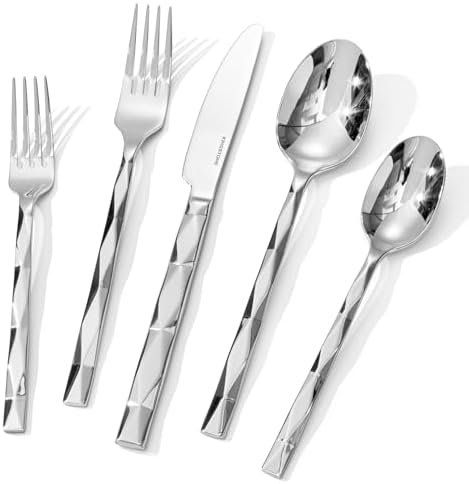
Differences I Noticed:

☁️ Let’s start with the satin cutlery set. Satin cutlery gives a softer feeling to the touch and has a simple design in appearance. We can describe this set as elegant without being flashy.

If polished cutlery is a flashy dinner guest, satin is the elegant one quietly sipping wine in the corner. Its surface is matte-like, sometimes described as “brushed” or “soft.” It doesn’t shout. It whispers.

Appearance: Low gloss. Light diffuses evenly on the surface, giving it a calm, almost velvety look.

When you touch the set, you feel a slight roughness. It’s like finely sanded metal not exactly rough, but you feel a gentle resistance.

Pros:

  • Satin cutlery hides fingerprints much better than polished. This means you won’t have to constantly grab a cloth to wipe off smudges a big advantage.
  • It gives a more modern look. If you have a Scandinavian-style kitchen, you’ll find a perfect match.
  • One of the most important features of satin cutlery is that scratches are much less noticeable.

Cons:

  • If shine is a must for you, satin cutlery may feel too matte.
  • If you’re going for a more affordable set, I recommend reading the product details carefully. If poorly made, the surface may look uneven over time.

✨ Polished Cutlery: Shine Bright… Like Stainless Steel

Polished cutlery is the classic mirror finish type. Think of restaurant cutlery or the special set your grandmother brought out on holidays. If shine is important to you, this is the product to get.

Its ultra-glossy design can feel like you’re looking into a mirror. You can literally see your face in the spoon.

When you touch it, it feels smooth and slick. I recommend keeping your hands dry if they’re wet, the cutlery can almost slip right out.

Pros:

  • Elegant and eye-catching with its high gloss.
  • Perfect for those who want a timeless, traditional style.
  • Looks great on dark tablecloths or rustic wood.

Cons:

  • Every fingerprint, scratch, and water spot? Unfortunately, they all show.
  • It needs to be wiped frequently to maintain its shine.

🍴 Which One Should You Choose?


Here’s the thing neither is “better.” It all depends on your style, patience, and how much you like wiping silverware.

If you want something low-maintenance, modern, and subtle, go for satin.

If you love sparkle and don’t mind the upkeep, polished is for you.

One more tip: lighting matters. Satin looks soft in natural light. Polished sparkles under warm bulbs. Weird but true.

One more warning: don’t mix them in the same table setting. It’s like wearing sneakers with a suit—it can work, but it usually doesn’t.

FeatureSatinPolished
Finish LookSoft, matte, modernGlossy, reflective, formal
Fingerprint ResistantYesNot really
Scratch VisibilityLowHigh
Style VibeMinimal, contemporaryClassic, elegant
MaintenanceEasyHigh

So yeah, next time you’re eyeing silverware online, give it a second look. That tiny word satin vs polished can totally change your table’s personality.

read more: Do Satin Silverware Sets Show Water Spots?

Pyrex vs Snapware: Best Glass Meal Prep Container

Everyone knows Pyrex. It is the Kleenex of glass containers. But their lid systems can be confusing. You have the flimsy blue push-on lids, the Snapware line, and now the Pyrex Freshlock.

  • 10 PIECES: This set of containers with lids is ideal for meal prepping, with one for each day of the work week. Set incl…
  • DURABLE GLASS: Pyrex glass containers resist stains and does not absorb food odors or flavors, making them easy to clean…
  • AIRTIGHT & LEAK-PROOF LIDS: The locking lids with 4 locking tabs are airtight and leakproof, so you can take it on the r…

Is Freshlock just a rebranded Snapware, or is it something new? More importantly, will it leak in your bag? We dug into user reports from r/BuyItForLife and r/MealPrepSunday to see if this specific line is worth your money compared to the titans like Rubbermaid Brilliance.

Leak-Proof Performance: The “Upright” Rule

While the marketing claims state “airtight and leakproof,” the user consensus tells a slightly different story.

The Reality: It is much, much better than the old, flimsy blue lids that pop off if you breathe on them. The four-tab locking system creates a decent seal for fridge storage or taking leftovers to work as long as you keep it upright.

The Problem: Multiple users report that the seal isn’t as confidence-inspiring as Rubbermaid Brilliance. While Brilliance users happily throw soup-filled containers into backpacks, Freshlock users are more cautious. There are reports of leaks when the container is tilted or inverted. It sits in the “better than standard Pyrex, but not bomb-proof” category.

Freshlock vs. Snapware: Are They Identical?

This is the most common point of confusion.

  • Snapware Total Solution: This sub-brand generally performs very well in independent leak tests. It often features a robust gasket system.
  • Pyrex Freshlock: This appears to be a distinct range; they are frequently marketed as standalone bowls, such as the 4-cup model.

Important Note: The lids are not universally interchangeable. A Freshlock lid (7201R-PC) fits specific Pyrex bowls, but the gasket design differs from Snapware’s, and the locking tabs are placed slightly differently. If you already own a Snapware set, don’t assume you can mix and match them.

Durability: Glass vs. Plastic Tabs

The Glass: It is classic Pyrex soda-lime tempered glass. It is a workhorse. It resists staining, doesn’t hold odors, and handles the microwave, dishwasher, and freezer with ease. Unless you drop it on a hard tile floor or shock it thermally (freezer to hot oven), it will likely last decades.

The Lids (The Weak Link): Like almost all locking lid systems, the plastic hinges are the failure point. Users report that after a few years of heavy dishwasher use, the tabs can fatigue and snap off. Replacement lids are available but can be pricey relative to buying a new set. This isn’t unique to Freshlock, but it’s a reality of the design.

Cleaning Headache: The Fixed Gasket

Here is the biggest potential deal-breaker for hygiene-conscious buyers.

Unlike Rubbermaid Brilliance, where you can easily pop the rubber seal out to clean, the Freshlock gaskets are often integrated or difficult to remove.

  • The Risk: If food juices get trapped under that seal and you can’t remove it, mold can develop over time.
  • The Solution: You have to be diligent about scrubbing into the crevice with a small brush. Some users have even broken lids trying to pry the gasket out for a deep clean.

read more: How to Remove Stains and Odors from Rubbermaid  Glass Food Storage Containers

Pros & Cons Summary

The Pros:

  • Just Right Size: The 4-cup round bowl is the “Goldilocks” size for a single lunch portion.
  • Safe Feel: Much safer than the old push-on lids.
  • Classic Glass Quality: Sturdy, stain-resistant, and oven-safe base.

The Cons:

  • Not 100% Reliable: Not recommended for loose transport of liquids in a backpack.
  • Cleaning Difficulty: Deep cleaning requires elbow grease since the gaskets are not removable.
  • Lid Confusion: Not compatible with all other Pyrex/Snapware lines.

The Verdict: Who Should Buy This?

Buy Pyrex Freshlock If:

  • You already have some Pyrex 4-cup bowls and only want upgraded, locking lids.
  • You primarily use them for fridge storage and microwave reheating at home.
  • You carry your lunch in a flat tote bag where tipping isn’t a risk.

Skip It (And Buy Rubbermaid Brilliance) If:

  • You want something that can tumble around in a gym bag without leaking a drop.
  • You are obsessive about removing gaskets to clean under them.
  • You want a “Buy It For Life” lid guarantee (plastic hinges will eventually fail).

In short, Pyrex Freshlock is a solid “middle ground” upgrade. It is superior to standard lids but falls short of the high-performance seal found in premium competitors like Rubbermaid Brilliance or the higher-end Snapware lines.

read more: Rubbermaid Brilliance vs. Pyrex: The Ultimate Glass Meal Prep Container Showdown

Vtopmart Glass Containers Review: The Honest Truth About “Budget” Glass

We all know the pain of staring at a $60 set of Pyrex or Rubbermaid containers and wondering, “Do I really have to spend this much?” That’s when you see Vtopmart on Amazon for half the price. It looks the same. It claims to do the same things. But is it too good to be true?

  • 【Set of 8 Glass Storage Containers】Rectangle (35.1OZ)+(21.6OZ)+(12.5OZ)+(5OZ); Square (27.1OZ)+(17.6OZ)+(10.8OZ)+(6.8OZ)…
  • 【Glass Containers Safe for Oven/ Microwave/ Freezer/ Dishwasher】Vtopmart Meal Prep Container is able to withstand -4℉ to…
  • 【100% Leak Proof Airtight Lid】Glass food containers is designed with removable silicone seals and 4-hinge snap locks to …

We analyzed technical specs, independent blog reviews, and user feedback to see if this budget brand is a hidden gem or just future landfill. Here is the breakdown.

Glass Quality: Surprisingly Premium

Usually, “budget glass” means thin, fragile material that chips if you look at it wrong. However, Vtopmart pulls a surprise move here.

The Material: Unlike standard Pyrex which uses soda-lime glass, Vtopmart claims to use borosilicate glass. This is actually the “superior” glass type for thermal shock. It can handle extreme temperature changes (oven to freezer) better than many name brands, with a heat resistance up to 752°F.

The Durability: Independent blogs describe the durability as “far above standard glass”. There are very few horror stories online about these “exploding” or shattering unexpectedly, which is a common complaint with cheaper tempered glass lines. In short: the glass itself is not the weak link.

Lid Durability: The Real Trade-Off

If the glass is so good, where did they cut costs? The answer is the lids.

The 4-hinge snap locks are the standard generic design. While they are BPA-free, they lack the engineering pedigree of premium brands.

  • The Hinge Risk: General consensus on Reddit regarding generic locking lids is that the plastic tabs are prone to snapping off after 6-12 months of heavy use.
  • Dishwasher Warning: If you blast these in the dishwasher on high heat every day, the plastic will eventually become brittle. They work great out of the box, but they are not “Buy It For Life” components like the glass base.

Leak-Proof Reality: Good for Fridge, Risky for Bags

The brand claims the containers are “100% leak proof” thanks to the silicone seal and four locking tabs.

The Test Results: In YouTube shorts and initial unboxing tests, they pass the “shake test” with water and soup without leaking. However, unlike Rubbermaid Brilliance, which is widely trusted by the community for backpack transport, Vtopmart lacks that long-term “gym bag trust”.

Verdict: They are excellent for keeping food fresh in the fridge and transporting lunch upright. But we wouldn’t recommend tossing a container of tomato soup upside down in a bag next to your laptop.

Cleaning and Maintenance

One distinct advantage Vtopmart has over some Pyrex lines is hygiene.

Removable Gasket: The silicone seal ring is explicitly designed to be removable. This is a huge win. You can pull it out to wash away trapped food juices.

  • Mold Prevention: Because you can remove the seal, you can prevent the dreaded “black mold ring” that plagues non-removable systems. Just be careful not to stretch it out over time.

Storage: True Nesting

If you have a small kitchen, “stacking” isn’t enough; you need “nesting.” Vtopmart delivers here. The mixed-size sets (ranging from 35oz down to 5oz) actually fit inside one another when empty. This saves significant cabinet space compared to brands that just stack on top of each other.

Final Verdict: Is It a Good “Pyrex Dupe”?

Buy Vtopmart Glass Containers If:

  • You are on a Budget: You get borosilicate glass and air-tight storage for roughly half the price of premium brands.
  • You Need Fridge Organization: They look clean, stack well, and keep produce fresh.
  • You Hand Wash Lids: If you are willing to wash the lids by hand to protect the hinges, this set could last you years.

Skip It (And Buy Premium) If:

  • You are a Commuter: If you need absolute certainty that your lunch won’t leak in a backpack, spend the extra money on Rubbermaid Brilliance.
  • You Want “Forever” Lids: If you want lids that will survive 5 years of daily dishwasher abuse, these plastic hinges might disappoint you eventually.

Overall, Vtopmart is a fantastic “Starter Set.” It offers 90% of the performance of the big names for 50% of the price, as long as you treat the plastic lids with a little extra care.

Rubbermaid Brilliance Glass Food Storage Review

If you are a fan of the plastic Rubbermaid Brilliance dishes you know why they are so loved: because they never leak. However, plastic has limitations; it stains easily, smells easily, and absolutely cannot be heated in an oven.

  • LEAK-PROOF AND AIRTIGHT: Rubbermaid Brilliance Glass Food Storage Containers have crystal-clear lids that are 100% airti…
  • EASY STORAGE AND REHEATING: Glass containers have vented, microwave-safe lids for easy, splatter-resistant microwaving
  • SPACE SAVING: Space-saving, modular Rubbermaid containers are perfect for stacking and organization

The Rubbermaid Brilliance Glass comes into the picture here. It offers the same legendary seal performance, as well as the high-end glass base feature. However, is it truly worth the extra weight and the price? We investigated the long-term feedback of the r/MealPrepSunday and r/BuyItForLife communities to find the answers regarding the usability of the glass component feature.

The “Glass” Difference: Heavy and Premium

The first thing that hits you is the weight. This is why users so commonly comment upon upgrading from plastic that they’re surprised by the heaviness of such devices. This isn’t thin or cheap glass; it’s very dense.

The Pros:

  • Oven Safe: You can actually bake a lasagna in these, as opposed to the plastic ones, as well as store leftovers from said lasagna.
  • Stain & Odor Free: No need to worry; the red pasta sauce won’t leave an orange stain.
  • Aesthetics: They can be placed on the dinner table.

The Cons:

  • Commute Factor: Since it is likely that the backpack will be loaded with at least three meals a day, the commute factor becomes a consideration because the weight is apparent.
  • Fragility: While they are robust, they are tempered soda-lime glass, not borosilicate glass. Though they are more resistant to thermal shock than regular glass would be, try dropping one on your tile floors, and instead of bouncing, it will shatter.

Leak-Proof Performance: The Bag Test

This is the make or break feature. Is the glass one going to seal the same way the plastic one did?

The Verdict: Yes. The lid locking mechanism is exactly the same as the plastic range. Side latches make a “whoosh” seal when pushed. Users on Reddit have reported taking soup and saucy curry lunches in their work bags with no problem. Providing the gasket is clean and the latches pushed, it is one of the safest glass products to transport.

The Lid Mechanics: Vents & Gaskets

Lids are crystal-clear and are made from BPA-free Tritan material. They also have vents underneath the latches, which is a great design feature. They can be used in the microwave with the lid secured (latches up) to prevent splattering of the food, but still allowing the steam to escape.

“Mold” Controversy: One of the popular debate threads involves mold growth underneath the rubber seal. This is what you need to know: The rubber seal is removable.

  • Lazy Cleaning: If you wash it in the dishwasher without ever removing this seal, moisture may be trapped inside and will eventually make it mildew.
  • Proper Care: People who remove the gasket every few washes, which can easily be done using a butter knife or the edge of a spoon, have never had any mold buildup problems after years of use. This may be a bit more work than a fused-lid container, but it ensures a more thorough cleaning.

Set Analysis: Is the “9-Piece” Set Practical?

This particular Amazon collection series includes:

  • Two small containers (1.3 cups)
  • Two medium containers (3.2 cups)
  • One large bowl (8 cups)
  • And their corresponding lids (hence the “9 piece” count).

Is it useful? This starter kit is good for a couple or an individual. The medium sizes are right on target for a lunch serving. The largest container would be terrific for a roasted vegetable or a family-sized salad serving. However, serious food preppers who cook up 5 lunches a day may have a fight over the two medium-sized storage bins and leave the small ones untouched in the cabinet. You’ll likely need more medium storage bins down the road.

Final Verdict: Who Should Buy This?

Consider Buying Rubbermaid Brilliance Glass If:

  • You frequently microwave leftovers and dislike the cleanup process associated with microwave splatter (the ventilated lids are genius).
  • You need a dish that is suitable for the oven, the fridge, and the table.
  • You are fed up with “mystery smells” lingering around your plastic storage containers.

Use the Plastic Version Only If:

  • Your commute is long, and each ounce in your backpack counts.
  • You have tiled kitchen floors and clumsy hands (glass and tile don’t mix).
  • You know you will never, ever take the time to clean a rubber gasket.

On the whole, the Rubbermaid Brilliance Glass line of containers is recognized as “the gold standard” for glass containers. They rectify problems with glass containers, namely being heavy with a leaking lid, by providing a high-quality base and integrating the best lid technology available.

Rubbermaid Brilliance vs. Pyrex: The Ultimate Glass Meal Prep Container Showdown

These glass meal prep containers are an investment. Basically, you are not purchasing a series of bowls but rather the guarantee that your chicken curry will not spill everywhere in your laptop bag. Yet when it comes to the selection between Rubbermaid Brilliance or Pyrex Snapware in the store, it’s hard to tell the difference between the two packaging boxes.

We ventured into the real-life usage experiences on Reddit’s r/MealPrepSunday and r/BuyItForLife to determine which one will ultimately make it past the tests of the daily grind. This is how the fight for your leftovers plays out.

The Leak Test: Gym Bag Anxiety

This would be the most essential part of the commute. Would the container of soup you would throw into the backpack hold?

Rubbermaid Brilliance: This is definitely the best for transporting meals around. The users rave about the “vacuum-like seal” provided by the two-latch closure feature and feel very secure and protected with it. Users mention it as a safe option in their gym bags and work backpacks without giving it much of a thought, and the closure is so good that you can hear the “release of air” as you press it down.

Pyrex Snapware: For the most part, the product performs well, but the confidence level is not high. The lock and seal are sound, but anecdotal evidence exists about leaks when the container tips on its side. Placing the unit standing up in the trunk of the car is perfectly acceptable, but using it as a payload for the backpack on the subway ride to work might not be the best idea.

Lid Durability: The Achilles’ Heel

Glass lasts forever; plastic lids don’t. This seems to be the biggest point of divergence in satisfaction levels.

Pyrex Problems: Issues with the Pyrex covers cracking with age remain valid. Also, with the Snapware offering, problems with the plastic hinges breaking off after a number of years have been experienced. Warping in the dishwasher has also been a problem, which affects how well it fits.

Brilliance Weakness: Rubbermaid lids are constructed from a harder, clearer type of plastic (Tritan) resistant to bending. The latches are shorter and more robust. On the downside, there is a trade-off: the rubber gasket. The theory is, if you don’t remove and clean it periodically, mildew will form beneath it.

Stacking and Space

If you have a small kitchen, the way these containers fit into your cabinet will be important.

Rubbermaid Brilliance: It has been fashioned taking into consideration a modular approach. It comes with flat lids, which can also be interchangeable according to the capacity of different vessels. It stacks steadfastly, making tidy towers inside your refrigerator or pantry.

Pyrex: Although Pyrex dishes are stackable, the rounded edges and somewhat rounded tops on certain Pyrex dishes do make them seem somewhat unstable if stacked high. They do consume a little more “dead space” in the cabinet compared to the sharp-edged efficiency in the Brilliance set.

The Verdict: Which One Should You Buy?

After examining the consensus, here is the bottom line based on how you actually live.

Prefer Rubbermaid Brilliance Glass If:

  • You commute with your food and require 100% leak-proof trust.
  • You want a “Pinterest-perfect” organized fridge where everything is stacked up perfectly.
  • You dislike damp, warped plastic lids.

Use Pyrex Snapware If:

  • You mostly retain foods in the house and hardly move liquid substances.
  • You want to use a container that feels more like ‘traditional cookware’.
  • You’re fine with possibly replacing plastic lids later.

The Rubbermaid Brilliance line of containers is the current champion for the lunch-eating outside the office crowd simply because it can take a beating better than the rest.

Farm to Table at Home: Sourcing and Celebrating Local Ingredients

Farm-to-table has become a clichéd marketing term in the restaurant industry, printed on menus to bill a higher price. But the essence of the farm-to-table experience is to be right in your own home kitchen. This is not about overpaying for vegetables. Farm-to-table is about bridging the gap between the earth and your dinner plate. By going farm-to-table, you’re not just supporting a local farmer, you’re elevating the level of your food.

Applying this philosophy in your lifestyle means changing habits. You have to trade the ease of supermarket shopping for the rhythm of the seasons. Here are steps to design a kitchen that celebrates the source.

The Flavor of Proximity

The produce found inside large grocery stores is raised to withstand shelf life and shipping, not taste. The supermarket tomato is meant to withstand a thousand miles of trucking without being squished, which is why it tastes like cardboard.

Local foods are harvested when they are at the peak of ripeness because of the distances they have to cover to reach your table. Sugar in corn deteriorates instantly upon harvest. When you harvest corn from a farmers’ stand and know that it was picked that morning, the sweetness pops. This explains the first reason why locals promote eating local foods You don’t have to be a better cook; you need to have better ingredients.

Farmers’ Market Campus Tour

Farmers’ market is the trading floor of the local food economy. To get the best from the experience, it is necessary to participate. Do not just wander around in a passive way. Talk to the farmers about what is in season each week. They will have knowledge of what is reaching the end of its season and when the peak is approaching.

Be accepting of things that aren’t perfect. Nature doesn’t produce perfect vegetables. Maybe your heirloom carrot will be crooked, your apple from the organic farm will have a blemish. It could mean that the produce wasn’t heavily sprayed with chemicals. Accept the dirt. A bit of dirt on your potatoes means they’re fresh. It preserves them until it’s time for washing.

The CSA Commitment

If a more personal connection with where your food comes from is your interest, maybe a program called Community Supported Agriculture, or CSA, would be a good fit. What this entails would be a subscription to receive a share of a farmer’s harvest.

“The CSA box is the greatest culinary game ever,” Claire explained. “You don’t get to pick what’s in it; the season does it for you.” You could be bombarded with kohlrabi or garlic scapes. This adds some creativity to the mix because it’s not so cool to cook the same five dishes every year. It teaches the cook to cook what she’s got instead of grabbing what she wants.

The Art of Doing Less

When you are working with superior ingredients from around your community, your skills need to lean more towards simplicity. A hothouse strawberry from the supermarket requires sugar and cream to taste enjoyable. Your picnic basket strawberry from around your corner needs nothing.

The philosophy behind “farm-to-table” cuisine is restraint. “If you’ve got fresh asparagus, you roast it with olive oil and salt,” Tanya says. “If you’ve got pasture-raised chickens, you roast them with lemons and herbs.” The aim is to show off what makes the ingredient great rather than trying to disguise it with sauce and processing.

Preservation and Seasonality

Eating locally requires an understanding that not all foods are available at all times. “Tomatoes are in August. Zucchini is in October. It’s the fleeting nature of these seasonal foods that lends the seasons their uniqueness,” argues West Virginia food activist Maria Hummer.

In order to prolong the seasons, you can learn about preservation. Freezing berries, pickling cucumbers, or making sauce with tomatoes is essentially finding a means whereby you capture the essence of the season that is going on outside. It is a larder that gives meaning to the passage of a year.

read more: The Aesthetic Pantry: Organization Solutions that Look Beautiful

Classic Meals

- Advertisement -