Home Blog Page 27

The “Battery Trap”: Why Your Next Salt Grinder Must Be USB-Rechargeable

There’s a little secret about electric spice mills: they’re basically power vampires.

A lot of electric grinders out there use 4 or 6 AAA batteries to operate. How come there’s so many? When you’re trying to crush really hard peppercorns or rock salt, you need a strong twist, and weaker motors drink up a lot of battery power to do that.
It’s not just about how much batteries cost upfront; they also lose their pep over time. When alkaline batteries get low, the voltage drops. This makes your grinder sound like it’s slowly giving up.

Tired of weak grinds and all those battery changes? It’s probably time to get yourself a rechargeable salt and pepper grinder.

So, I’m going to break down for you exactly why Lithium-Ion batteries are always the better choice over Alkaline.

The Math: The Hidden Cost of “Cheap” Grinders

Alright, let’s look at the numbers.

  • You can usually snag a battery-powered set for about $20.
  • You can grab a USB-rechargeable set for roughly $30-$35.

It sure looks like the battery version is the more affordable choice. That’s not right.

If you’re cooking every day, you’ll probably go through 6 AAA batteries in about 2 to 3 months. So, that’s about 24 batteries every year for each grinder.

In just a year, you’ve spent more on Duracells than what it would have cost to get the rechargeable one instead. You’ll save enough with the USB-rechargeable one to pay for it in around nine months. Then it’s free to go wherever it needs to.

Performance: The “Voltage Sag” Problem

Chefs like rechargeable ones for a technical reason.

  • Alkaline Batteries: They have a voltage that steadily goes down as they lose power. When you first get your grinder, it works great, but after a couple of weeks, the motor just doesn’t spin as fast. It has trouble grinding coarse salt, so your food might not taste seasoned evenly.
  • Lithium-Ion (USB) Batteries: They keep a steady voltage output until theyโ€™re practically drained. The motor keeps chugging along at full power for weeks, and then, without warning, it just quits when it needs a charge. You’ll get a consistent amount of torque every single time.

Convenience: The USB-C Era

It’s all about convenience now that we’re in the USB-C era. These days, most rechargeable salt and pepper grinders charge up with a USB-C cable, just like the one you probably use for your Android phone, iPad, or even your laptop.

  • No Hunting: You don’t need to hunt for batteries anymore; no more searching for fresh AAAs while your dinner cools down.
  • Fast Charging: Quick to charge, most of these units are good to go in about an hour and can handle over 200 grinds before needing another boost.
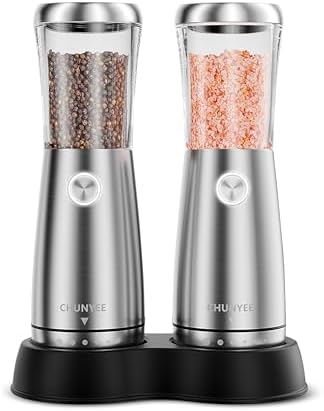
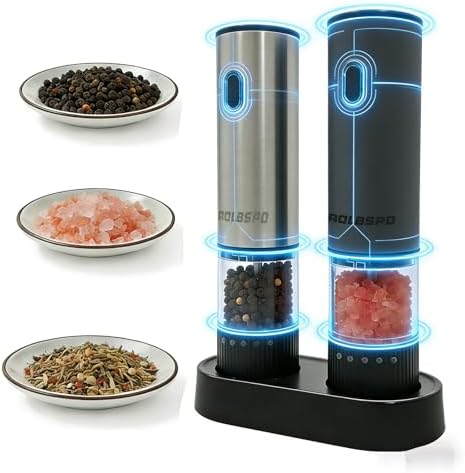
  • Charging Docks: You get a charging dock with the premium models. Just pop the grinder back on its base after you’ve eaten, and that way it’s always ready to go.

The One Downside: Built-in Obsolescence

Okay, so to be a fair analyst, we really should bring up the downside of rechargeable units.

Once the internal lithium battery stops working, usually after three to five years, the whole thing becomes useless. You can’t replace the battery yourself. However, most electric grinders conk out from salt corrosion within three to five years anyway, so this kind of lifespan is pretty normal for almost everyone.

Verdict: Which One Should You Choose?

Get a USB-rechargeable grinder if:

  • You cook every day: Having reliable power and saving money is a big deal to you.
  • You hate waste: Nobody likes waste, right? Tossing out all those alkaline batteries each year just isn’t good for our planet, and it sure isn’t good for your wallet either.
  • You want power: Lithium batteries really deliver more torque when you’re dealing with tough rock salts.

Go with replaceable batteries if:

  • You barely touch it: Say you only break out the grinder once a month (e.g., at a holiday home), alkaline batteries keep their charge longer when they’re just sitting around.

The Bottom Line Just cut out all those little things that drain your phone battery. Spending a little more at first for a rechargeable one is totally worth it; you get constant power and never have to mess with upkeep.
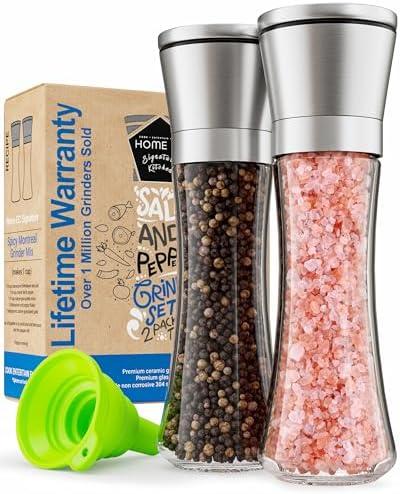
Home EC Grinder Set Review: Why 9,000 Kitchens Switched to This “Upside-Down” Design

So, with all these battery stuff and smart gadgets around, you gotta wonder: what makes plain old glass shakers, the manual kind, sell more than 9,000 every single month?

  • High Quality Glass – Brushed Stainless Steel Salt and Pepper Mill Set : Home EC Salt and Pepper Mills are easy to grip a…
  • Easily Adjustable Ceramic Grinder : Our Salt and Pepper Shakers have a larger heavy duty ceramic rotor than competitors….
  • Stainless Steel Lid Caps = Fresh Spices & Clean Counters : Our tightly sealed stainless steel lid keeps your Himalayan s…

The Home EC Premium Stainless Steel Grinder Set isn’t trying to shake things up too much. It tries to fix the two most annoying things about regular wooden pepper grinders: the mess they make and how hard they are to refill.

With over 40,000 reviews, this product is a total winner in the “low-tech” kitchen gear world. Seriously, itโ€™s earned its high rating.

Is it really a top-notch tool for chefs, or just a little something to spiff up your dining table? We looked closely at how good it feels for older hands, its upright design that keeps things tidy, and the single catch that really particular cooks should be aware of.

The Design: Solving the “Pepper Dust” Problem

If you’ve got a classic wooden pepper mill, you’re probably familiar with this annoying problem: you put it down, and bam, there’s a little circle of pepper dust all over your nice, clean tablecloth.

The Home EC set stands up, which is a nice feature. The grinding part is up top, hidden under a shiny steel cover.

  • The Result? No mess. One person really liked that these spice grinders “donโ€™t get salt and pepper all over the counter,” which is a legitimate benefit.
  • The Material: The body is thick glass, not that thin plastic stuff. This is a big win for health-minded folks who worry about things like microplastics or BPA.

Ergonomics: The Hidden Feature for Aging Hands

Ergonomics is like a secret tool, especially when our hands start showing their age. Even though electric grinders are usually suggested for people with arthritis, not everyone is keen on dealing with batteries.

User Ed Henry really nailed a key advantage of this tall, cylindrical design when he compared it to those round, “globe” style grinders:

“The key feature is the ability to have a firm grip on the grinders… One thing I’ve noticed… was that you lose your grip strength as you age. This style returns confidence in holding.”

That extended glass part gives you lots of room for your whole hand to get a good grip, which makes twisting way simpler than with those tiny, slick knobs you see on less expensive, throwaway grinders.

The Flaw: Precision Adjustability

The problem is all about how precisely you can make adjustments. This set has a ceramic rotor you can adjust. You turn a knob to go from really fine to coarse.

Is it accurate? I wouldn’t say so. User Cyn gave it 4 stars, but also gave a realistic check on expectations:

“If you’re looking for greater adjustability, you’re going to have to spend more.”

Here’s the deal: ceramic burrs are pretty tough and won’t rust, which is awesome if you’re grinding salt. But with cheaper ceramic sets, you usually miss out on those helpful stepped adjustments.

  • For General Cooking: This is totally fine. You can get coarse bits for steak or fine dust for popcorn.
  • For Precision: It can be a real pain to get your grind just right. Sometimes it feels impossible to get the same fineness consistently because of how imprecise it can be. You might need to tinker with it a bit, unlike a fancy Peugeot engine.

Durability & Maintenance

It really comes down to how long things last and what it takes to keep them in good shape.

  • Capacity: Each jar fits about 3/4 cup of spices. That means you won’t have to refill it as often as those skinny electric ones.
  • Refilling: It’s super easy to refill since the glass body has a wide mouth. And hey, Home EC throws in a silicone funnel with it โ€“ a little extra touch that saves your peppercorns from bouncing around your whole kitchen.
  • Reliability: Someone mentioned that it doesn’t have that spring inside, which is exactly what broke on their old one. Usually, if there are fewer parts that can move around, things tend to last longer.

Verdict: Should You Buy It?

Rating: 4.5/5

Buy It If:

  • You do not want a messy counter: The upright design works to keep your table tidy.
  • You want a really good grip: The tall glass body is super easy to hold. You can twist it without trouble, even if your hands aren’t all that strong.
  • You avoid plastics: The glass and stainless steel build gives it a real premium vibe and keeps things super clean.

Skip It If:

  • You are a control freak: If youโ€™re really looking for that super precise, micron-level grind size every single time, you’ve gotta be ready to shell out more than fifteen bucks. Think fifty dollars and up for that kind of exactness.
  • You want one-handed use: You’ll still need both hands one to hold it steady, and the other to twistThe Bottom Line The Home EC spice grinder set is like the Honda Civic of spice grinders. This thing isn’t some fancy gadget, but it’s really dependable. It keeps things tidy, and honestly, it fixes those little seasoning headaches you deal with every day way better than stuff that costs twice as much.

The Best One-Handed Pepper Mills for Cooks with Arthritis or Weak Grip

For most people, you don’t even think about grinding pepper. But if you’re a cook dealing with arthritis, Carpal Tunnel Syndrome, or just have trouble gripping things, trying to twist a regular manual mill can be really painful.

Freshly ground pepper should not hurt any way.

When hand pain makes kitchen chores tough for you or someone you care about, getting a one-handed pepper mill isn’t just a nice extra; it actually helps keep things independent in the kitchen.

But, not every “one-handed” gadget is really the same. Some of these even have really stiff buttons, which are just awful when your joints are already aching. We looked at how different grinders work mechanically to figure out the real solutions for making them easier to use.

The Enemy: The “Twist” and The “Pump”

You should figure out what to stay away from before you buy anything.

  • Standard Twist Mills: You gotta get a good, tight grip on these with one hand, then just wrench it with some serious power with the other. This really isn’t good for your wrists.
  • Thumb-Pump Grinders: These are pretty common just those tall, skinny metal tubes with a plunger on the top. Stay away from these things. They take a lot of force, all of it right on the thumb joint, which is a real hotspot when arthritis acts up.

So, what should you get instead?

1. The Gold Standard: Gravity Electric Grinders

Gravity Electric Grinders are, by any measure, the best around. If you’ve got arthritis, whether it’s moderate or severe, a gravity electric grinder just makes sense.

  • How it works: No buttons. Just flip the grinder over, and a sensor starts it up.
  • Why it works: This is great for arthritis since you don’t need to grip anything. You won’t have to squeeze, press, or twist this. You can season a steak if you can lift a soda can.
  • The Grip: You want to find models that have a wide, matte-texture body. When your hands are numb or weak, it can be tough to grip thin, slippery stainless steel.

2. The Runner Up: Button Electric Grinders

These are just your typical battery-run grinders, you know, the kind with a button right on top. So, here’s the deal: you just grip the handle and push this button right where your thumb rests.

  • The Caution: Okay, so squeezing is better than twisting, but still, some buttons are just super stiff. If your thumb arthritis is playing up that’s the CMC joint we’re talking about then a gravity model is a better bet for you.
  • The Good News: For regular wrist pain, these are great since they stop that twisting movement.
  • Pro Tip: Go for models that have a “soft-touch” or a nice big button, instead of those little clickers that are kinda hard to press.

3. The Manual Alternative: Rabbit-Ear / Lever Grinders

Not everyone wants batteries. If you’d rather go with a hand tool, try looking for something called a “Rabbit Ear” or one of those lever-style grinders (like a Chef’n PepperBall).

  • How it works: You just push the two handles together, kind of like with pliers, and that’s how you grind.
  • Why it works: It just makes sense: youโ€™re using your whole hand and palm, which spreads out the work among all your fingers. That way, youโ€™re not putting all the strain on just your thumb or wrist.

This is great for folks who have a little trouble with their grip and really don’t want to mess around with changing batteries.

Key Features to Look For (Buying Checklist)

If you have arthritis and are looking for a salt grinder, here are three things to keep in mind:

  1. Refill Mechanism: Most people never think about how a product gets refilled, and it’s a detail that often gets overlooked. Is it easy to open? Stay away from those mills where you have to unscrew a small, really tight metal nut right on top. Look for lids that pop off or doors on the side.
  2. Weight: Some of the really nice electric grinders can be pretty heavy because of their powerful motors and glass parts. If it hurts to lift heavy things, try plastic or acrylic instead of glass.
  3. Capacity: Having a bigger capacity means you won’t have to open it up and refill it as much, which really saves your hands from some annoying fiddly work.

The Bottom Line

If you want no pain at all, the Gravity Electric Grinder is a solid choice. It totally gets rid of biomechanical stress. It makes seasoning fun again, not a pain.

Gravity vs. Button Grinders: Which Style Is Actually Easier to Use?

So, you’ve decided to move on from twisting things by hand and go electric. Good choice.

Okay, so you’re stuck on a design choice here. Do you go for the classic, simple button on top, or that cool “Gravity” one that just works when you tilt it?

The gravity electric grinder just sounds better on paper. It feels like magic. You tip it, and it seasons. But when the kitchen is a mess, sometimes “magic” just means making an even bigger mess accidentally.

The button model might not be fancy, but it gives you something really important: control.

We tried both ways of cooking to figure out which one really helps you in the kitchen, and which is just for show.

The Contender 1: The Button Grinder

This is a regular electric mill. It kinda looks like a manual grinder, but there’s a button, usually right on top, that you press with your thumb.

The Pros: The big thing here is simply getting it right. The moment you lift your thumb, the grinding stops. If you need to measure out exactly one teaspoon of pepper for your cooking, this is the one to get.

The Cons: The catch is, you need a steady grip. You gotta grab that heavy grinder and push the button at the same time. When your hands are either greasy or wet, your thumb could just slip right off that button.

The Contender 2: The Gravity Electric Grinder

This thing doesn’t have any buttons. It has a gyroscope/tilt sensor. Just flip it more than 45 degrees, and the motor will start up all by itself.

The “Flow” Factor: This is your best bet for really getting things done when you have a lot on your plate. You can grab it, flip it, put seasoning on your steak, and set it back down, all without having to change how you’re holding it. It works without a hitch.

Hygiene: No button to press means you won’t spread raw meat germs from your hands to the device. It’s certainly the cleanest cooking method.

The Head-to-Head Comparison

So, what do these two look like when placed side-by-side? We really put them through their paces in three tough kitchen situations.

1. The Clean Counter Test

Winner: Button Grinder

This one thing is the real problem with the gravity electric grinder. Every time you tip it back up to stop grinding, a bit of ground pepper or salt usually tumbles out. You’ll always get a little circle of pepper dust on your table or counter because the part that dispenses faces down when it’s just sitting there.

The Button grinder avoids this issue entirely because you just stop grinding before you set it down.

2. The “Arthritis/Mobility” Test

Winner: Gravity Grinder

For folks with arthritis, carpal tunnel, or if they just have a weak grip, the gravity model is really a medical necessity. You won’t have to keep pressing it over and over. You simply lift it and then tilt it. It does not take much hand coordination, so it’s the easiest one to use out there.

3. The Accidental Grind Test

Winner: Button Grinder

Sometimes, gravity sensors are just too sensitive. If you accidentally knock over a gravity grinder at dinner, it won’t stop grinding salt onto your tablecloth until you pick it up. A button grinder just sits there until you press the button.

Verdict: Which One Should You Choose?

Pick the Gravity Electric Grinder If:

  • You cook nonstop: Like when you’re seasoning meat, stirring a pot, and flipping veggies all at the same timeโ€”using the tilt-action feature can really speed things up and keep your hands much cleaner.
  • Your hand hurts: This is the most comfortable choice you can make.

Pick the Button Grinder If:

  • You hate mess: If even the thought of pepper dust on your nice white tablecloth makes you cringe, then using the button option is a good choice for you.
  • You have kids/pets: A gravity grinder is just asking for trouble. One little bump from a curious cat and you’ve got a real mess on your hands. The button really helps keep things safe.

The Real Takeaway

The gravity electric grinder is really great for people cooking in the kitchen, but for folks sitting down to eat, the button grinder is a better choice.

Etekcity Kitchen Scale Review: The Only Real Rival to Amazon Basics

If the Amazon Basics scale is the heavy-duty workhorse of the kitchen, the Etekcity Food Kitchen Scale is its sleeker, more modern sibling.

  • ๐—˜๐—ณ๐—ณ๐—ผ๐—ฟ๐˜๐—น๐—ฒ๐˜€๐˜€ ๐—ช๐—ฒ๐—ถ๐—ด๐—ต๐—ถ๐—ป๐—ด: Supports 5 units (oz/lb:oz/fl’oz/g/mL), tare function, and includes 2 AAA batteries for hassle-free…
  • ๐—ฃ๐—ฟ๐—ฒ๐—ฐ๐—ถ๐˜€๐—ฒ ๐—ฅ๐—ฒ๐˜€๐˜‚๐—น๐˜๐˜€: Accurately weighs up to 11 lb/5 kg with 1 g increments
  • ๐—ฆ๐—ถ๐—บ๐—ฝ๐—น๐—ฒ & ๐—–๐—ผ๐—บ๐—ฝ๐—ฎ๐—ฐ๐˜: The small and sleek scale is a perfect fit for most kitchens, occupying little space and easily storab…

Sitting at #4 in Kitchen & Dining Best Sellers and selling over 30,000 units a month, it is the only product that gives the Amazon brand a run for its money. With a staggering 170,000+ reviews, it has a massive cult following.

But why buy this one over the #1 best-seller? Is it just the design, or is the sensor actually better?

We analyzed the “Smart” features that users rave about, the surprising durability tests (involving foster kittens), and the critical difference between the two models listed on the same page.

The Design: Stainless Steel vs. The World

The first thing you notice is the profile. It is incredibly slim. User Lee Gauthier, who replaced an old dial scale, noted:

“The stainless surface is durable and easy to clean. This was a fantastic deal… repeatability and accuracy is important.”

Unlike bulkier plastic scales, the Etekcity uses a 304-grade stainless steel platform that resists fingerprints and wipes down easily after a messy baking session. It feels less like a “budget tool” and more like a permanent appliance.

The Versatility Test: From Flour to… Kittens?

Most people test scales with flour or water. But user B put it through a much harder stability test: Weighing foster kittens.

“Stick a small bin on it and it’s perfect for weighing foster kittens… I account for the weight of the attached empty bin by just resetting the scale to 0.0.”

Analyst Note: This is a brilliant stress test for the sensors. A rectangular bin hanging off the sides would typically cause a cheap scale to give “wobbly” or inconsistent readings due to uneven weight distribution. The fact that it accurately tracks a moving kitten proves the sensors are well-calibrated, even when the weight isn’t perfectly centered.

The “Smart” Confusion (Read This Before Buying)

Here is where 90% of buyers get confused. Etekcity sells two versions on the same Amazon listing:

  1. The Standard (304 Stainless): Just a scale. No phone connection.
  2. The Smart (Smart Stainless): Connects to the VeSync app via Bluetooth.

User Chris K. bought the “Smart” version and was blown away:

“I was unaware of all the features I would be getting in the app as well… Highly recommend if you want to weigh your food and count your calories W/ macros.”

If you are tracking nutrition data, the Smart version syncs your food weight to your phone, acting like a digital nutrition log. However, if you just want to bake bread, the Standard version (which is cheaper) is all you need. Be careful which one you click.

Accuracy & Usability

Like its competitors, it measures in 1g increments.

  • The “Tare” Function: As Lee mentioned, the tare button is responsive and essential for zeroing out the weight of bowls (or kitten bins).
  • The Display: It uses a backlit LCD (unlike some basic models that are non-backlit), making it easier to read if your kitchen lighting is dim or if a large bowl casts a shadow over the screen.

Verdict: Etekcity or Amazon Basics?

Rating: 4.6/5

Buy the Etekcity If:

  • You want a slimmer profile: It takes up less visual space on the counter than the Amazon Basics model.
  • You track Macros (Smart Version): If you want to log calories directly to an app, the “Smart” variant is a tech upgrade worth the extra few dollars.
  • You need uneven weighing: As the kitten test proves, it handles off-center loads (like large mixing bowls) remarkably well.

Skip It If:

  • You prefer physical buttons: The touch-sensitive buttons on the Etekcity can sometimes be triggered by wet fingers. The Amazon Basics model has physical “clicky” buttons which some cooks prefer for tactile feedback.
  • You need espresso precision: Like most kitchen scales, it is not sensitive enough for measuring 0.1g coffee doses.

The Bottom Line The Etekcity earns its 170,000 reviews by balancing style and substance. It is prettier than the Amazon Basics scale and just as reliable. If you care about how your tools look on the counter, this is the winner.

Amazon Basics Scale Review: Why Simplicity is the Ultimate Feature

These days, with Wi-Fi in your fridge and touchscreens on your toaster, the Amazon Basics Digital Kitchen Scale really stands out. It brings something special: Focus.

It’s completely disconnected. There isn’t a complex app scene for it. It won’t keep bothering you with alerts. This cool, stainless steel tool does just one thing, but it does that one thing perfectly. That’s why it’s the top pick for kitchens, plain and simple.

  • Digital kitchen scale with food-safe, BPA-free plastic components
  • Stainless steel platform with wide LCD screen
  • Weighs up to 11 pounds (2 grams minimum, up to about 5000 grams); displays results in pounds, ounces, grams, fluid ounce…

We looked at why this simple gadget is now a critical tool for anyone who does meal prep or bakes sourdough. We also found one technical thing you should definitely be aware of before you buy it.

The “Essentialist” Approach

This scale is like that perfect white t-shirt for your kitchen. It’s not about being super fancy; the idea is to make it something you really can’t do without.

1. The “Diet” Reliability For people like Yadira, this scale goes beyond just being a device; it acts as a reliable accountability partner.

“I actually weigh out my food every day with it. That LCD screen is really clear, and the stainless steel? Super easy to clean.”

When you’re getting meals ready for the week, anything that slows you down is a real headache. You don’t want to deal with menus. You want to put a bowl on it, press “Tare,” and then just add your stuff. This scale takes the headache out of eating well. As Karoleigh pointed out, it’s small enough to just stay on the counter, so it’s always there when you need it.

2. The Chemistry of Baking Baking is really all about getting the chemistry right; you can’t just wing it. A cup of flour? Oh, that can seriously mess with the weight, and if the weight’s off, your bread’s texture is just going to be ruined.

Jacob T. Collins said that for him, changing to this scale was what really turned his sourdough efforts around:

“Once I added this scale, it was a game-changer. My bread turned out so much better! The tare button sure comes in handy.”

That 11lb (5kg) capacity is a big advantage. It holds up even big ceramic mixing bowls and dough with no trouble, which smaller, flimsier scales often struggle with.

The Limitation: The “Espresso” Threshold

It’s great for most cooking, but to be honest, it does have some technical limits. User bypaolazuaje brought something to my attention:

“You should really check the lighter items because I’ve found it doesn’t always handle their weight accurately.”

The Technical Reality: This isn’t for micro-chemistry, it’s just a cooking scale. For example, if you’re trying to measure out a small amount, like 3 grams of yeast or 18 grams of coffee for a pour-over, the scale’s sensor might not pick up those initial few grams right away. This thing is made for grams and ounces, not milligrams.

  • For Chicken or Flour: This thing is really spot-on and dependable.
  • For High-End Coffee: This just isn’t as precise as those fancy scales baristas use.

Durability and Design

  • The Aesthetic: It looks really clean and simple. The stainless steel just makes it hygienic, and if you spill something, it wipes right off without a fuss.
  • The Power Source: It runs on AAA batteries. Yes, they come included in the package. AAAs are a good choice because you can just pop new ones in when they die, and they last a while. That’s a real contrast to the little coin batteries you see in thinner gadgets.

Verdict: Is It Right For You?

Rating: 4.7/5

Buy It If:

  • You like things to be efficient: You want a tool that starts right up and shows you what you need to see. No fuss, no waiting.
  • You are a Baker: That 11lb capacity is big enough for just about any home baking project you can think of.
  • You want value: This really hits the mark. It works just as well as those fancy “smart” scales, but it costs way less.

Skip It If:

  • You are a Coffee Enthusiast: To get your morning espresso just right, with 0.1g precision, you’ll need to grab a specialized coffee scale.
  • You prefer heavy materials: The body itself is made from light materials. If you’re set on something heavy and all-metal, you’ll have to shell out a bit more cash.

The Bottom Line The main takeaway is that you don’t always need fancy stuff to have a bestseller. Amazon Basics has really hit on something by taking out all the extra stuff; what you’re left with is just a tool that simply works.

Classic Meals

- Advertisement -