
It is one of the most frustrating things you can experience in the kitchen. You purchase a brand new, flawlessly slick non-stick skillet. Your morning eggs cook in the pan as if they are sliding across the ice. However, after six months, the magic is gone. Your food is now sticking to the pan, tearing apart, and leaving behind a burnt, sticky mess.
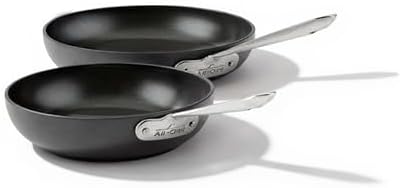
- This cookware set includes 8 inch and 10 inch Fry Pans, ideal for browning, searing, and pan-frying foods like eggs, veg…
- High Quality Performance with Everyday Convenience – HA1 Nonstick heavy gauge aluminum and stainless-steel base deliver …
- Design You Will Love- HA1 Nonstick has a sleek and stylish contoured design. Our double riveted stainless steel handles …
Are you looking at your ruined breakfast, wondering, “why is my non stick pan sticking?” You are not alone. However, to fix the problem, we first need to discuss the science behind the stick.
The Science of the Stick: 3 Reasons Your Non-Stick Pan is Sticking
Are you using an old PTFE (Teflon) pan or a newer, more advanced Sol-Gel (ceramic) pan? Regardless, the non-stick coating is based on microscopic chemical bonds. If the microscopic bonds are blocked or broken, the pan becomes sticky. The following are the three main reasons why your non-stick pan is now sticking:
1. Carbonization from Cooking Spray
This is the most common reason why your non-stick pan is now sticking. The problem is caused by the emulsifiers found in most aerosol cooking sprays. The emulsifiers, usually soy lecithin, are designed to mix two liquids that would normally not mix, such as oil and vinegar. However, the emulsifier itself does not evaporate as easily as the oil. Instead, the emulsifier bakes into the microscopic pores of your pan at relatively low temperatures, creating an invisible, sticky mess on the non-stick coating.
2. High Heat Degradation
A non-stick pan is designed to cook food using low to medium heat. However, are you the type of cook who likes to blast the pan with high heat to sear the steak? If you are, the high heat is breaking the microscopic chemical bonds in the non-stick coating, causing the pan to become sticky.
3. Micro-Scratches
Spatulas, forks, and abrasive scrubbing pads scrape away microscopic areas of the non-stick finish, allowing food proteins to bind to them during cooking.
How to Fix a Sticky Non-Stick Pan
If your non-stick pan has a buildup of old oil residue and emulsifiers, its non-stick surface may still be in relatively good condition. You can rid your pan of this tough grime using a powerful, deep-cleaning process:
- Put water in your sticky pan, leaving one inch of headroom at the top.
- Add one half cup of white vinegar and bring to a gentle boil on your stovetop.
- Remove from heat and immediately add two tablespoons of baking soda, which will fizz rapidly.
- Let your mixture sit and cool for 15 minutes.
- Throw away your mixture and use a non-abrasive sponge to scrub your pan clean.
The combination of acid and alkaline chemistry will dissolve your invisible layer of baked-on grime, restoring your pan to its original non-stick finish.
The Hard Truth: When It Is Time to Say Goodbye
While the vinegar and baking soda trick can revive a dirty pan, physics has a way of getting in the way when we want to pretend our pans are still alive and functional.
You’ve scrubbed your pan, and it still sticks? You’ve looked inside your pan and seen your underlying metal surface shining through? Your non-stick pan has died, and there is nothing you can do to revive it. The non-stick surface has been destroyed, and no amount of cleaning, seasoning, or Internet trickery can regrow a synthetic chemical surface.
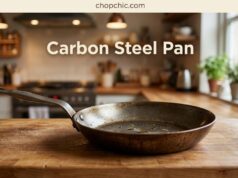
Once the coating has been stripped, it is time to discard the pan. To prevent this from happening in the first place, consider moving to a highly durable hard anodized skillet, or take the plunge and move to a material like carbon steel, which develops its own non-stick surface naturally over time.




[…] years, the non-stick frying pan was the epitome of convenience for the modern cook. The ability to slide a fragile […]
[…] have seen the beautiful advertisements. “Pastel-colored pans for a toxic-free, non-stick utopia.” Millions of home cooks, driven by the justified fear of “forever […]