Home Blog Page 41

Best Knife Bags and Rolls for Home Cooks and Traveling Chefs

Loosely tossing a $150 chef’s knife into a tote bag or wrapping it in a kitchen towel is a recipe for two things: a ruined edge and a trip to the emergency room.
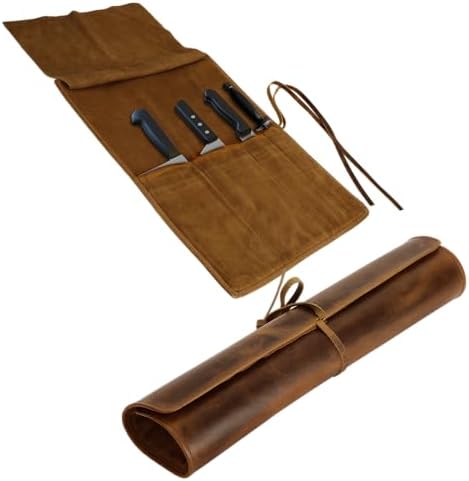
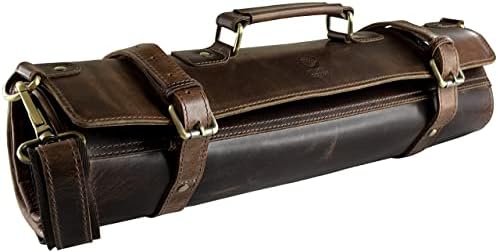
Whether you’re a professional commuting to a kitchen, a catering chef, or a home cook off to an Airbnb for the holidays, blade protection is absolutely non-negotiable. A proper knife carrier does more than just hold tools in place; it immobilizes the steel to prevent friction damage (dulling) and tip bending.

To choose the right vessel, you need to decide between two primary form factors a Roll versus a Backpack and two material classes: Leather versus Synthetic.

read more: Top 5 Most Popular Paring Knives

1. The Classic Knife Roll: Compact and Traditional

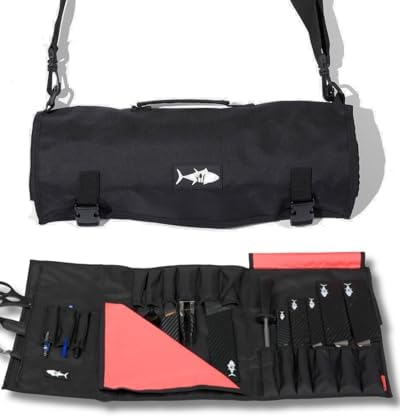
The knife roll is the industry standard for a reason. It’s designed to be unrolled on a counter, giving you immediate visual access to your entire kit.

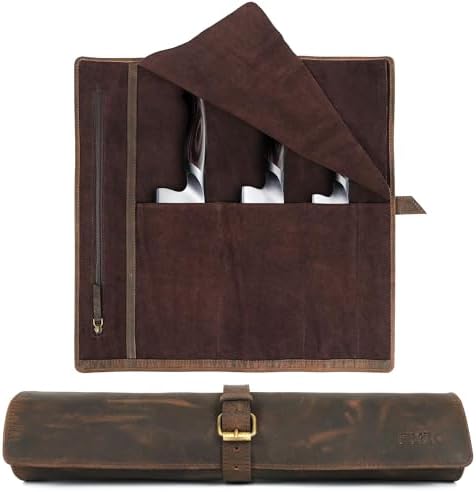
  • Capacity: Typically holds 7-10 knives.
  • The Physics of Storage: Elastic retention slots and a zippered flap are key to a good roll. The flap is critical; it creates a barrier so that when the bag is rolled up, the handles of one knife don’t scratch the blades of another.
  • Best For: Line cooks and home chefs carrying a particular “Core Set” (Chef, Bread, Paring, Tweezers).

2. The Chef’s Backpack: For the Heavy Commuter

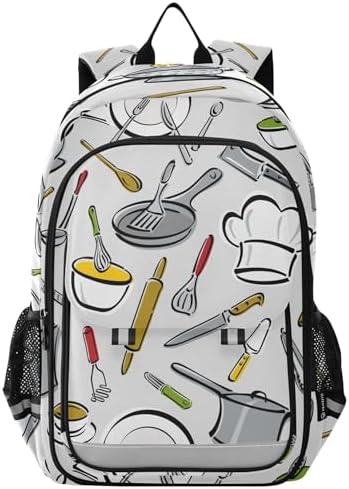
If you carry more than just steel laptops, honing rods, mandolines, and scales a roll becomes unwieldy. The Chef’s Backpack is the modern solution to weight distribution.
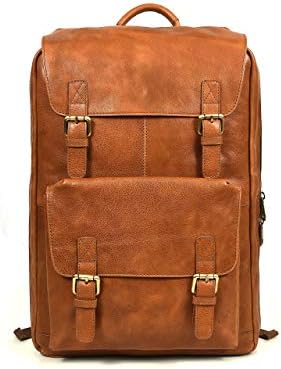
  • Ergonomics: Carrying 15 lbs of steel on one shoulder, messenger style, translates into eventual spine misalignment. A backpack spreads that weight across both shoulders.
  • Separation: Find a bag with a specifically strengthened “knife tech compartment” that’s separate from the laptop sleeve, to avoid punctures.
  • Best For: Culinary students and traveling chefs who bring their whole office with them.

3. Material Analysis: Leather vs. Ballistic Nylon

Leather The Heirloom Choice: Top-grain leather is tough, virtually puncture-proof. It will patina well over time, molding to the shape of your handles. But it does require upkeep conditioning and can be heavy.

  • Verdict: Buy this for style and longevity.

Waxed Canvas / Ballistic Nylon (The Utility Choice): These synthetics are lightweight, water-resistant and significantly cheaper. The high denier nylons are practically impossible to tear.

  • Verdict: Buy this for grueling, messy kitchen environments where the bag might sit in grease or water.

Verdict: What to Bring Along?

  • For the Purist: Get a Waxed Canvas Roll. It’s durable, light, and protects the essentials.
  • For the Student/Commuter: Get a Reinforced Backpack. Your back will thank you.
  • For the Head Chef: Get Top-Grain Leather. It demands respect and will last a lifetime.

Knife Set vs. Open Stock: Which is a Better Investment for the Home Kitchen?

The largest financial mistake when equipping a home kitchen has to be the “Wedding Registry” syndrome: purchasing a huge 15-piece knife block because it looks professional on the counter.

While aesthetically pleasing, these sets often represent a poor allocation of resources. You pay for 12 knives you rarely use to get the one Chef’s Knife you actually need. On the other hand, building a custom kit through buying piece-by-piece (“Open Stock”) requires some knowledge and patience.

To determine where to invest our money, we need to evaluate the two methods on the basis of Cost-Per-Use and Ergonomic Suitability.

1. The Case for Knife Sets: Volume and Value

A knife set is a collection bundled together and sold, often at a discount relative to the sum of its parts.

  • The Economics: If you do the math for price per blade, sets are cheaper. A generic 6-inch utility knife might be $60 open stock but is effectively $25 inside a block set.
  • The Target Audience: Sets are ideal for Empty Kitchens. If you are furnishing a first apartment or outfitting a vacation rental and have zero tools, a set gets you immediate functionality (Chef, Paring, Bread, Scissors, Honing Rod) in one purchase.
  • The Downside: You are stuck with the manufacturer’s handle geometry for every tool. If the Chef’s knife handle feels too bulky, you cannot swap it out without breaking up the set.

2. The Case for Open Stock: Performance and Customization

“Open Stock” refers to a purchase of individual knives. This strategy is consistent with the professional view: Invest in workhorses.

  • The 80/20 Rule: In truth, you do 90% of all kitchen work with only three knives: A Chef’s Knife (8″), a Paring Knife (3-4″), and a Serrated Bread Knife.
  • The Investment Strategy: You don’t buy a mediocre 15-piece set for $300; you buy a world-class Chef’s Knife for $150, a utilitarian bread knife for $30, and a paring knife for $10.
  • Ergonomic Freedom: Open stock allows mixing and matching. You can buy a heavy German Chef’s knife for chopping vegetables but a thin Japanese slicer for fish. You are not locked into one ecosystem.

3. The “Filler” Problem

There is primarily one technical argument against large sets: that they contain “Filler Knives.”

  • Redundant Blades: Most large blocks include a 6-inch Utility Knife, a 5-inch Santoku, and an 8-inch Chef’s Knife. Mechanically, these tools overlap significantly. An experienced cook will be able to do everything a utility knife can by using a Chef’s knife.
  • Serrated Utilities: A lot of sets contain little serrated “tomato knives” that, once they go dull, become almost impossible to sharpen and are essentially disposable, cluttering up the counter.

Related article: How to Safely Clean a Knife Handle: Wood, Synthetic and Composite Materials

Verdict: Which One Should You Get?

It’s going to depend on your current inventory and cooking style.

  • Get a Knife Set If: You’re starting from scratch, giving a wedding gift, or really like the look of a consistent block on the counter. It’s the path of least resistance.
  • Buy Open Stock If: You want maximum performance. By curating your own “Core Three” of Chef, Paring, Bread you get superior steel quality and ergonomics for the same total price.

The Complete Guide to Cleavers: Choosing the Right Weight for Meat and Bone

The most common catastrophe in home butchery is not cutting a finger; it’s destroying a $200 chef knife by striking a chicken bone.

Standard kitchen knives are designed for slicing, whereas cleavers are designed for chopping. But buying “a cleaver” is simply not good enough. The market is full of thin “Chinese Chef Knives” masquerading as bone choppers. Hit the wrong one against a beef rib, and it’ll chip instantly.

To choose the right tool, you need to understand three technical metrics: Spine Thickness, Mass, and Rockwell Hardness. We have grouped them by physics and usage below.

1. The Heavyweight: Western Bone Cleaver

For processing dense protein structures beef ribs, pork shoulders, or frozen meats you count on Momentum, not sharpness.

  • Physics: $Force = Mass \times Acceleration$. A lightweight cleaver requires you to swing your arm harder to cut through cartilage, which leads to loss of control. A heavy cleaver (1.5 lbs+) creates its own kinetic energy. You simply lift and let gravity drive the wedge through the bone.
  • Spine Thickness: Should be 4mm to 6mm. This will turn the spine into a splitting wedge, which protects the edge from rolling.
  • Steel Hardness: Ideally softer (54-56 HRC). Soft steel is tough; it will dent rather than shatter if hitting a femur.
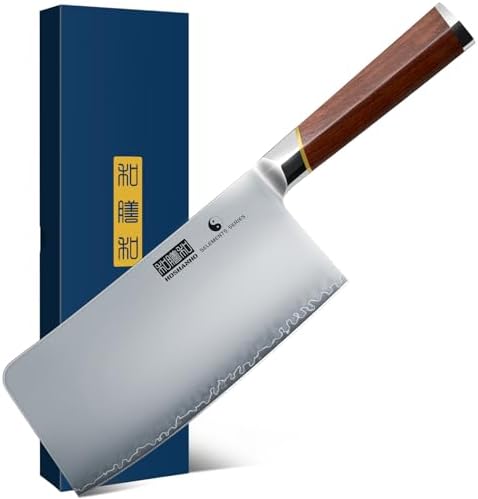
  • Premium Durability And Quality – Super Sharp Cleaver Knife is made of high-quality stainless steel that resists rust, co…
  • Multi-purpose Cleaver’s Knife – Designed to be multipurpose knife for professional applications and it can be used for y…
  • Extremely Sharp Edge – Sharpness is key to achieving the best cuts and this is evident in the knife’s blade which is qui…

2. The Middleweight: Poultry and Lobster

Not every task requires a 2-pound beast. Whole chickens, duck, or lobster shell splitting requires a balance between agility and power.

  • Hybrid Role: These blades are often lighter (approx. 0.8 to 1 lb) with a thinner spine (2.5mm to 3.5mm).
  • Usage: It is sharp enough to slice through meat cleanly but has enough backbone to pop through joints and smaller rib cages. However, they should not be used on heavy beef bones.
  • Multi-purpose Cleaver: The classic 7″ Chinese kitchen knife easily handles your everyday kitchen needs such as chopping,…
  • Professionally Ground Sharp Blades: Hand sharpened by experienced artisans. The kitchen knife has an 18° angle on both s…
  • Extremely HC Outstanding Stainless Steel from Japan: This imarku Meat Cleaver is forged from excellent Japan imported hi…

3. The Lightweight: Chinese Vegetable Cleaver (Cai Dao)

This is the most misunderstood tool in the kitchen. Although it is rectangular like a cleaver, it is mechanically a Chef’s Knife.

  • Blade Geometry: The spine is razor-thin (2mm or less). The edge angle is acute (often 15 degrees).
  • Usage: It is designed for push-cutting vegetables and slicing boneless meats. The broad blade is excellent for scooping up prep work from the cutting board.
  • Warning: Never strike a bone with this. The hard, thin steel will chip immediately.
  • 【Excellent Sharp Edge】The sharp blade with 15° on each side allows for clean and precise cutting, and the hardness is as…
  • 【Precision Forged Japanese Steel】This meat cutting knife is made of our specially formulated Japanese 10Cr15CoMoV stainl…
  • 【Ergonomic Handle Design】The handle of our chef’s knife is meticulously crafted for both comfort and control, designed f…

4. Critical Safety Feature: The Handle

Regardless of the weight class, the handle construction is nonnegotiable.

  • Full Tang: The metal of the blade must extend all the way through the handle. In a chopping tool, the stress on the neck (bolster area) is immense. Partial tangs will eventually snap, sending the blade flying.
  • Grip Material: When butchering, hands get covered in fat and moisture. Avoid smooth, polished handles. Look for textured composites (like G10 or Pakkawood) or textured polymers that provide traction when wet.

Verdict: Matching the Tool to the Tissue

  • Breaking Beef/Pork: Prioritize Mass (Weight). Get the heaviest tool you can safely lift.
  • General Prep: Prioritize Geometry (Thinness). A vegetable cleaver is the ultimate slicing machine, provided you respect its fragility.
  • Chicken/Game: Go for the Middleweight. Versatility is key.

Related article: Victorinox Fibrox Pro Boning Knife Review: Why It Is The Industry Standard

BYkooc Paring Knife Set Review: The $5 Workhorse?

In the world of kitchen tools, there is a whole category filled with things called “loss leaders.” These are things you purchase knowing they will get lost at a picnic, thrown away accidentally with pizza boxes, or “borrowed” by a roommate never to return. You do not need performance art; you need volume.

  • 【Multi-functional Paring Knife Set】-The rainbow knife set can easily help you handle small or complex cooking tasks.For …
  • 【Pleeling Knife】- The peeling knife set is made of stainless steel and has been finely polished to become very sharp, ma…
  • 【Design Excellence】-Paring knife set adopts an ergonomic design concept aimed at achieving optimal comfort and control. …

However, cheap often means dangerous dullness. The BYkooc 8-Pieces Paring Knife Set dominates the Amazon best-seller list not because it competes with Wusthof but because it solves the “disposable utility” problem better than any competitor.

Blade Physics: Thinness Over Hardness

With a knife that costs approximately $1.25 per unit, how can it actually cut anything? The secret of the blade geometry is in its thinness.

  • Stamped Construction: Unlike forged knives, which have a thick spine that tapers down, these blades are stamped from thin sheets of stainless steel.
  • The Physics: Because this blade is so thin almost razor-thin it generates very little friction passing through soft produce, like strawberries or cucumbers. It doesn’t split the food; it slides through it.
  • The Limitation: Do not use this on a butternut squash or sweet potato. This thin steel does not have the structural integrity for hard vegetables and will flex or snap under heavy lateral pressure.

Safety Mechanics: The Sheath Value

The main technical feature corresponding to this price class is the presence of independent sheaths.

Most budget knives are sold loose – creating a “drawer hazard” where you risk cutting your hand just reaching for a spoon. The snap-on sheaths allow these to be safely tossed into:

  • Gear for Camping: Without cutting through your bag.
  • Lunchboxes: To peel fruits at work.
  • Junk Drawers: Without dulling the edge against other metal objects.

Hygiene and Materials

These handles are made from molded Polypropylene (PP). Though they feel light almost “toy-like” to the touch, PP is chemically inert. It does not absorb water, odors, or bacteria, making these significantly more hygienic than cheap wooden handles which rot over time.

The Color-Coded System Black, Yellow, Green, and Red is not for mere aesthetics; this enables a simple form of HACCP cross-contamination prevention, such as Red for meat and Green for vegetables during food preparation.

The Realistic Verdict

If you’re a serious chef in search of balance and edge retention, look elsewhere. If you simply need a set of “beater” knives for an Airbnb, a dorm room, or for that trip you’re taking camping, the value proposition here is mathematically unbeatable.

The Good

  • Cost-Per-Use: At ~$5 for a set, the replacement cost is negligible.
  • Slicing Ability: Surprisingly sharp on soft fruits due to the thin blade profile.
  • Portability: Included sheaths make them the ultimate travel knife.

The Bad

  • Fragility: The thin stamped steel is brittle. It will snap or separate from the handle under heavy pressure.
  • Edge Retention: Soft stainless steel needs to be honed often to maintain sharpness.
  • Size: The handle is a bit small for big hands, standing at 3.8 inches.

HENCKELS Forged Accent 2-Pc Paring Set Review: Why Weight Matters

For most home cooks, a paring knife is considered a somewhat disposable item: They buy supercheap stamped sheet metal knives that feel like toys in the hand. And while they come sharp from the factory, they lack a critical physical property: Mass.

When peeling an apple or turning a mushroom “in-hand” (holding the food in the air, not on a board), this featherlight knife forces one to apply more grip pressure in order to control the blade leading to hand cramping. The HENCKELS Forged Accent Set solves this ergonomic failure by bringing a full bolster and forged construction to the budget category.

  • STAYS SHARP LONGER: Professional, satin-finished blade boasts precision cutting and is finely honed for long-lasting sha…
  • THE LAST KNIFE YOU’LL EVER NEED TO BUY: German Engineered Knife Informed by over 100 Years of Mastery. HENCKELS knives a…
  • DURABLE AND BALANCED: Forged bolster construction offers durability and balance and a seamless transition from blade to …

The “Forged” Difference: Bolster and Balance

The defining feature of this set is the Forged Bolster. This is the thick band of steel where the handle meets the blade.

This doesn’t exist in stamped knives, such as Victorinox or Vituer. In the Henckels Accent, this added mass shifts the center of gravity backward toward your fingers.

  • Why it matters: When the knife is balanced, the blade feels like a natural extension of your index finger. You get feedback from the cut without fighting the tip weight. It transforms a tedious task like peeling 5 pounds of potatoes into a controlled, rhythmic motion.

Two Sizes, Two Distinct Roles

Both have 3-inch and 4-inch blades. For a lot of novices, this might appear redundant, but their mechanics serve different distinct purposes:

  • 3-Inch (The Peeler): The shorter length brings the tip closer to your thumb. This minimizes leverage, giving you maximum control for intricate work like hulling strawberries or peeling garlic cloves.
  • 4-Inch (The Mini-Utility): This extra inch gives enough “runway” to use on a cutting board. It’s perfect for mincing shallots or slicing citrus, tasks where the 3-inch blade would be too short to complete a stroke.

Fit and Finish: German Engineering

While Henckels is the “value” brand compared to their premium Zwilling line, the DNA is the same. The blades are made from High-Quality German Stainless Steel.

The handles are made of ABS, with a classic triple-rivet design and a stainless steel endcap. This endcap is not simply cosmetic; it serves as a rear counterweight, further stabilizing the knife in your palm.

Should You Upgrade to Forged?

If you’re used to those dollar-store knives, picking these up is going to feel significantly heavier, and that’s the point. The weight does the work for you.

This set is for the home cook tired of having flimsy blades bend when cutting through a crisp apple. It offers 90% of the performance of a $100 Wusthof paring knife at a fraction of the price.

The Good

  • Balance: The forged bolster provides a professional, weighted feel rarely found at this price point.
  • Versatility: Having both 3-inch and 4-inch options covers every small prep task.
  • Durability: Triple-riveted handles and full-tang construction ensure the handle won’t snap off.

The Trade-off

  • Rust Potential: Although stainless, customer reviews report spotting if left wet. They have to be dried immediately.
  • Thicker Spine: Since they are forged, the blades are thicker than cheap stamped knives. To some users, they are a little bit wedgy on very dense vegetables such as carrots.

read more: Are Ceramic Knives Worth the Maintenance Hassle? (Sharpening & Durability Review)

VITUER 4-Piece Paring Knife Set Review: The Truth About Budget Blades

Let’s be realistic: You don’t buy an 8-piece knife set for less than $10 expecting heirloom quality. You buy it because you need functional sharpness without the fear of ruining an expensive tool.

  • PARING KNIFE SET: 8 Piece Paring Knives including 4 of Paring Knives and 4 of Knife Sheath, it’s designed to be a combin…
  • MULTI-FUNCTIONAL PARING KNIVES: This Rainbow Knife set can easily handle your daily kitchen tasks of chopping, slicing, …
  • RAZOR SHARP BLADE: This pairing knife is made from the high-quality German stainless steel(3Cr13MoV) with a Rockwell Har…

You don’t want high-end cutlery in such a chaotic environment: a college dorm, camping tackle box, or the office kitchenette. You want a “beater” knife one that can get the job done and be replaced sans heartache. The VITUER 4-Piece Paring Knife Set positions itself as the ultimate disposable utility option, but does the steel actually hold up?

Related article: SAINT GERMAIN Bread Lame – Perfect Crust & Oven Spring

Steel Analysis: What is 3Cr13MoV?

VITUER markets this as “High-Quality German Stainless Steel,” but let’s break down the metallurgy. The specific alloy used is 3Cr13MoV.

In the cutlery world, this is known as a budget-friendly martensitic stainless steel.

  • The Good: It has a Rockwell Hardness of 56±2 HRC. That is relatively soft, which makes it very easy to sharpen. You can bring the edge back to life with just a few swipes on a ceramic mug bottom or a basic sharpener.
  • The Bad: It doesn’t contain vanadium and cobalt that are found in the premium steels. Edge retention is low. You will need to hone this knife frequently if you use it daily.

Addressing the “Rust” Complaints

Several user reviews state that these blades stain or rust if they are left in the sink. This is chemically correct.

While stainless, 3Cr13 contains less Chromium about 13% compared to premium steels that often have 15-18%.

  • The Fix: Treat this knife like cast iron. Do not leave it soaking in water. Wash it, dry it immediately, and slide it back into its sheath. If you treat it with basic care, corrosion is manageable.

Ergonomics and Safety Features

The set includes matching protective sheaths, which is the primary selling point for this price bracket. It turns the knives into safe travel companions for picnics or RV drawers.

Handles are molded from Polypropylene (PP). Although the material is hygienic and hydrophobic (does not absorb bacteria), some users mention that this symmetric design makes it hard to feel the blade’s orientation without looking. This is a trade-off for the lightweight, ambidextrous design.

The Realistic Verdict

Is this VITUER set replacing your Wusthof or Shun? Absolutely not. It is the best value for money, though, when it comes to a “rough use” knife.

At about $0.90 a knife, the math can’t be beat. It cuts fruit, opens packages and slices cheese with aplomb. If you lose one on a camping trip or a roommate ruins the edge, it doesn’t matter.

The Good

  • Unbeatable Price: Extremely low cost-per-unit makes them practically disposable.
  • Sharp Out of Box: Thin stamped blade slices through soft produce easily.
  • Portability: Included sheaths make them safe for travel and crowded drawers.

The Bad

  • Corrosion Resistance: Must be dried immediately after use; cannot remain wet.
  • Edge Retention: Soft steel dulls faster than premium alternatives, but it sharpens easily.
  • Tactile Feedback: The shape of the handle does not provide clear “blade-up/blade-down” orientation.

Classic Meals

- Advertisement -