Home Blog Page 39

Goodbye, Measuring Cups: Are Smart Kitchen Scales Worth the Hype?

It is necessary to speak about the “Cup.”

When it comes to cooking, a cup is merely a guideline. A bit more onion in a pot won’t hurt anyone. But in baked goods? “Baking,” as the saying goes, “is a science.” A tightly packed cup of flour will weigh 20% more than a loosely packed cup of flour. That 20% difference separates a moist cake from a crumbly rock.

I thought my oven was busted until I realized I had been measuring incorrectly.

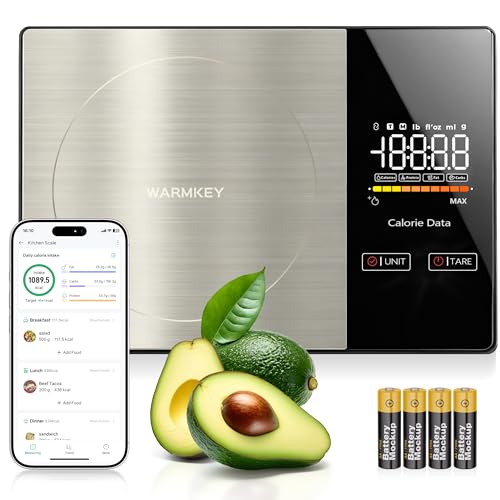
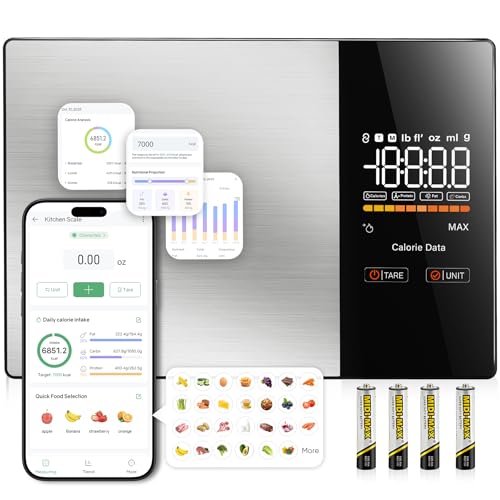
This is exactly why I decided to give the Smart Kitchen Scale with App Connectivity a try. This device is intended to assist the user in making a dish by following a series of instructions, having a precision of 0.1g, and being connected to the phone via Bluetooth. But does it make sense to introduce the use of a sophisticated device into the preparation of a simple mixture of flour?

The Problem with “Dum*b” Measuring

If you’re using plastic measuring cups, you’re washing far too many dishes. Scoop the flour using the dirty cup #1. Measure the sugar using the dirty cup #2. Measure the oil with the dirty cup #3.

A digital kitchen scale would work better, although then you have to calculate the amount. “Okay, the bowl weighs 500g, so I have to get it to 750g.” That requires mental power.

How the ‘Smart’ Scale Changes the Game

A smart scale is linked to an application on either a tablet or a phone. You choose a recipe, and in this case, it could be “Chocolate Chip Cookies,” and then it switches to an “interactive bowl.”

  • No More Math: The application automatically adjusts the scale to zero.
  • The “Pour” Bar: The virtual bar on your screen gets filled as you pour flour into a bowl. “Pour until the circle is green,” it says.
  • Scaling Up: Do you want to make 1.5 times the recipe? You don’t need a calculator. You just press a button on the app, and it figures everything out immediately.

The True Victory: Fewer Dishwashes

This was the feature that truly won me over. Because this thing walks you through layering all your ingredients one at a time into one and the same bowl (tare function automatic in between), I made an entire cake with just one bowl and one spoon. Measuring cups? Forget about washing those. That alone made it worth paying for.

Read more: Best Knife Bags and Rolls for Home Cooks and Traveling Chefs

The Tech Headaches (The Cons)

It would not be a truthful review without the negatives.

  • The “Sleep” Mode: If you’re taking a long time to locate the vanilla extract in your kitchen cabinet, the scales may time out and thus cut off the Bluetooth connectivity to conserve the battery. Mid-recipe reconnection is annoying.
  • Dirty Screens: You are baking. Your hands are covered with butter and flour. Tapping your clean iPad to click “Next Step” is messy. You’ll have to clean your electronics after this activity.
  • App Dependency: If the person wants to apply their own recipe, such as Grandma’s secret pie recipe, the smart capabilities are unnecessary. This is simply another expensive scale.

Is It Worth It?

If you are an intuitive cook who throws everything in a pot and hopes for the best, then you’ll be annoyed at this recipe.

But if you are a baker trying to create a superior French macaron, or a newcomer fed up with cake that tastes too much like a crispy, crumbly cracker, then a good digital scale is a HUGE improvement. Goodbye anxiety-ridden “Did I measure that right?” accuracy, replaced by absolute accuracy. Just remember to keep a damp cloth handy to wipe your smartphone screen.

read more: The Complete Guide to Cleavers: Choosing the Right Weight for Meat and Bone

Lazy Cooking or Genius Move? Reviewing the Automatic Pot Stirrer

There’s a reason I rarely make risotto or homemade custard on weeknights. It requires 25 minutes of unbroken eye contact and constant arm movement. If you turn your back for thirty seconds to break up a sibling fight or pour a glass of wine, the bottom burns, and dinner is ruined.

Enter the automatic pot stirrer. You’ve no doubt seen the thing on social media it’s a little robot spider that sits in your pan. The promise is great: it stirs so you don’t have to.

But is this actually a helpful tool, or just another piece of plastic junk destined for the garage sale box? I put one to work on a batch of Sunday gravy to find out.

How It Really Works

The concept is relatively simple. It’s a battery-operated motor with three legs and silicone feet. You place it inside your pot, press the button, and it vibrates and spins, agitating the liquid.

The first thing you notice is that it doesn’t “stir” like a human does. It doesn’t fold ingredients over. Instead, it creates a constant swirling motion that keeps liquid moving across the bottom of the pan to prevent scorching.

Quick Answer: Who is this for?

In general, an automatic pot stirrer is a worthy investment for the home cook who regularly prepares thin sauces, gravies, soups, or caramel that must be kept in constant agitation to avoid burning. Most models, however, don’t have the torque for thick stews, chunky oatmeal, or heavy bolognese, rendering them useless for any type of hearty meal.

Where It Shines (The Wins)

I used it for a béchamel sauce, which is notorious for burning if you look at it wrong.

  • The Result: It worked beautifully. I was able to chop vegetables for a salad while the little robot kept the milk in motion. It really was like having a sous-chef in the kitchen.
  • Best Use Case: It’s great for holidays. When you’ve got four burners up and running on Thanksgiving, having a gadget that keeps the gravy from clumping is a justifiable stress reliever.

The Sad Reality (The Cons)

Before buying one, you need to know its physical limits; these devices are not strong.

  • The “Thick” Test: I tried it on a chunky chili. It got stuck immediately. The motor just isn’t powerful enough to push heavy chunks of meat or potatoes. It just vibrated sadly in place.
  • The Blind Spot: Most of these stirrers rotate in a circle, but they often miss the very outer edge of the pot, which is where the wall meets the base and exactly where burning happens most often. You still need to scrape the edges manually now and then.
  • Batteries: They use batteries up fast. If you are going to do a 4-hour slow cook, better have fresh batteries in, or it dies halfway through.

Worth the Drawer Space?

If you are buying this expecting it to mix a heavy beef stew, then you will be disappointed. It’s just not strong enough. But for delicate sauces, soups, and that high-maintenance risotto? It is surprisingly helpful. It’s a luxury, not a necessity, but on a chaotic Tuesday evening, I’ll take all the extra help I can get.

Read more:My Tiny Kitchen Survival Guide: 5 Gadgets That Actually Save Space

The Battle of the Drawers: Why I Swapped Metal for Silicone Collapsible Strainers

If one thing in the kitchen cabinet more than any other likes to act like a bully, it would be the colander.

You know the problem. You have the typical stainless steel or hard plastic colander. It is massive, round, and refuses to stack alongside anything else in your kitchen. You attempt to pile a pot on top of it, and thus topples the whole lot over. It may as well render an entire shelf useless for the storage of a tool that you use a mere two times a week.

This is all the more reason why collapsible silicone kitchen utensils have become so popular. But is it true that soft silicone is reliable when it comes to boiling pasta? This is what you need to know.

The Space-Saving Magic

The first reason to consider buying a collapsible strainer has to be geometry.

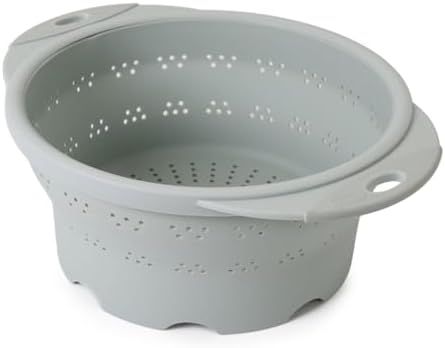
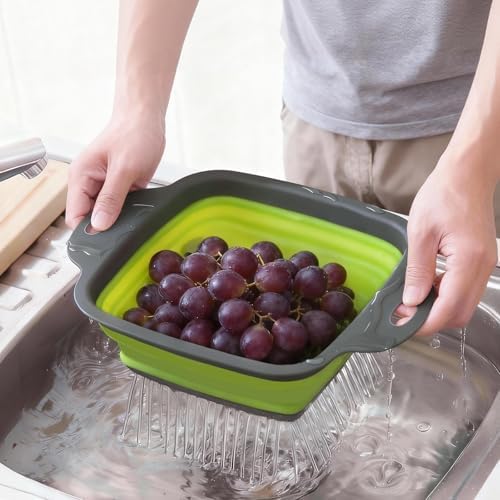
“Regular” colanders come in the form of inflexible bowls. “Collapsible” colanders have a hard plastic frame and “base,” and these elements are linked by accordion folds of silicone. To store the colander after you’re done with it, you press down on it and the colander collapses from a 5-inch deep bowl into a 1-inch disk.

  • The Result: You can position it vertically alongside cutting boards or layer it below a dinner plate. In a small apartment such as mine, it opened up enough room in a cabinet for a whole blender.

Quick Comparison: Metal versus Silicone

For those torn between the two, here is a breakdown.

  • Metal Colanders: Drain quickly and last forever but consume enormous storage space.
  • Collapsible Silicone Strainers: Are ultimate space-savers, usually dishwasher safe, but drain slowly because there are less holes, as well as tend to collapse suddenly if packed with heavy materials.

Where Silicone Struggles (The Cons)

I promised truth, so here is the annoyance not listed on the box: Drainage Speed.

In a wire mesh strainer, there are holes all around, including the bottom and sides. Water disappears immediately. In the most common type of collapsible strainers with a flat bottom, only holes are there on the bottom surface.

  • The Problem: In pouring a massive amount of spaghetti into the colander, water accumulates for a brief moment prior to draining out. It is effective but not instantaneous.
  • The Risk: Because of the flexibility of the sides, if you turn on a big pot of potatoes too much, sometimes the strainer will attempt to fold in on itself. You have to treat it a little more gently than a metal strainer.

read more: Why I Finally Ditched My $10 Grocery Store Thermometer

Cleaning and Durability

There is a myth about these kinds of items being hard to clean. It is actually easier. They are dishwasher safe, and because they flatten out, they go down in the dishwasher bottom rack as though they were a plate, as opposed to something akin to a large metal bowl.

However, the longevity of the material is limited. With heavy use involving constant folded/unfolding for a few years, the material may finally break down along the seams. Whereas a metal colander is for the taking and is ‘buy it for life,’ the silicone material is a ‘buy it for a few years’ item.

Is It Worth It?

If you have the kitchen of the giant super-rich, and there are an infinite number of cabinets, then stick with the metal. Trust me, the drainage is better.

But if you are fighting for every inch of cabinet space, then the sacrifice is absolutely worthwhile. Giving back 5 seconds of drainage time for an entire shelf is a trade-off I will make every time.

read more: Stop Guessing: A Real Look at the Alpha Grillers Instant Read Thermometer

My Tiny Kitchen Survival Guide: 5 Gadgets That Actually Save Space

In my very first urban apartment, the kitchen was really a hallway. I had only one drawer, one cabinet, and about two feet of counter space. If I placed my cutting board on the counter, the coffee maker had to go on the floor.

I began trying to purchase “mini” versions of all things, but they all just seemed like playthings. Then I tried stacking things until they tipped over. Later, after a great deal of trial and error and several avalanches of Tupperware, I discovered which tools really functioned.

Living in a compact space has nothing to do with owning fewer stuff but rather owning stuff that doesn’t consume “dead air.” These are the gadgets that helped me turn my compact kitchenette into an efficiency workspace.

Read more: Why I Finally Ditched My $10 Grocery Store Thermometer

The Golden Rule: Create Counter Space

The hardest part of a compact apartment isn’t the space to store things; it’s space to prepare them. What’s one supposed to do with the onion if the pasta pot is occupying most of the counter space?

This is exactly why Over-the-Sink Cutting Boards are a necessity. It has collapsible strainers or bins included, and it fits securely over your sink. Immediately, you have created two extra feet of counter space out of thin air. You chop, push it into the sink, and keep the actual counter space clear to prep your meals.

Quick Cheat Sheet: What Works?

In a small kitchen, the best space-saving solutions for your cabinets and drawers include those that emphasize collapsibility and verticality. Look for:

  • Collapsible Silicone Colanders that collapse to the size of a dinner plate.
  • Magnetic Spice Racks that use the unused side of your fridge.
  • Mixing Bowl Sets that nest fully into each other, compacting five products into one space-saving device.

Go Vertical (The Fridge Side)

Consider the side of your refrigerator. Is it empty? This is wasted real estate.

I invested in a strong Magnetic Organizer Shelf. It sticks to the side of the fridge like glue and holds paper towels, olive oil, spices, and oven mitts. Taking all these bulky items that sat on the countertop and storing them on the “wall” of the fridge made the kitchen instantly double in size.

The Problem with Round Containers

Open your cabinet. If you use round storage boxes, you are squandering space. The gaps between circular bowls cannot be filled.

The use of Square, Stackable Containers was a huge success. These containers could be placed against each other like bricks in a Tetris game. With this design, you could pack 30% more food into the same space.

What to Avoid (Don’t Buy These)

Avoid the “All-in-One Breakfast Station” deals. You know what I mean the thing that does it all: toasting, egg frying, and coffee brewing. Just kidding. They just end up taking up all your counter space because they’re all bulky and big. They’re hard to clean and honestly, they kind of suck at all of them.

Stick with separate items that can nest or fold. You don’t need a big kitchen to prepare tasty food. You just have to start converting your space by not storing air. Now your hallway just converted into a home.

read more: Growing Up: Real Look at Kibbidea Stainless Steel Knife Set

Why I Finally Ditched My $10 Grocery Store Thermometer

We all start with the same kitchen tools. You buy the cheapest utensil set you can find, and it usually includes a flimsy plastic meat thermometer. It takes 15 seconds to give a reading, the screen fogs up, and eventually, it falls into the sink and dies.

  • Smart Display Base with Control: The ThermoMaven G1 wireless meat thermometer features a versatile smart display base th…
  • Reliable Sub-1G Connectivity: Experience stable, long-range monitoring with our advanced Sub-1G technology, allowing you…
  • NIST Certified 6-Sensor Precision: The ThermoMaven G1 digital meat thermometer features 6 sensors (5 internal and 1 exte…

I used those cheap gadgets for years until I realized they were costing me money in ruined roasts.

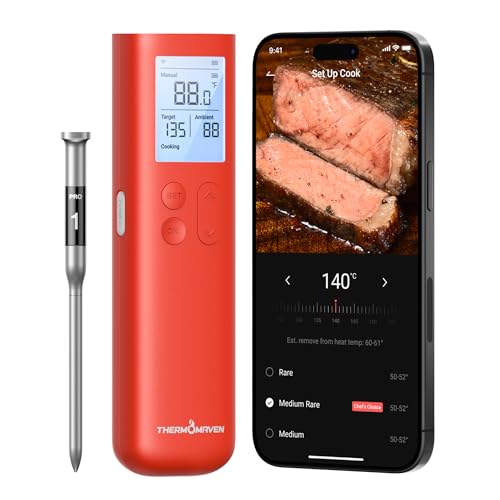
That is why I decided to test the ThermoMaven Professional Meat Thermometer. It claims to offer commercial kitchen standards (NSF Certified) at a home-cook price point. But is the jump in quality actually noticeable? Here is what I found after using it on a Sunday grill session.

The “NSF” Difference

The first thing you notice is the “NSF” logo on the packaging. This stands for National Sanitation Foundation.

Why does this matter? Most cheap thermometers are just generic electronics. NSF certification means this device meets strict public health standards for cleanability and material safety. It feels completely different in your hand solid, sealed, and clearly built to survive a busy kitchen environment, not just a drawer.

Who Needs This Upgrade?

The ThermoMaven Professional is ideal for home cooks seeking commercial-grade accuracy without the premium price tag of high-end brands. With NSF certification, rapid 2-second response times, and IP67 waterproofing, it outperforms standard budget thermometers significantly. It is best suited for serious grilling, brewing, and roasting where precision and hygiene are non-negotiable.

Smart Features That Aren’t Gimmicks

Beyond the build quality, two features stood out during actual cooking:

  • Intelligent Motion Sensing: There are no buttons to mash with greasy fingers. The device detects when you pick it up and turns on automatically. When you set it down, it goes to sleep to save battery. It makes the cooking flow incredibly smooth.
  • The Rotating Screen: If you are left-handed or trying to check a turkey at an awkward angle in the oven, reading the numbers can be a pain. This screen rotates 360 degrees automatically, so the numbers are always right-side up.

What You Should Know (The Cons)

While it is “Professional,” it is still an instant-read thermometer.

  • Don’t Leave It In: You cannot leave this inside the meat while it cooks in the oven. It is made for quick checks only.
  • Magnet Strength: It has a magnet to stick to your fridge, which is handy, but if you slam the fridge door too hard, it might slide down a bit. It’s strong, but not industrial-strength.

Is It Worth The Switch?

If you are still using a slow, manual dial thermometer or a cheap digital one that you don’t quite trust, this is a massive upgrade. The speed alone (reading in 2-3 seconds) prevents you from burning your hands over a hot grill. It stops being a “gadget” and becomes a reliable tool you reach for every single time you cook.

Stop Guessing: A Real Look at the Alpha Grillers Instant Read Thermometer

There is a particular kind of anxiety that comes with steak grilling and guests ringing your doorbell. It’s a perfect medium-rare that you want, and the line between “perfect” and “gray and tough leather” is 60 seconds long. “Ah, it needs a poke and a peek,” and you end up slicing it open in a panic and letting all your juices out.

  • Instant Read Food Thermometer | Our instant read thermometer features a temperature probe and advanced, highly accurate …
  • Multi-Use | From bbq thermometer to baking thermometer, our digital food thermometer for cooking is perfect for meats, l…
  • Easy-Read Digital Thermometer For Cooking | Large instant thermometer dial with bright blue backlight means you can alwa…

If this sounds like you, you do not have a need for cooking school. You only have a need for a quick thermometer.

The product was evaluated for its functions and performance after purchasing the Alpha Grillers Instant Read Thermometer to find out whether there is a cheap alternative that can compare to top-end brands. Here’s the result.

Speed is Everything

The “Instant” part of the title is most significant. In my testing, this thermometer takes a temperature reading after roughly 2-3 seconds.

Would it be considered the fastest-cueing thermometer out there? Possibly not although there may be a professional $100 thermometer that’s a millisecond ahead of this product but for a casual cook like me, 3 seconds is very quick enough to check a burger without scalding my hand between me and the hot coals. It’s virtually lightning speed when you consider an old thermometer that took a whopping 20 seconds to move.

Quick Review: Is it worth buying?

For home cooks looking to prevent overcooking meat without breaking the bank, the Alpha Grillers option is probably the best bang for one’s buck. It has an IP66 water-resistance rating, an LED backlight for nighttime grilling, and an attached temperature guide. It offers home cooks a level of quality that they won’t find in drugstore thermometers or in higher-end, more expensive options from an upscale cookware set.

Characteristics that Really Matter

Apart from simply giving you the temperature, there are two features of its design that make this gadget extremely useful:

  • “Auto-On” Probe: There are no buttons that get in the way when your hands are full of marinade. Just flip the probe out, and it turns on. Fold it back, and it turns off. It sounds silly, but this is what makes the process seamless.
  • The Backlight: You know the struggle of attempting to grill in the fall when the sun goes down at 5 PM. Reading a screen with a flashlight in your mouth is no easy feat. This screen shines through bright blue, with giant numbers that populate easily in the dark.

What It Is NOT

It is important to manage one’s expectations. This is considered to be an instant-read thermometer. It is not a leave-in thermometer.

  • Don’t: Insert this into a roast and throw it into the oven. The plastic will melt. It’s to be used briefly and then taken out.
  • Durability: It is waterproof because it is easy to clean under a running tap. It is, however, made of plastic. It may crack if dropped on concrete pavers.

Why You Should Upgrade

The idea of cooking by touch is simply not a reality for most of us. With the Alpha Grillers thermometer, there is no longer any guesswork. If you are testing baby formula, frying oil temperatures, or a Thanksgiving day turkey, knowing the precise temperature makes all the difference. Its cost will pay for itself with the price of a few steaks.

Classic Meals

- Advertisement -