Both the Lodge Double Dutch Oven and the Le Creuset Signature trap steam perfectly. Physics does not care about brand names. A heavy iron mass holds extreme heat effortlessly, forcing a wet ball of dough to expand aggressively before the crust hardens.


If both pots bake phenomenal bread, the massive premium in cost comes down entirely to structural engineering, material science, and how you plan to use the vessel outside of baking.
The Sourdough Safety Hazard
Sourdough baking presents a distinct physical hazard: burning your forearms on the walls of a screaming-hot iron pot.
Lodge solves this structural problem brilliantly. Their “Double Dutch” acts as a combo cooker. By inverting the system, you use the shallow skillet lid as the base and the deep pot as the dome. You slide the scored dough directly onto the flat skillet surface. There are no high walls to navigate.
Le Creuset utilizes a traditional deep-pot design. To bake bread, you must carefully lower your dough on a parchment sling down into the deep cavity. This requires wrist strength, precision, and heavy-duty oven mitts to avoid touching the scorching hot interior walls.
Bare Iron vs. Vitrified Enamel
This is exactly where the massive disparity in cost is either justified or wasted.
Lodge uses bare, pre-seasoned cast iron. You can dry-preheat this pot completely empty at extreme baking temperatures for two hours, and it will not flinch. It absorbs severe thermal shock without issue. However, bare iron requires maintenance. You cannot use soap, and you must apply a micro-thin layer of oil after every use to prevent aggressive rusting.
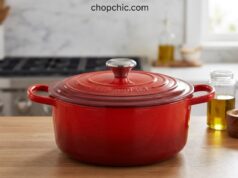
Le Creuset applies proprietary, high-fired vitrified glass enamel in their French foundries. You never have to season it with oil, and it wipes clean instantly. Furthermore, the Signature series upgrades the hardware with a heavy-duty stainless steel lid knob that easily handles the punishing heat of bread baking. For bakers, the true advantage is the light sand-colored interior. It allows you to visually monitor the exact browning of your crust during the final twenty minutes a notoriously difficult task against the pitch-black background of the bare Lodge pot.
User Experience Reality
The market data distinctly highlights how buyers view these two tools. Lodge buyers are highly pragmatic. Verified purchaser Craig B. noted he bought it specifically for sourdough, stating it is “Just the right size” and “heavy which it should be.” It is viewed as a heavy-duty, indestructible utility tool.
Le Creuset buyers treat their purchase as a permanent investment. Verified buyer Roger Culleton summed up the multi-generational appeal, calling it the “Highest quality ever.” They buy it for the lifetime warranty, the rust-proof convenience, and the aesthetic prestige of keeping it permanently displayed on the stovetop.
The Pragmatic Baker’s Choice
If your sole objective is baking the best possible artisan bread without emptying your wallet, buy the Lodge Double Dutch Oven. The inverted skillet-lid design completely eliminates the risk of forearm burns, and the bare iron construction easily absorbs the punishing dry preheats required for explosive oven spring.
The Culinary Heirloom
If you want a multi-purpose kitchen workhorse, invest in the Le Creuset Signature. Bare iron is terrible for acidic foods; you cannot simmer a heavy tomato sauce in the Lodge without stripping the protective oil seasoning. The Le Creuset flawlessly transitions from a high-heat sourdough bake to a delicate, slow-simmered wine braise. You are paying for a chemical-free, stain-resistant glass surface that you will eventually pass down to your children.