
For years, the non-stick frying pan was the epitome of convenience for the modern cook. The ability to slide a fragile omelet directly onto a plate without a crusted mess was nothing short of magical. But this magic was recently replaced with alarmist headlines, documentaries, and social media posts and warnings. Millions of cooks are now standing in front of their older skillets, asking, “Is Teflon bad for you?”
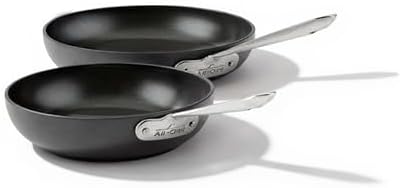
- This cookware set includes 8 inch and 10 inch Fry Pans, ideal for browning, searing, and pan-frying foods like eggs, veg…
- High Quality Performance with Everyday Convenience – HA1 Nonstick heavy gauge aluminum and stainless-steel base deliver …
- Design You Will Love- HA1 Nonstick has a sleek and stylish contoured design. Our double riveted stainless steel handles …
To cut through the hysteria and get to the facts, we need to examine the alphabet soup of chemicals known as PTFE, PFOA, and PFAS, and then examine the actual chemistry and biology to determine if these chemicals are actually dangerous to humans.
The Chemistry of Teflon: What is PTFE?
First, we need to determine just what Teflon is and if it is actually dangerous to humans. “Teflon,” as a word, is actually a brand name, and that brand name was originally owned and still is owned by the Chemours Company, a spin-off of DuPont. The actual name for the non-stick material is a synthetic material known as polytetrafluoroethylene, or PTFE.
The actual composition is a synthetic material known as a fluoropolymer, a type of plastic that is extremely slippery and extremely stable. PTFE is entirely inert at room temperature and at all commonly used cooking temperatures. It does not react with any known substance, including your food, water, or even chemicals. It is, therefore, entirely safe to cook on, if we are talking about actual PTFE and its composition and behavior.
The Ghost of the Past: The PFOA Problem
If PTFE is safe, then why are people worried about cancer and Teflon use? The problem is that PTFE is not actually used to make non-stick cookware; rather, a different compound known as PFOA is used.
Historically, PFOA was part of the manufacturing process, as it was necessary to bond the PTFE coating to the metal pan. PFOA is considered a “forever chemical” and is part of the PFAS family. PFOA is associated with a number of health issues, including thyroid problems, chronic kidney disease, and cancer. PFOA is also notorious for its permanent presence in the environment and the human body.
The reality check is as follows: PFOA is now banned. In the United States and Europe, the use of PFOA in the manufacturing process for non-stick cookware was completely eliminated by 2013. If you purchase a new non-stick pan, it does not have PFOA. However, if you are still using an old, scratched-up, hand-me-down Teflon pan from 2005, it is time to toss the pan in the dumpster.
The Real Danger: Temperature and “Teflon Flu”
While the modern non-stick pans are PFOA-free, they are not indestructible. The primary danger associated with modern PTFE non-stick pans is temperature control.
PTFE is only heat-stable up to a certain temperature. If you put an empty non-stick pan on the burner and crank the heat, the metal part of the pan can easily reach 500 degrees Fahrenheit (260 degrees Celsius) or hotter. At this extreme temperature, the PTFE coating literally begins to break down and release noxious chemical fumes.
Inhaling these invisible, odorless, and tasteless chemical fumes causes the well-known medical condition called Polymer Fume Fever, or “Teflon Flu.” The symptoms are the same as having a viral infection, complete with chills, headaches, fever, and flu-like body aches. While only temporary in nature, “Teflon Flu” is famously deadly to pet birds in the house.
Is Scratched Teflon Toxic?
This is the most common situation in any home kitchen. You are using a metal spatula, and suddenly your non-stick pan has silver lines scratched into it. This brings us to the ultimate question: is scratched Teflon non-toxic if you accidentally eat the Teflon chips?
To our surprise, the answer is no. PTFE is chemically inert, meaning that even if you accidentally eat a microscopic piece of Teflon non-stick coating, your body will be unable to assimilate it. Instead, it will pass completely through your stomach without any adverse effects.
But even with this knowledge, it is recommended that you replace the scratched non-stick pan immediately. Although Teflon non-stick chips are non-toxic, they also mean that the scratched pan is no longer non-stick. This means that when cooking, the food will burn and stick to the pan. You will have to use high heat to cook the food properly. Also, the aluminum will leach into the food when cooking acidic ingredients like tomatoes. This will give your meal a metallic taste.
The Final Verdict on Non-Stick Safety
So, is Teflon non-stick bad for you? If you are using a non-stick pan with PTFE non-stick coating and are using low-to-medium heat on your stove, then Teflon non-stick is safe to use.
However, the margin for error is small. All it takes is to forget an empty non-stick pan on high heat to fill your kitchen with noxious fumes. PTFE non-stick is also very fragile. You will inevitably scratch the non-stick surface of the pan. This will mean that you have to buy a new non-stick pan every few years. This is very bad for the environment.
If you are fed up with worrying about invisible fumes, Teflon non-stick peeling, and having to buy non-stick pans regularly, it is time to explore other non-stick pan options.