
The Caraway Dutch Oven is undeniably one of the most aesthetically pleasing pieces of cookware on the market today. With its minimalist design, cream-colored finish, and viral social media presence, it looks perfect on any modern stovetop. However, a beautiful aesthetic does not rewrite the laws of thermodynamics. While this pot is a masterpiece for simmering Sunday stews, using it to bake artisan sourdough bread is a fundamental engineering mistake.

- CARAWAY NOW LIVE ON AMAZON: Caraway has officially launched their best-selling and consciously crafted cookware on Amazo…
- 6.5 QUART DUTCH OVEN: Your new best friend for pastas, roasts, stews, bread baking, and more. This durable non-stick pot…
- NATURALLY NON-STICK: Our naturally slick non-stick pots and pans require less oil or butter for cooking and minimal scru…
The Thermal Mass Deficit
As we have continuously highlighted, achieving explosive oven spring requires massive thermal weight. When you open your oven door to load a scored dough, the ambient temperature drops rapidly. Heavy cast iron acts as a thermal battery, radiating stored heat into the dough instantly.
The Caraway Dutch oven is constructed from aluminum, bringing its total weight to just over 8 pounds. While aluminum heats up incredibly fast, it loses heat just as quickly. It lacks the dense thermal mass of a 15-pound cast-iron pot. Consequently, your dough misses the violent shock of heat required for maximum expansion, often resulting in flatter, denser loaves.
The Ceramic Coating Trap
The main selling point of the Caraway is its PTFE-free, naturally slick ceramic coating. It is genuinely phenomenal for making sure scrambled eggs or sticky sauces slide right out of the pan.
The manufacturer states the pot is oven-safe up to 550°F. However, baking sourdough requires a highly specific, punishing technique: “dry preheating.” You must place the completely empty vessel into a 500°F oven for up to an hour before dropping the dough inside. Caraway’s own care instructions explicitly warn against high heat, noting that the heat-retentive aluminum design does not require it, and excessive temperatures “can burn food or damage the non-stick surface.” Subjecting a ceramic non-stick coating to extreme, dry ambient heat will rapidly degrade its slick properties, ruining the exact feature you paid a premium for.
User Experience Analysis
For its intended daily use, the Caraway excels. It holds a 4.7 out of 5-star rating, with buyers like “long time Reilly fan” praising it as “fantastic for family dinners” and “remarkably easy to clean.” As a daily driver for soups, boiling pasta, and low-and-slow braising, the lightweight aluminum body is actually a massive advantage, saving your wrists from the heavy lifting associated with cast iron.
The Baker’s Reality
If you are looking for a stunning, non-toxic pot to sit on your stovetop and handle your daily dinners, the Caraway 6.5-Quart Dutch Oven is an exceptional piece of modern cookware. However, do not buy this to bake bread. Sourdough requires heavy iron and coatings built for extreme thermal shock. Keep the Caraway on the burner for your pasta sauces, and invest in a dedicated bare iron combo cooker or a heavy-duty vitrified enamel pot for your artisan baking.
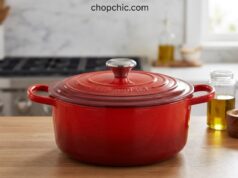
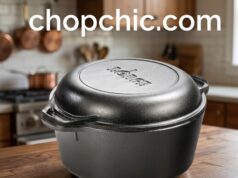





[…] completely by outfitting the pot with a heavy-duty stainless steel knob. It is rated as completely oven-safe at any baking temperature, meaning you can slide the entire heavy unit into a screaming hot […]
[…] shock. Sourdough requires “dry preheating” placing the empty vessel into a 500°F oven for an hour. While this extreme heat can craze or crack budget enamel, bare cast iron absorbs the […]
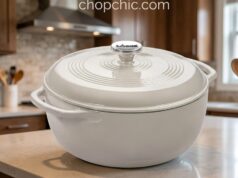
[…] is an enameled surface, you must adjust your sourdough baking technique. While the pot is perfectly oven-safe up to 500°F, you should avoid “dry preheating” it completely empty at those […]
[…] value. It delivers the heavy thermal mass and tight steam seal required for beautiful sourdough oven spring. It also seamlessly transitions into a low-maintenance, easy-to-clean braiser for everyday […]