
Wood is not wood. If you cut a chicken on an oak board you are creating a germ hazard. Choosing the woods for cutting boards depends on how the wood is made and its strength, not just matching your kitchen.

- Solid Wooden Cutting Board: Elevate your food prep with a John Boos R-Board series wood cutting board. It’s ideal for sl…
- Crafted for Your Home: This thick wooden charcuterie board boasts reversible sides, recessed finger grips, an oil finish…
- Made for Life: Available in 3 different sizes for your serving and charcuterie-board needs, this large wooden cutting bo…
To survive hits from a cleaver and resist soaking up juices from meat a cutting board needs two important things: a tight structure and the right density.
The Facts: How Wood is Made and the Janka Scale
We measure wood strength using the Janka Hardness Scale. It shows the pounds-force needed to push a steel ball into the wood. If a wood is too soft, like pine or cedar it breaks into your food. If it is too hard, like bamboo or teak it damages your knife. The best strength for a cutting board is between 900 and 1,500 pounds-force.

- Solid Wooden Cutting Board: Elevate your food prep with a John Boos R-Board series wood cutting board. It’s ideal for sl…
- Crafted for Your Home: This thick wooden charcuterie board boasts reversible sides, recessed finger grips, an oil finish…
- Made for Life: Available in 3 different sizes for your serving and charcuterie-board needs, this large wooden cutting bo…
The way the wood is made is also important. Woods with pores like oak or ash soak up liquid, germs and bad fats. You should only use woods with a structure. Here’s how maple, walnut and cherry work in the kitchen.
Hard Rock Maple
Maple is very strong and good for kitchens and butcher shops. It blocks germs and wetness well. People say it lasts a time; heavy users note that maple boards withstand years of chopping without getting damaged. The downside is its color. If you cut beets, berries or turmeric the pale surface will show stains.

- END GRAIN BOARDS PROTECT KNIVES & SELF HEAL — End grain cutting boards are renowned for extreme durability, and gentlene…
- ELEGANT, HYGIENIC, & DURABLE AMERICAN BLACK WALNUT — Elevate your kitchen with the luxurious tones of a Black Walnut cut…
- STABLE & ORGANIZED PREP W/ NON-SLIP FEET & SORTING WELLS — The removable feet on this non slip cutting board provide sec…
Black Walnut
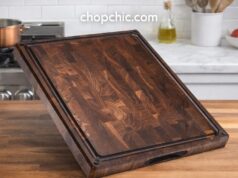
Walnut is a choice if you want a dark luxury look. It also helps protect your knives. Owners say their blades stay longer on walnut than on maple. However users warn that walnut soaks up a lot of oil. If you don’t treat it with mineral oil it will. Crack. The dark color hides food stains well.
Cherry
Cherry is a middle ground. It is soft enough to protect your knife but strong enough for prep. Long-term users like how it changes color over time; it starts light pink. Turns deep red with regular oiling and light.
The Serrated Knife Exception: Why You Still Need a Bread Board
Don’t use your hardwood block to cut a bread. Serrated bread knives act like saws. Damage the wood. This is where a dedicated bread board is needed. A slotted board for bread catches crumbs. Takes the abuse saving your expensive maple or walnut surface for precise work.
Matching the Wood to Your Technique
Your choice of wood dictates your kitchen workflow. If you want an hygienic cutting board that survives heavy use invest in hard rock maple. If you prioritize protecting knives and want a dark centerpiece black walnut is the better material. Pick the wood that matches your habits oil it regularly and keep your serrated knives away, from it.
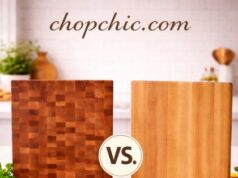
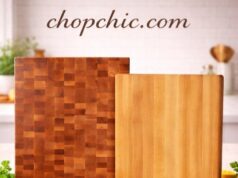



[…] surface, you are immediately confronted with a confusing choice and a significant price gap. Two boards made from the exact same wood like Northern Hard Rock Maple can have vastly different price tags. […]
[…] on rigorous culinary standards, we have selected the three ultimate wooden cutting boards that dominate their respective categories. If you are ready to upgrade your prep station right now, […]