
This morning, in my kitchen, I broke a ceramic coffee cup. It broke into a dozen pieces. Cursing at my bad luck, I scooped up all of the fragments and discarded them. Afterward, I’ll never give a second thought about this. It only costs me five bucks.


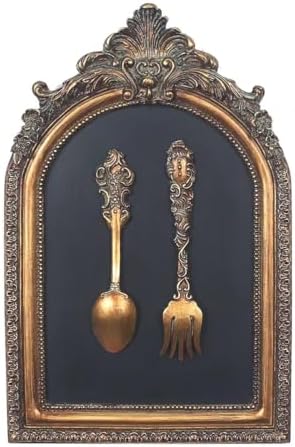
But as soon as you tour the secure areas in the foremost museums around the world, you grasp that for particular kitchenware, a slip of the finger wouldn’t only be annoying; it would be a historical loss valued in the millions. We’re not speaking about kitchenware at this point; we are speaking about an asset that just happens to contain soup.
Here are the kitchen antiques that have the highest value ever recorded.
The $36 Million “Chicken Cup”
It’s like something out of a joke, right? A little cup, barely big enough to hold a swallow of tea, decorated with a crude depiction of a rooster and hen. Yet the Ming Dynasty Chenghua Chicken Cup is the holy grail of porcelain.
When one of these cups came up for auction, it sold for over $36 million. Why did it sell for that much, you may wonder. It’s because these cups had been used by Emperor Wu himself in the 15th century, and very few of them have survived through the ages. It’s certainly the ultimate measure of how scarcity can drive prices in the kitchen.
The Germain Soup Tureens (The Louvre & The Met)
And if you go to the Louvre in Paris or the Met in New York, look for some of the silver, and I’m talking about Thomas Germain, “Silversmith to Kings.” Serving soup was a thing of the 18th century, and you showed it off, you paraded it.
His silver tureens are enormous affairs that are more like beasts, adorned as they are with boar’s heads and vegetables sculpted out of precious metals. These are no mere bowls; they are among the last artifacts that survived the French aristocracy prior to the revolution that saw the melting-down of most all of it. Nowadays, one tureen alone can sell for well over $10 million at auction.
The Value of Breakability
Why does kitchenware cost this much?
The high price for museum-quality kitchen antiques ultimately relates to survivorship bias. While paintings and statues were meant to be admired, not used, kitchenware was meant to be used, touched, and washed. High-quality ceramic dishes and glassware from the 15th or 16th century had a very low survival rate. If it exists in a museum today, it beat the chances of clumsy servants, wars, and revolutions for hundreds of years.
The Meissen Menagerie
At the Getty Museum or the V&A, you may catch a glimpse of the porcelain animals of the Meissen factory. These were commissioned by Augustus the Strong back in the 1700s as a table centerpiece for a lavish feast.
Augustus was so enamored with the “white gold” that he offered a regiment of soldiers for a set of vases. Talk about expensive tableware.
Therefore, the next time you chip your plate, you shouldn’t feel too bad about yourself. At least you didn’t have the opportunity to crash the GDP of an island nation.
read more: The Scandalous History of the Fork: Why It Was Once Considered Demonic








[…] Read more: The Most Expensive Kitchen Antiques Ever Displayed in Museums […]
[…] of the concept of “Mingei” or folk craft. As a curator of a kitchen would learn, the lesson in this museum is one of modesty and texture. The collection includes items such as bowls, plates, and lacquerware […]
[…] but are instead gazing at the copper pans hung up in the corner. Movie kitchens are one thing that real-life kitchens never accomplish, and that’s because they always capture the ambiance that the chef in the […]
[…] read more: The Most Expensive Kitchen Antiques Ever Displayed in Museums […]