
Both sit on the counter. Both hold cookies. Both look better than a zip-lock bag on the shelf. Glass and ceramic cookie jars are not the same. Choosing the wrong one means stale cookies by day two.


The difference is how well the lid seals.
Ceramic jars have a ceramic lid that rests on a ceramic rim. The weight keeps it in place. Air moves in and out through the gap. It’s not open storage, but it’s not airtight either.
Glass jars vary. A glass jar with a glass lid behaves like ceramic. A glass jar with a twist-on lid and a silicone O-ring is airtight. That single design difference changes how long cookies stay fresh.
Cookie Freshness Comparison
| Cookie Type | Ceramic Jar | Glass Jar (glass lid) | Glass Jar (silicone seal) |
|---|---|---|---|
| Chewy cookies | 2 to 3 days | 2 to 3 days | 4 to 5 days |
| Crispy cookies | 4 to 5 days | 4 to 5 days | 2 to 3 weeks |
| Airtight | No | No | Yes |
| Dishwasher safe | Usually | Yes | Lid: hand wash |
| Visibility | No | Full | Full |
Ceramic and glass jars with glass lids work the same. They slow air exchange but don’t stop it. The glass jar with a silicone seal is different.

Why Ceramic Is Better
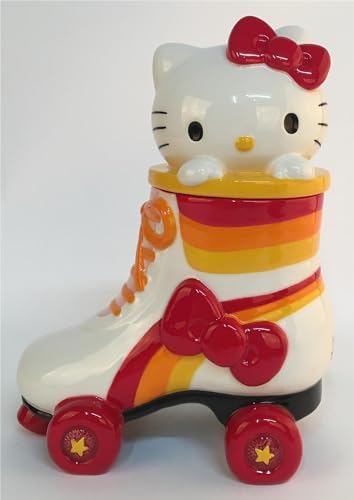
Ceramic creates a stable environment inside the jar. It doesn’t let in light, so there’s no UV exposure to affect flavor. Ceramic is also harder to chip or crack than glass. A ceramic jar dropped from counter height often survives. Glass usually doesn’t.
Ceramic looks great in farmhouse kitchens. The glaze, hand-painted details, and warm matte finish stand out. If the jar is on a visible counter and looks matter, ceramic wins.
Why Glass Is Better
Glass wins on two things: visibility and seal quality.
You can see how many cookies are left without lifting the lid. This is a practical advantage for households with kids or multiple people reaching into the jar.
A sealed glass jar with an O-ring lid keeps chewy cookies soft for nearly a week and crispy cookies fresh for close to a month. No ceramic jar matches that.
The Problem with Storing Different Cookies
Many households bake both crispy and chewy cookies. This adds a variable to the jar comparison. Storing two types of cookies in the same jar ruins both. The chewy cookie releases moisture. The crispy cookie absorbs it. Within 24 hours, neither one has the texture it started with.
This is an argument for owning two jars. Two 16 oz glass jars with sealed lids cost less than one large ceramic jar and solve the mixing problem entirely.
How to Decide
If the jar is primarily decorative and your household goes through cookies in two to three days, ceramic does the job. If freshness matters and cookies sit for four to seven days, a glass jar with a silicone seal is the better choice. If you have both types of cookies at once, two separate sealed containers beat any single jar regardless of material.
The right jar isn’t about glass versus ceramic. It’s about matching the container to how you bake and how fast your household eats.
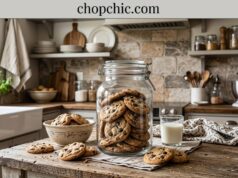







[…] Ceramic cookie jars have been on kitchen counters for over a century. There is a reason for that. They are made well. The weight, the shiny glaze, and the wide mouth make it easy to fill and grab cookies. A good ceramic jar looks like it belongs in a kitchen. […]
[…] Crispy cookies like shortbread or biscotti are baked for a long time and they have very little moisture when they come out of the oven. The problem they have is that the air around them is humid and this humidity makes them soft. If you leave a crispy biscotti on a plate in a humid kitchen it will become soft in a few hours. […]