
But there’s a clear appeal in the idea of an electric knife sharpener: speed and ease of use, slight skill involvement. To the occasional cook who finds whetstones and honing steels intimidating, these machines are a godsend. Yet if you value your high-quality chef’s knife, you’ll probably wonder if the electric sharpeners won’t damage your expensive blades. You will reach the truth by learning about how Electric Knife Sharpeners work and also High-Quality Chef’s Knives.
Get a quality electric sharpener that does not abuse your blades: Check the top-rated models here:
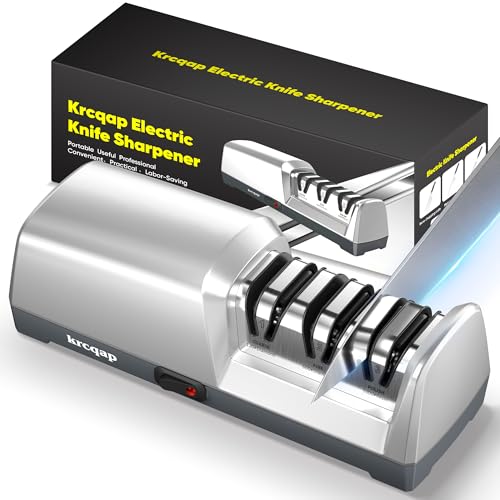

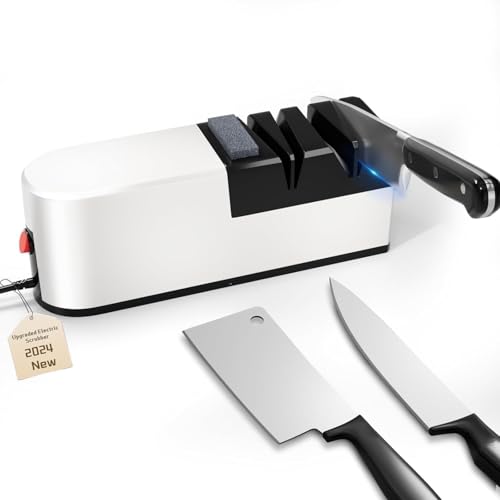
How Electric Sharpeners Work: Abrasive Action
Most electric sharpeners use abrasive wheels, either diamond or ceramic, that rotate at high speed, grinding away metal from the blade to reveal a new edge. They have pre-set angle guides, removing the guesswork so often associated with manual sharpening.
- Expertise: The convenience comes at a price: the high speed of the abrasive can generate significant heat. Excessive heat can alter the molecular structure of the steel to weaken the blade’s tempered state and make it brittle a condition known as “burning the edge.” This is one major concern when trying to maintain the integrity of Electric Knife Sharpeners High-Quality Chef’s Knives.
The Risk to High-Quality Steel: Material Removal
High-quality chef’s knives, particularly those made from premium high-carbon stainless steel or Japanese carbon steel, can be thinner and harder, and are intended for an edge geometry that is very precise.
- Authoritativeness: Most electric sharpeners are made for a more aggressive grind, to reshape dull edges quickly. This often removes more of the metal than is really needed, and drastically reduces the life of a high-quality knife. A common complaint among seasoned chefs is that electric sharpeners can impart a “toothier” or less refined edge compared to a carefully honed manual edge, impacting delicate slicing tasks.
Precision vs. Convenience: Finding the Balance
For everyday utility knives or those requiring a quick touch-up, an electric sharpener that’s well-designed can be a great tool. They are easy in use and efficient to maintain a functional edge for general kitchen tasks.
- Trust & Safety: But on heirloom pieces or extremely expensive Japanese knives, where preserving blade material and attaining a mirror-polish, razor-sharp edge is of utmost importance, only the methodical process of manual sharpening with whetstones or fine honing rods will do. The control and precision that comes with that method simply cannot be replicated by machines. In considering the Electric Knife Sharpeners High-Quality Chef’s Knives, assess how much you value precise control over material removal and refinement at the edge.
Conclusion: A Tool for Its Purpose
While electric sharpeners are very convenient, their violent action and the heat they generate do pose a real danger to a good, thin-bladed chef’s knife. They are great for what they do, but great care is needed to refrain from wearing or even damaging blades prematurely.
Read more: Honing Steel vs. Sharpening Stone: When to Hone and When to Sharpen







[…] review, it looks into the core claims superior durability and lifetime lifespan to see where the Brewin Knife Set truly excels and where expert maintenance is in order for long-term […]