
Food is ephemeral, while the artifacts that serve as vessels to prepare and consume it represent the history of civilization itself.
When considering “food museums,” one can easily conceive of an exhibition focused on a particular ingredient, as in chocolate or cheese. However, for the designer enthusiast as well as the food lover, the true gem is something more. This is where architecture intersects with cuisine, where the history of a silver spoon holds the secrets of polite society, and where product design turns a humble kettle into an icon.


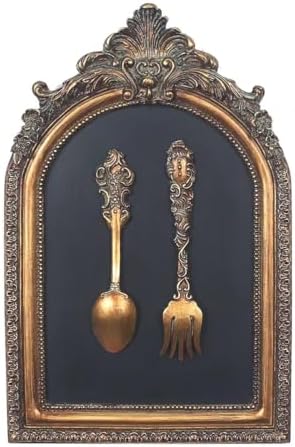
In this carefully compiled list, we take you from the impressive galleries of Paris to the minimalist studios of Tokyo in order to discover the globally inspiring design museums. These are places not just for people who love to eat but also for people who understand the art of eating.
1. Victoria & Albert Museum
Location: Located in London, UK The Vibe: Imperial Grandeur meets Industrial Craft
The V&A is the global leader in the museum of art, design, and performance, but for the connoisseur of food, the Ceramics Galleries at the V&A are a holy landing. The holding ranges across the ages and across the world. It is possible to follow the history of tea-drinking through the back of the everyday porcelain cup or to admire the glazes of the Renaissance majolica.
Don’t Miss: The V&A Café (The Gamble Room). This was the planet’s first museum restaurant. The experience of eating in the restaurant, surrounded by Victorian ceramic tiles and stained glass, is itself metacuisine you are eating food in an iconic item of design related to food.
2. Musée des Arts Décoratifs (MAD)
Location: Paris, France The Vibe: The Epitome of French Art de la Table
It is situated in the wing of the Louvre and is the protector of French lifestyle. It was France that invented the restaurant and honored the art of dining, and it is the MAD that reveals the means that made this feat achieved.
Their collection of diningware, glasses, and cutlery leaves one aghast. You would learn how the design of a wineglass evolved according to social morality and also how the lay-out of a table was a political statement and still remains so. This place is a lesson in the drama of dining.
Why Go: To grasp that a fork is never merely a fork; it symbolizes class and trends.
3. The Alessi Museum
Location: Omegna, Italy The Vibe: Industrial Poetics & Italian Flair
Even though this isn’t exactly a public museum, due to the fact that visits are often made on an appointment basis, the Alessi Museum is a crucial destination for any kitchen enthusiast, being that Alessi was the one who changed the kitchenware from just being practical objects to being something people desire and consider art.
It is home to prototypes, designs, and iconic items from legends like Philippe Starck and Aldo Rossi. It takes into account the “Italian Factory of Design” idea as it highlights how the lemon squeezer (like Juicy Salif fruit squeezers) became a scandalous piece of art.
4. The Japan Folk Crafts Museum (Mingeikan)
Location: Tokyo, Japan The Vibe: Wabi-Sabi, Silence, and Functional Beauty
Weary of Western grandeur, the Mingeikan provides a deep exploration of the concept of “Mingei” or folk craft. As a curator of a kitchen would learn, the lesson in this museum is one of modesty and texture. The collection includes items such as bowls, plates, and lacquerware worked anonymously.
The ideology in this respect is that beauty is found in utility. The rugged surface of the tea bowl or the balance of the wooden ladle puts the user in touch with the earth. This is the complete polar opposite of mass-produced items.
Takeaway: It shows us that the most beautiful objects in the kitchen are those that we use every day.
5. Cooper Hewitt, Smithsonian Design Museum
Location: New York City, USA The Vibe: Interactive, Modern, and Narrative-Driven
Based at the historic Andrew Carnegie Mansion, Cooper Hewitt examines design with a focus on problem-solving and storytelling. The exhibitions here tend to change from time to time but usually include in-depth analyses of domestic objects.
The Tupperware box and the chef’s knife are particularly illustrated in how the Cooper Hewitt Museum situates the kitchen as the laboratory of human ingenuity. The kitchen bridges the “Origins” of the object and the “Chronicle” of the object.
The Verdict: Why Design Matters in the Kitchen
Why do we come to these museums? Because the kitchen is the heart of the home, and the table is where humanity gathers.
Whether it’s the rich gold of the French cup or the earthy clay of the Japanese bowl, these pieces remind us of the creative act that happens every time we cook and eat. Through the exploration of these designs and how they have evolved in different eras and cultures, we learn how to better curate our own kitchen spaces.
Think of this each time you pick up a knife or put out the table settings. You are a part of a tradition that stretches back for hundreds of years.
Read more: The Scandalous History of the Fork: Why It Was Once Considered Demonic









[…] are the kitchen antiques that have the highest value ever […]
[…] come to realize that noodle dishes posed certain difficulties when eaten by hand. And so, the fork, designed with three or four curved prongs, proved ideal for twirling […]
[…] you ever found yourself in a grocery store, looking at wine, wondering why this is the size of wine. Milk is in a liter. Soda is in a liter. Wine, however, remains proudly in 750 milliliters. It is […]
[…] and “sculpture” gets blurred. They are so perfectly designed that the curators of the Modern Art Museum in New York feel they are meant to be placed on the same pedestal as the works of […]
[…] read more: The World’s Best Design Museums for Food Lovers: A Global Guide […]