
The centerpiece of any holiday meal or celebratory dinner is often a beautifully roasted turkey, a succulent prime rib, or a perfectly cooked ham. Yet, such grandeur can easily be diminished by the wrong carving tool. A general-purpose chef’s knife, while versatile, is simply not designed to make the thin, delicate slices necessary to present these culinary masterpieces.
This guide, tapping into decades of culinary experience and expertise in material science, will explore in depth the specific characteristics defining the finest slicing knife, making every cut from your roasts and turkey perfect and yielding thin, even slices that elevate presentation and taste.
Take your carving experience to a new level today. Here are some of the best-rated slicing knives:

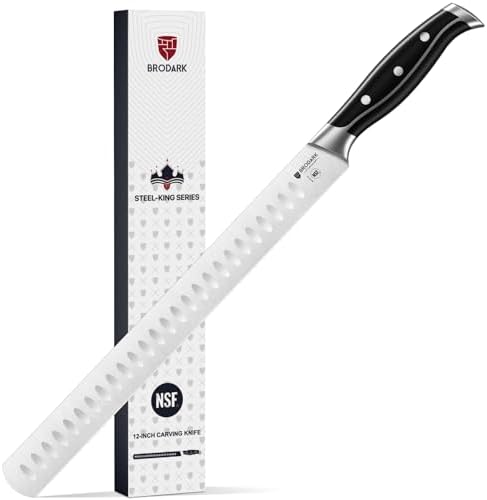

Blade Length and Profile: The Glide Factor
The ideal slicing knife is differentiated right away by its length and blade profile, usually from 10 to 15 inches.
- Expertise: This extended length is important because it enables one to make a single, smooth stroke across the width of a large roast or turkey breast. Shorter knives require that multiple sawing motions be employed, which tears at the delicate meat fibers, rendering ragged edges and causing moisture loss. The blade should be fairly narrow with a pointed tip, allowing it to move without effort between joints and along bones for maximum yield. This geometry is typical of knives designed for carving perfection.
Edge Geometry: Precision and Retention
More important than just pure length, though, is sharpness and specific edge geometry in obtaining paper-thin, intact slices.
- Authoritativeness: A better slicing knife will have a razor-sharp, fine edge with a relatively acute angle, often between 15–20 degrees per side. Many high-end versions feature a Granton edge (indentations along the blade) to create air pockets, decreasing friction and keeping meat from clinging to the blade. This design feature, supported by metallurgical science, is most effective with moist, dense meats, ensuring each slice separates neatly and easily.
Handle Ergonomics and Balance: Control Under Pressure
Carving large hot roasts requires not only a sharp blade but also stability and comfort for the carver.
- Trust & Experience: The handle should provide a firm, comfortable grip, even for wet or greasy hands. The preferred materials are Pakkawood, high-quality polymers, and composites, offering durability with a tactile feel. Equally important, the knife’s balance point should be precisely at the bolster or slightly toward the blade, allowing for effortless control and lessening hand fatigue on extended carving sessions. This is thoughtful design to ensure safety and precision when dealing with substantial cuts of roasts and turkey.
Conclusion: An Investment in Culinary Presentation
A slicing knife is not a luxury but a must-have for every serious home cook who aims to present perfectly carved roasts and turkey. That investment in a good slicing knife, defined by length, sharp edge, and ergonomic balance, translates directly into higher culinary presentation and a raised dining experience.
related article: Santoku vs. Chef’s Knife: Which Blade Shape is Best for General Use?






[…] to damage or not. For anyone investing in quality cutlery, understanding this balance is key to choosing a blade that truly meets their culinary […]
[…] Choosing a new knife means committing to a material, and the perennial debate between high-carbon and stainless steel is about more than just performance. it’s about lifestyle. Each material demands a drastically different level of maintenance. While high-carbon steel offers superior sharpness and edge retention, stainless steel provides unmatched convenience. Deciding between High-Carbon vs Stainless Steel Knives hinges on your willingness to embrace meticulous daily care. […]