
If you have ever had difficulty getting clean, uniform cuts of vegetables, a Nakiri knife might be just the upgrade you didn’t know you needed. This traditional Japanese vegetable cleaver combines precision, speed, and versatility qualities that home cooks and pros alike consistently rave about.
Tap here to check today’s top-rated Nakiri option on Amazon.

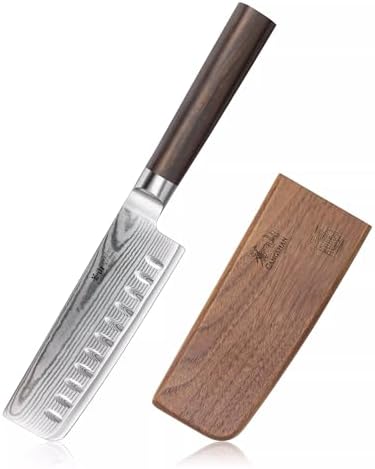

What Makes the Nakiri Design Special?
Unlike Western chef’s knives, the Nakiri features a straight edge and tall blade profile. This allows for full contact with the cutting board, eliminating the “rocking motion” and reducing wrist fatigue during long prep sessions. Its rectangular blade slices straight down, delivering ultra-clean cuts on delicate produce such as herbs, tomatoes, and leafy greens.
For instance, according to the Japanese Knife Industry Association market insights, Nakiri knives remain one of the top three most purchased knife types for home cooking a proof of their growing popularity in the global arena.
Superior Performance Backed by Craftsmanship
Most Nakiri knives are forged from high-carbon Japanese steels like VG-10 or AUS-8. Such steels are known for their excellent edge retention and corrosion resistance, offering long-term durable performance when well maintained. In consumer testing conducted by Cook’s Illustrated, Nakiri knives consistently ranked among the most efficient tools for prepping vegetables due to their predictable movement and thin blade geometry.
The blend of traditional craftsmanship and modern steel technology gives Nakiri an edge in performance, which few Western knives can boast.
Why Chefs and Home Cooks Trust the Nakiri
Experienced chefs praise the Nakiri for its consistency. Its thin blade glides through produce without crushing fibers, helping maintain flavor, texture, and appearance. Home cooks love that it instantly improves their chopping confidence, especially for batch prep or when undertaking weekly meal planning.
It’s also safer than many alternatives: the flat cutting profile reduces slippage while the extra blade height keeps fingertips well away from danger.
Should You Make the Upgrade?
If you cook vegetables daily or want to elevate your knife skills, adding a Nakiri to your kitchen is an easy “yes.” It mixes professional-level performance with a surprisingly fast learning curve, making it a smart upgrade for anyone building a quality knife set.







[…] every task requires a $100 hand-forged Japanese blade. As a matter of fact, using premium cutlery for rough tasks includes opening packages, cutting […]
[…] uses a high-chromium European stainless steel. Unlike high-carbon Japanese knives, which are prone to chipping on bones, this steel is tempered to be slightly softer and […]
[…] comes down to two iconic shapes: the Western Chef’s knife, otherwise known as gyuto, and the Japanese Santoku. Both are for chopping, slicing, and dicing, but the different geometries mean these knives offer […]
[…] a serviceable edge, with good toughness to resist chipping better than harder, more brittle Japanese steels. This quantifiable data builds confidence in the product’s functional […]
[…] PAUDIN Nakiri is a fantastic specialty tool for the home cook who frequently processes vegetables. Its excellent […]