
There’s a little secret about electric spice mills: they’re basically power vampires.
A lot of electric grinders out there use 4 or 6 AAA batteries to operate. How come there’s so many? When you’re trying to crush really hard peppercorns or rock salt, you need a strong twist, and weaker motors drink up a lot of battery power to do that.
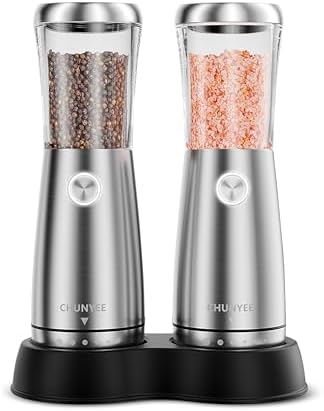


It’s not just about how much batteries cost upfront; they also lose their pep over time. When alkaline batteries get low, the voltage drops. This makes your grinder sound like it’s slowly giving up.
Tired of weak grinds and all those battery changes? It’s probably time to get yourself a rechargeable salt and pepper grinder.
So, I’m going to break down for you exactly why Lithium-Ion batteries are always the better choice over Alkaline.
The Math: The Hidden Cost of “Cheap” Grinders
Alright, let’s look at the numbers.
- You can usually snag a battery-powered set for about $20.
- You can grab a USB-rechargeable set for roughly $30-$35.
It sure looks like the battery version is the more affordable choice. That’s not right.
If you’re cooking every day, you’ll probably go through 6 AAA batteries in about 2 to 3 months. So, that’s about 24 batteries every year for each grinder.
In just a year, you’ve spent more on Duracells than what it would have cost to get the rechargeable one instead. You’ll save enough with the USB-rechargeable one to pay for it in around nine months. Then it’s free to go wherever it needs to.
Performance: The “Voltage Sag” Problem
Chefs like rechargeable ones for a technical reason.
- Alkaline Batteries: They have a voltage that steadily goes down as they lose power. When you first get your grinder, it works great, but after a couple of weeks, the motor just doesn’t spin as fast. It has trouble grinding coarse salt, so your food might not taste seasoned evenly.
- Lithium-Ion (USB) Batteries: They keep a steady voltage output until they’re practically drained. The motor keeps chugging along at full power for weeks, and then, without warning, it just quits when it needs a charge. You’ll get a consistent amount of torque every single time.
Convenience: The USB-C Era
It’s all about convenience now that we’re in the USB-C era. These days, most rechargeable salt and pepper grinders charge up with a USB-C cable, just like the one you probably use for your Android phone, iPad, or even your laptop.
- No Hunting: You don’t need to hunt for batteries anymore; no more searching for fresh AAAs while your dinner cools down.
- Fast Charging: Quick to charge, most of these units are good to go in about an hour and can handle over 200 grinds before needing another boost.
- Charging Docks: You get a charging dock with the premium models. Just pop the grinder back on its base after you’ve eaten, and that way it’s always ready to go.
The One Downside: Built-in Obsolescence
Okay, so to be a fair analyst, we really should bring up the downside of rechargeable units.
Once the internal lithium battery stops working, usually after three to five years, the whole thing becomes useless. You can’t replace the battery yourself. However, most electric grinders conk out from salt corrosion within three to five years anyway, so this kind of lifespan is pretty normal for almost everyone.
Verdict: Which One Should You Choose?
Get a USB-rechargeable grinder if:
- You cook every day: Having reliable power and saving money is a big deal to you.
- You hate waste: Nobody likes waste, right? Tossing out all those alkaline batteries each year just isn’t good for our planet, and it sure isn’t good for your wallet either.
- You want power: Lithium batteries really deliver more torque when you’re dealing with tough rock salts.
Go with replaceable batteries if:
- You barely touch it: Say you only break out the grinder once a month (e.g., at a holiday home), alkaline batteries keep their charge longer when they’re just sitting around.
The Bottom Line Just cut out all those little things that drain your phone battery. Spending a little more at first for a rechargeable one is totally worth it; you get constant power and never have to mess with upkeep.









[…] is a regular electric mill. It kinda looks like a manual grinder, but there’s a button, usually right on top, that you press with your […]
[…] rechargeable batteries immediately. Otherwise, the cost of batteries will exceed the cost of the grinder within a […]
[…] Danger Zone: Going below #4 is asking for trouble; it can jam your grinder or put a real strain on the motor. If you hear the motor making a whining sound, just adjust it so […]