
Go into just about any kitchen store today, and you’ll spot them right away: those tall, shiny, battery-powered grinders that claim to mill your spices with just a press of a button, or even just by tilting your wrist.
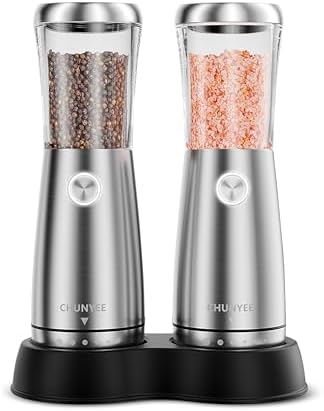


Lots of folks feel strongly one way or another about electric salt and pepper grinders.
To a chef who really respects the old ways, that’s just pure laziness like someone created a fix for something that wasn’t even broken. Why bother with six AAA batteries when a quick flick of your wrist does the same job in no time at all?
But for some folks, it really changes the game when it comes to keeping things clean and making life easier.
So, is it legit or just trash? As a kitchen equipment analyst, I looked at how it works, what the battery will really cost you, and if it’s actually useful in your everyday cooking, to help you make your decision.
The Case AGAINST Them: Why They Are “Gimmicks”
Let’s just address the skepticism right off the bat. Professional chefs usually have pretty good reasons for not using these things in the kitchen.
1. The Battery Drain A lot of electric grinders really suck up power. Usually, you’ll need about 4 to 6 AAA batteries for each grinder in a typical set. If you’re cooking every day, that motor really goes to town on the batteries, especially since it needs so much oomph to crush tough stuff like peppercorns or rock salt. If you’re not using rechargeable batteries, the cost really starts to add up.
2. The Speed (or Lack Thereof) A good hand grinder, like a Peugeot, grinds a lot of pepper with just one turn. Electric grinders can be a bit slow. Yeah, it’s pretty annoying. You’ll hold that button for a full 10 seconds to get what you’d normally get with just two quick turns of your wrist.
3. Durability Issues Salt eats away at things, so it doesn’t last. Trying to put a battery, copper wires, and a cheap motor in a container with salt is just asking for trouble. Water gets inside, the connections rust, and then the gadget just stops working after about a year. Manual grinders don’t have any electronics that can break.
The Case FOR Them: The Hidden Utility
So, here’s the thing. They’ve got a hidden use that totally changes how we see them. Even though they’re slow and use up battery quickly, they still sell millions of units. They are better than doing it by hand, but only for certain situations.
1. The “Raw Meat” Hand (Hygiene) This is the best argument around for getting an electric salt and pepper grinder. Think about when you’re seasoning a steak or getting a whole chicken ready to cook. My one hand is covered in raw meat juice, which is not ideal since salmonella is a real risk.
- Manual Grinder: You gotta wash your hands, dry ’em off, grind the pepper, and then get back to the meat. Or your grubby hand contaminates the grinder.
- Electric Grinder: Just press the button with your clean hand or even just your thumb. Or, if it’s a “Gravity Grinder,” all you do is tip it over. That just means we keep everything totally separate.
2. Accessibility If you have Carpal Tunnel, arthritis, or your grip isn’t what it used to be, twisting things by hand can really hurt or just not be possible. For some folks, an electric grinder isn’t about being lazy; it’s a really important tool that helps them cook with fresh spices, avoiding the pre-ground stuff.
Gravity vs. Button: Which Mechanism Wins?
So, if you go to buy one, there are two big options.
- Gravity Grinders: They don’t have any buttons. Just flip the grinder over, and a sensor kicks the motor on. It’s really cool, and you don’t have to do a thing.
- Downside: If you accidentally bump it on the table, it’ll start grinding.
- Button Grinders: These are pretty simple: you just push a button on top with your thumb. You get really precise control, but you’ll need a bit more finesse.
The Verdict: Should You Buy One?
So, here’s the big question: Is it worth your money?
Get yourself an electric salt and pepper grinder if:
- You cook a lot of meat: Being able to season with one hand while your other hand is busy with raw chicken really changes the game. That’s a real workflow upgrade.
- You have hand pain: If your wrist aches from twisting a manual mill, this little piece of tech isn’t just a fancy toy; it’s a genuine need.
- You love gadgets: That LED light (most of them glow to tell you how much salt is hitting your food) is actually pretty satisfying to watch.
Stick to a hand grinder if:
- You hate maintenance: Nobody likes constantly changing six batteries. It’s just a pain.
- You want speed: A manual grinder really delivers. It’s just quicker and cranks out more volume in the same amount of time.
- You want longevity: A manual grinder is a really solid choice; you could easily get two decades out of it. An electric one usually only lasts about two or three years.
The Bottom Line It’s not just some trick, it’s a luxury deal. If you’re not in a situation where you absolutely need a one-handed tool, like for cooking or health issues, the old-school manual mill is still the best pick for your kitchen.







[…] you’re making espresso, pour-over, or French press, here’s how to find the perfect grinder for your […]
[…] one thing is the real problem with the gravity electric grinder. Every time you tip it back up to stop grinding, a bit of ground pepper or salt usually tumbles […]