
In our previous article, we created detailed and informative content on Fullstar vs. Mueller: Which Vegetable Chopper Lasts Longer? This article focuses on what to consider when using kitchen appliances.

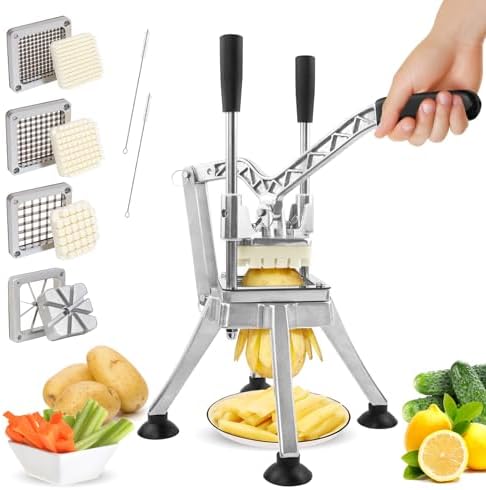
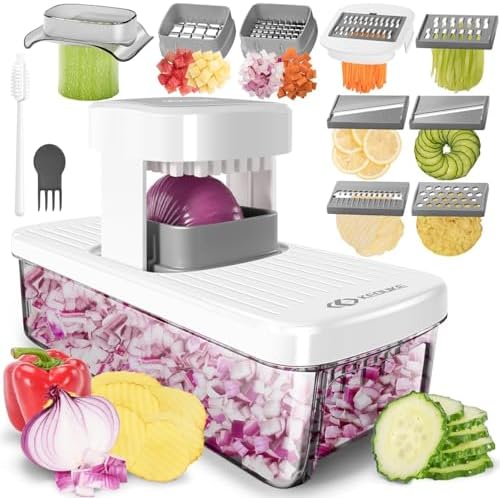
Vegetable choppers are responsible for a surprising number of ER visits. They look innocent enough just a plastic box with a grid of metal but those blades are often sharper than your chef’s knife. Unlike a knife, they don’t give you feedback until it’s too late.
I have seen seasoned cooks lose fingertips because they trusted the plastic guard too much or, worse, didn’t use it at all.
Safety with these tools isn’t about being slow; it’s about physics and preparation. If you respect the mechanism, you keep your fingers. If you get lazy, you get cut. Here is the operational protocol to chopping without an injury.
1. Secure Your Station
Most accidents happen before the blade even touches the onion. If the chopper slides while you are applying force, your hand slips, and your momentum carries your fingers directly into the grid or the hinge.
- Dry the counter: Water is your enemy here. A wet countertop turns your chopper into a hockey puck.
- The damp towel trick: Put a damp (not wet) kitchen towel or a silicone mat under the catch bin. This creates friction. If the bin moves while you are chopping, you are either using too much force or your surface is unsafe.
2. Respect the Geometry
You cannot put a whole onion in these things. I don’t care what the infomercial showed you. Round objects roll. If the vegetable rolls while you are bringing the lid down, your hand might follow it.
- Create a flat surface: Slice a thin layer off the bottom of the potato or onion with a knife first. Place that flat side down on the blades. This prevents the vegetable from shooting out sideways when you slam the lid.
- Pre-cut to the grid size: If your onion extends past the metal grid, you are asking for trouble. The overhang will catch on the plastic frame. This jams the unit. When you try to un-jam it with your hands, that is when the blade bites.
3. The “Slam,” Not the “Press”
This is where most beginners fail. They try to be gentle. They press the lid down slowly to see if it cuts.
This is wrong. Slow pressure allows the vegetable to compress and act like a spring. The blades get stuck halfway through. Then you have to push harder, your hand slips, and disaster strikes.
- Commit to the movement: You need a swift, confident motion. Use the heel of your hand on the designated impact zone of the lid.
- Watch the hinge: Keep your fingers away from the seam where the lid meets the base. I have seen pinch wounds from the hinge that were just as painful as cuts from the blade.
4. The “No-Touch” Cleaning Rule
The most dangerous time is not when you are chopping; it is when you are washing up. The blades are serrated and incredibly sharp.
- Never use a sponge: The blades will shred the sponge and then they will shred your fingers.
- Use the claw brush: Most choppers come with a little plastic comb or brush. Use it. If you lost it, use an old toothbrush.
- Don’t soak it blindly: Never drop the blade grid into a sink full of soapy water. You will reach in to grab a fork, forget the blade is there, and cut yourself. Wash it immediately under running water and set it aside to dry.
When to Retire Your Chopper
A dull blade requires more force. More force means a higher chance of the unit slipping or the plastic hinge snapping under stress.
If you find yourself having to body-slam the chopper to get through a bell pepper, the blades are dead. Throw it out. It is much cheaper to buy a new $25 chopper than to pay for stitches.









[…] Most vegetable choppers, sadly, just end up in the trash. This is just bound to happen. When you push a bunch of steel blades through something tough like a sweet potato, you’re really twisting those plastic parts, and they often aren’t built strong enough for that kind of strain. […]
[…] and fruits, and the durability of each is tested. In the next article, we’ll examine what to consider when using vegetable slicers. In this article, we’ve written about the difference between manual and electric […]