
We’ve all known what it means to be in a kitchen that just didn’t feel right. Maybe it was filled with high-end marble and high-end appliances, but it was just too small the minute two people entered it. You were constantly ducking to avoid the dishwasher handle or running into the island just trying to grab a glass of water.


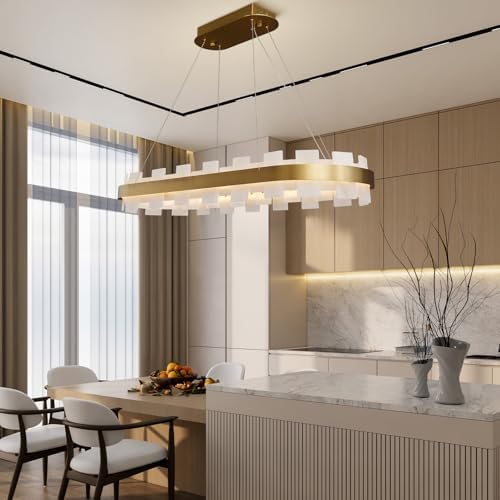
This is not a failure of budget, this is a failure of psychology.
High-end design involves the concept of “flow,” which represents the unseen force that leads people throughout a space. Flow represents the distinction between a kitchen that photographs well and a kitchen that functions well. When discussing the psychology of space in a high-end kitchen, what is being described is the concept of reducing friction. The objective is to provide a space whereby the mind does not have to consider movement; the body will intuitively know where to go.
read more: The Evolution of the Toaster: From Fire Hazards to Smart Tech
The Death of the Triangle
Architects for decades worshipped the so-called “Work Triangle” configuration from the sink, through the stove, to the refrigerator. There was a reason for the worship in the 1950s. The kitchen was a small isolated area which was inhabited by only one person.
The triangle has no place in state-of-the-art high-end homes. In today’s design concept, it’s all about “Zones.”
“The psychology at play is that of task reduction,” WestEnder explains. “What you want to happen is that if you’re making coffee, for example, you shouldn’t have to walk through the path of the person cooking eggs.”
A luxury kitchen includes a coffee station where you can prepare your brew because “you want all of the cups, all of the beans, and all of the water in reach.” There is also a prep area “with its own sink and its own trash chute,” because by dividing “the room into self-contained areas,” you eliminate “the crossing of traffic that creates mental stress.”
The Island as a Social Barrier
The kitchen island is no mere countertop but a psychological barrier. Guests are cooking and making contemporary conversation in a hosting setting. If there were no barrier, then guests would wander into the cooking area and cause congestion and potential dangers.
An effective kitchen island is like a stage. It distinctly separates the “Actor” (the chef) from the “Audience” (the dinner party).
To create this flow, seating needs to be located on the outside edge with minimal traffic on the inner aisle. The “Proximity and Safety” principles of psychology relate to this. The guests need to feel close enough to participate in what is going on but can feel safe with the physical buffer of the island.
Sight Lines and Mental Peace
Humans also have an “Evolutionary Preference for Prospect and Refuge.” “We enjoy watching what is happening while still being protected.”
An elite kitchen has maximum sight lines. As a kitchen designer, you should be able to see the dining area, outdoors, or living area when standing at the main preparation area. When a cook has a blank wall, it promotes a sense of isolation.
This too applies to clutter. The brain recognizes clutter as an incomplete task. This is why “Sculleries” or “Butler’s Pantries” are having a gigantic resurgence as a design statement in high-end design. This catch-all room gives you a place to stash clutter like toasters, blenders, and dirty dishes out of sight. This way, it keeps the psychological peace in the kitchen with a clear design statement that invites relaxation for the brain.
Light as a Guide
And, finally, everything that exists, or in other words, all substance, is ruled by light.
“Layered Lighting” will solve this problem. First, you have to have good, strong, focused task lighting above the work areas for safety reasons. Yet for a warm effect, you have to have soft, warm “ambient” lighting under the cabinets or toe-kicks.
“When lighting is well-balanced, a room feels open. It is an invitation to enter. True luxury is not simply a function of what one touches. It is a function of how one behaves without even realizing it.”
read more: Open Shelving Styling: How to Curate Functional Art in Your Kitchen









[…] shopping online, photos can be deceiving. A thin, cheap napkin looks exactly like a thick, luxurious one in a picture. To judge quality, you need to look for the GSM (Grams per Square […]