
We consider the “pop” process nothing short of ordinary. You place two slices of bread into a slot, press a lever, and two minutes pass, and breakfast appears. But for the bulk of historical time, the process of toasting bread on either side of the Atlantic was an extreme sport. You had long forks, open fire, and a good chance of burning your fingers, your bread, or yourself.

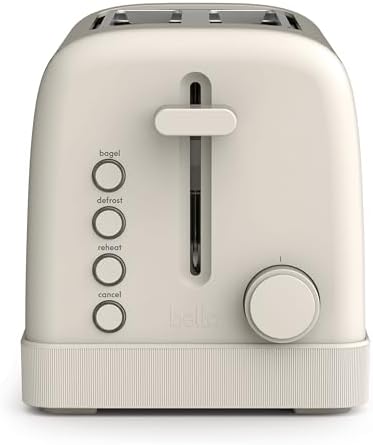

The history of this toaster has nothing to do with warming carbohydrates. This is our story of how we harnessed technology to overcome breakfast rush.
The Age of Wire and Fire
Prior to the 20th-century era, electricity was a novelty and a hazardous item. The early versions of electric toasters, which emerged in the 1890s or 1900s, were effectively a metal framework hanging in the open, with red-hot wires strung around it. These were frightening pieces of equipment.
These first models, such as the General Electric D-12, had neither sensors nor housing. You put the bread on the grill and had to watch it until it was done on one side before flipping by hand the scorching hot slice to finish cooking it on the other side. Guess what happened if you got caught up in reading the morning paper? You wound up with toasted bread and a burning kitchen if you weren’t watching it minute by minute.
The Invention of Nichrome
However, it’s not the chef who should be credited as the hero of the toaster. Instead, it’s an engineer by the name of Albert Marsh. In the year 1905, Marsh invented “Nichrome,” which stood for an alloy of nickel and chromium.
This was important because, prior to its creation, wires that were intended to be heated would either turn to liquid or break down in just several uses. Marsh made it possible to have a wire that could be heated to bright red thousands of times without turning to liquid. Without Nichrome, there would be no toaster or hair dryer in today’s world.
The Pop-Up Revolution
“The dissatisfaction associated with burned toast is an important motivator,” says the book “The Innovator’s DNA.” World War I provided the backdrop in which Charles Strite, an inventor and mechanic, grew frustrated that the cafeteria in which he ate served “charcoal” toast for breakfast. “He wanted to eliminate human error from his decision.”
In 1919, Strite invented the first pop-up toaster, called the “Toastmaster” when released to the public in 1926, and used a clockwork timer and springs to pop the toast into the air when it was toasted to the owner’s liking. Now, you could let the toaster do the work without necessarily watching over it. The toaster went from something that could burn you to something that you could rely on.
Brief History: Chrome to Computers
By mid-century, the toaster had achieved iconic status. The chrome and rounded design of the 1950s elevated this appliance into the centerpiece of the formal table. However, the principle and function had changed little since then: heat, timing, and spring power.
Current technology brings us into the age of “smart toaster” products. The latest smart models incorporate steam technology, which maintains a moist environment inside while crisping the outer layers. Some models allow users to select their preferred bread type, such as sourdough or bagels, via a touch screen.
We have moved a long way from the use of open flames, a practice that was common in the Victorian age. But whether it is a rusty iron fork or a Wi-Fi-enabled robot, the motive remains the same: the crunch!
read more: Timeless Kitchen Design: Balancing Modern Function with Classic Aesthetics








[…] read more: The Evolution of the Toaster: From Fire Hazards to Smart Tech […]
[…] read more: The Evolution of the Toaster: From Fire Hazards to Smart Tech […]