
Open your utensil drawer. What do you see? A jumble of black plastic spatulas, a garlic press that never works, and a can opener that you loathe. These are tools. These are things we use and then clean and store away.


However, there is another type of kitchenware. This includes objects in which the boundary between “appliance” and “sculpture” gets blurred. They are so perfectly designed that the curators of the Modern Art Museum in New York feel they are meant to be placed on the same pedestal as the works of Picasso.
The catch: Unlike a Picasso, you can afford to display these masterpieces on your counter. Here are five design icons who show form follows function:
1. The Chemex Coffee Maker
Creator: Peter Schlumbohm (1941)
It doesn’t look like a coffee maker as much as laboratory equipment, and this is appropriate, given its origins in the lab of a chemist.
“The Chemex is, in my view, the supreme example of mu-sho, this aesthetic of simplicity through reduced complexity, through diminished complexity, through rediscovered simplicity.”
There are no mechanical parts to break, no circuitry to malfunction, in this product that is hailed as one of the greatest designs of the modern era because it reduces the process of coffee-making to its bare essentials.
2. Rex Vegetable Peeler
Designer: Alfred Neweczerzal (1947)
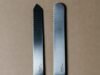
You will be amazed to see a device that costs less than a lunchbox sitting in a glass case at MoMA. The Rex Peeler is the epitome of the word “Humble Masterpiece.”
Made out of a single aluminum sheet, it is almost weightless, ergonomically delightful, and almost unbreakable. This device shows that design need not emphasize richness; it must emphasize the solution of a problem using the minimum amount of material.
3. Alessi 9093 Kettle
Designer: Michael Graves (1985)
Before this kettle, boiling water was a dull task. However, Michael Graves, an architect from America, made it a work of Pop Art.
Of course, its cone shape is very unique, but what is most brilliant about it is a tiny red plastic bird perched on top, singing when the water reaches boiling points. It brought a playful and optimistic note to a dull kitchen area where morning tea is taken.
4. Fiskars Orange-Handled Scissors
Designer: Olof Bäckström (1967)
A pair of scissors with orange handles in your supply cabinet is a piece of design history. When Fiskars decided to create a scissor with plastic handles in 1967, because they wanted to make scissor handles more comfortable, the machinist had leftover orange plastic from a juicer project.
They decided to use this leftover plastic solely for this scissor design project. This design became a permanent display at MoMA.
What is “Functional Art”?
Why are these items in a museum collection? Museums collect kitchenware not for its scarcity, but for its historical importance as it signifies an achievement in Industrial Design. These items provide solutions for complex functions of peeling, brewing, or cutting in aesthetically symbolic designs, which signify their time. These items are termed “Functional Art” because of their perfect function
5. Stelton EM77 Vacuum Jug
Designer: Erik Magnussen (1977)
This iconic Danish design can be identified by its cylindrical shape and the distinctive rocker stopper. It doesn’t shout to get attention, but it demands it through its quietness. This epitomizes extreme Scandinavian design, which adds nothing if it isn’t absolutely necessary.
So, the next time you’re considering a new tool, it might be helpful to think not just about what will work, but what will be worth a second glance.
read more: The Scandalous History of the Fork: Why It Was Once Considered Demonic








[…] is often something grand: an art museum, a high-rise building, a cathedral. But the most significant architectural fact in your life is […]
[…] was the last time you bought a kitchen gadget because you needed it? Not because it looked cool, not because some magazine told you to, but […]
[…] with heirloom cookware. There’s weight that comes with these cookware pieces that roots you in the kitchen. They require a different kind of care that you would not be able to put into the dishwasher, but […]