
Have you ever found yourself in a grocery store, looking at wine, wondering why this is the size of wine. Milk is in a liter. Soda is in a liter. Wine, however, remains proudly in 750 milliliters. It is not a liter, nor is a pint. Why is this?
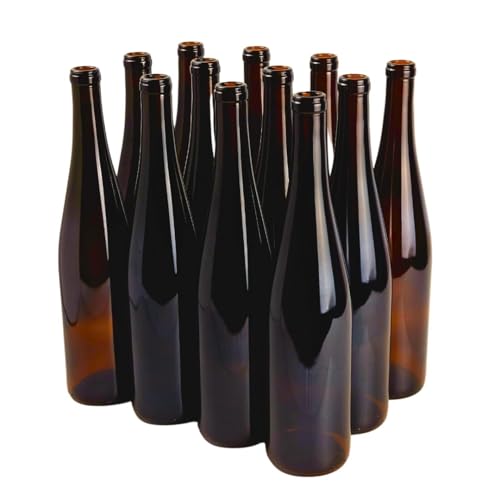


Hardened romantics might argue it is “the perfect amount of wine for a dinner party of two,” while others believe it was “the daily allotment of a Roman centurion.” Both are very colorful, and yet the truth is much more boring and very calculating.
The reason for the standard bottle size is actually a calculation based on 18th-century human lung capacity and British math.
read more: The Most Expensive Kitchen Antiques Ever Displayed in Museums
The Glassblower’s Limit
Prior to the 19th century, bottles were not produced by machine but were blown by hand. A glass maker blows the glass from the pipe to form the desired shape.
This leads us to a physical constraint. A glassblower had just enough lung capacity to produce a 600-800 ml bottle with a single breath. Going beyond that was just holding too much air, while anything less was a waste of effort. Consequently, 750 ml was anything but standard; it was simply what was easiest for a human physically.
The British Gallon Math
But biology is only part of the story. The other part is that standardization came out of trade. In the 19th century, the French produced the most wine, and the British consumed the most wine. It is a metric nightmare: the French measured in liters, and the British in imperial gallons.
A standardization of size was required in order to simplify trade. Here is the calculation involved: One Imperial gallon is about 4.5 liters. If this gallon is divided by six, the result is exactly 750 milliliters.
This is why wine is packaged in cases of six or twelve to this day. For the British traders, the case of six bottles was exactly equal to one gallon. This made pricing or calculating taxation and transportation lists extremely easy.
A Definition of Trade, Not Taste
Therefore, the next time you pour a bottle, remember that you are opening something more than a beverage. You are opening an artifact that is measured by the breathing power of an 18th-century laborer and the calculations of a British businessman.
But the 750 ml standard was never about wine per se but about making wine easier to sell. It is a classic illustration of how history responds to logistical imperatives to create our modern meal, confirming that some of our most delightful traditions begin with a math question.
read more: The Scandalous History of the Fork: Why It Was Once Considered Demonic