
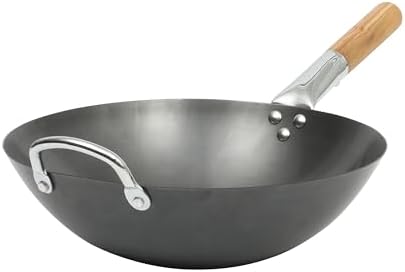
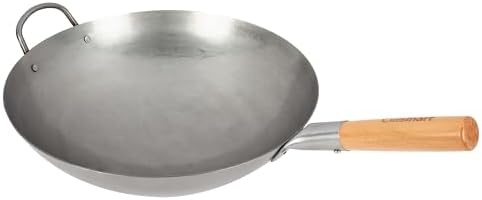
A carbon steel wok is a strong, high-performance tool that requires special care to maintain the nonstick seasoning and prevent rust. Unlike most stainless steel cookware, a carbon steel wok should never see soap. Poorly managing the cleaning and storage process is the surest way to ruin the seasoning, which can cause sticking and corrosion. Mastering the proper aftercare is just as important as mastering the stir-fry itself.
Golden Rule of Immediate Cleaning
Cleaning the wok immediately after use while it is still warm is the most important thing to do to maintain the seasoning. Do not soak. Soaking waterlogs the metal and encourages rust. The residual heat in the wok aids the cleaning.
- Cleaning method: Using a bamboo whisk or a soft sponge with hot water, scrub gently to remove any food residue. (If necessary, place the wok over low heat, with a few inches of water inside, and boil for a few seconds to loosen stuck food particles.) Never use steel wool or harsh scouring pads, as they will scrape away all your hard-won seasoning.
Drying: Banish All Moisture
After cleaning the food particles, the wok needs to be completely dried to avoid oxidation. This is an absolute must for carbon steel; merely wiping with a towel will not suffice.
- Technique: Put the clean wok on the stove over medium-high heat. The heat flashes off any residual water. When the wok is properly dry, the metal displays a uniform gray color with no more droplets of moisture. This should take less than a minute.
Re-Oiling: Maintaining the Finish
This means after drying, the surface of the wok is fragile and should just be sealed with a thin layer of oil to maintain its protective seasoning barrier. This simple step protects the metal from moisture in the air.
- Procedure: Turn the heat off. Dip a paper towel into a high smoke point oil, such as peanut or refined avocado oil. Rub the oil all over the inside of the wok so that it has a very thin, almost invisible sheen to it. You want the surface to be conditioned, not dripping with a thick residue that could become sticky.
Storage: Air Circulation is Essential
Proper storage comes last. Stacking the wok with other pans or covering it right away can lock in humidity, creating rust spots. To store, place the wok in a dry location, uncovered. Many wok owners prefer to hang their wok in order to maximize airflow. If you are unable to hang your wok and have to stack it, separate your wok from other cookware using a paper towel or clean dishcloth to absorb humidity and protect the finish of your wok. Proper storing will have your wok ready for the next immediate high-heat use.
related article: What Is Wok Hei? The Secret Flavor of Great Stir-Fry Dishes






[…] This will make you feel good about your dishes as they get clean. In addition to being happy, your dishes, your skin, and our planet will benefit from […]
[…] selection is a key consideration when cooking with a carbon steel wok in order to achieve best results. Since it possesses better heat retention and distribution […]